
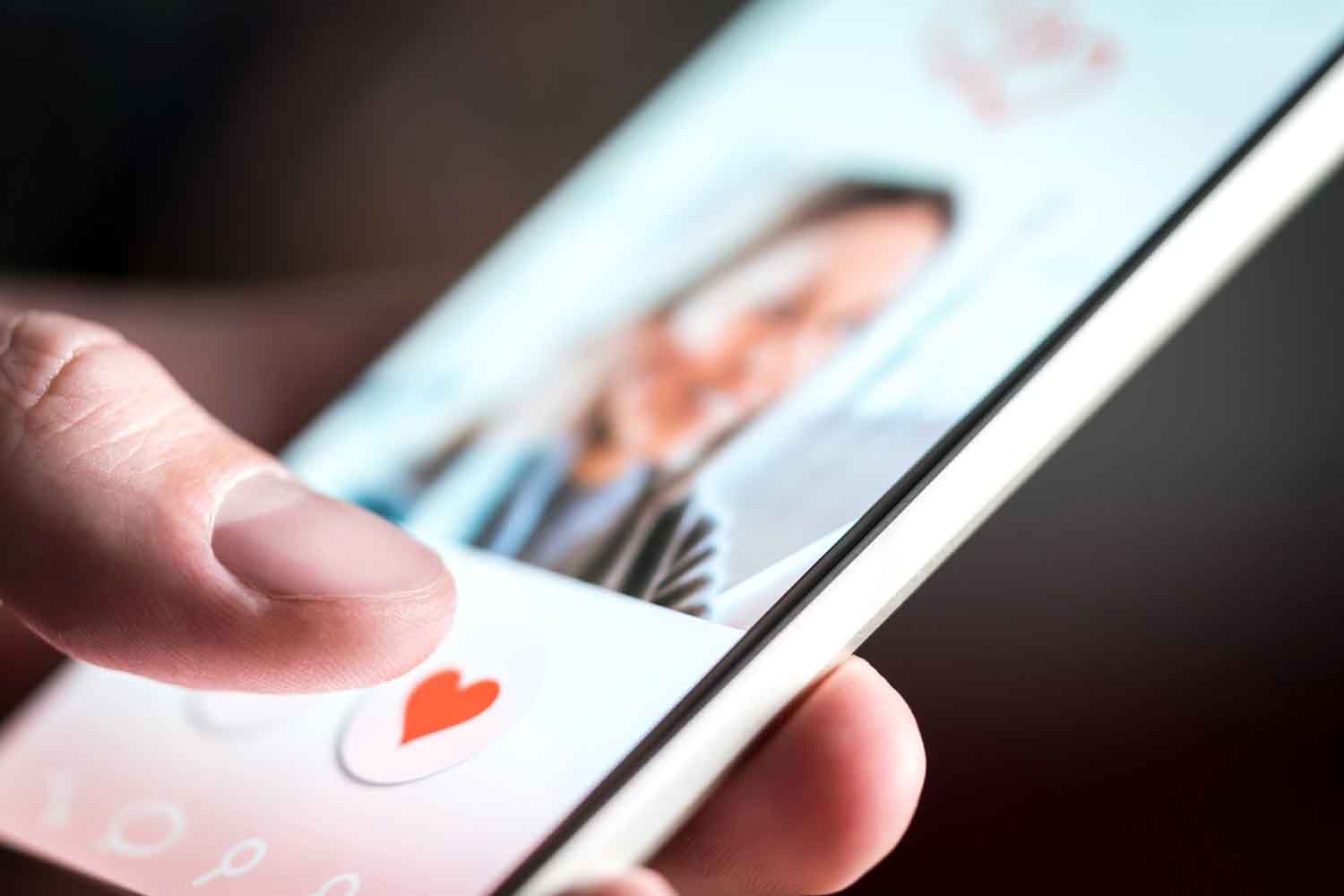
First there was the terror of the first message. That empty line under a profile photo, the suspended finger, the phrase crossed out three times, the doubt of seeming banal, too cold, too available, too desperate. Now, in that little moment of digital panic, an algorithm can enter. You ask him for a brilliant joke, a less limp bio, a more fluent answer. He arranges, polishes, makes everything more fluid. Sometimes even too much.
In the world of online datingAI is ending right there: at the point where we try to make ourselves desired. ChatGPT, Gemini and apps designed as digital “wingman” can write openings, correct answers, transform an ordinary profile into something more seductive. It seems like a harmless shortcut, almost a favor done to those who feel awkward. But then comes the uncomfortable detail: if the words that spark an initial attraction also come from a machine, exactly who are we flirting with?
A study published in Telematics and Informatics analyzed this slip calling it “Cyrano Effect”: as in Cyrano de Bergerac, someone lends words to someone else to help him conquer a person. Except that here the poet hidden behind the window is a linguistic model, and the balcony is a chat. The research is based on 45 interviews: 23 people who used AI to write profiles or messages and 22 who suspected or discovered a match’s use of AI.
Assisted flirting
To understand why this thing is catching on, just look at how dating apps work. Everything is fast, competitive, a little cruel. One photo, two lines, one swipe. In a few seconds you have to seem interesting, light-hearted, brilliant, available, but without appearing to be there waiting for sentimental salvation. Basically a job interview with more anxiety and less paid vacation.
In this scenario, AI becomes a convenient crutch. Those who often use it say it like this: . A person with social anxiety can ask for help so they don’t get stuck. Anyone who writes in a language he has little command of can be corrected. Those who feel awkward can find a less wooden phrase. From the outside it looks like cheating. From the inside, for many, it finally seems to be able to present itself without stumbling.
And it is here that the study identifies the first node: the paradox of authenticity. For some users, AI doesn’t erase their voice, it makes it more precise. Like a proofreader, a translator, a friend who tells you: “No, you sound like a sad accountant, rewrite it”. The problem arises when this mediation remains invisible. Because it’s one thing to get a helping hand, it’s another to let the algorithm build a brighter, safer, more present version of us than we really are.
Whoever receives feels cheated
On the other side of the screen, however, things change temperature. Anyone who discovers that a romantic message, an intimate response or a particularly thoughtful phrase has been sent by the AI may feel betrayed. The point is not just about the sentence itself. It’s about being exposed to something that seemed human but was actually at least partially packaged.
The research speaks of digital betrayal. A strong definition, but understandable. On dating apps, trust is already fragile: retouched profiles, photos chosen with military care, bios full of half-truths, conversations that disappear into thin air. Even if the words begin to lose their paternity, a strange sensation remains. Like telling someone something personal and discovering that, in the meantime, there was a third person in the room sitting at the table. Silent, efficient, invisible.
The annoyance also arises from an emotional disproportion. Maybe a person really responds, puts in attention, vulnerability, time. Then he discovers that on the other end someone was copying and pasting from a virtual assistant. The perfect message, at that point, stops seeming perfect. It becomes too smooth a package. And when something is too smooth in relationships, it usually starts to slip.
The coffee table test
As long as everything stays in chat, AI can work wonders. It can remove awkwardness, add rhythm, fix the irony, avoid those “haha yes” responses that have killed more conversations than ghosting. But then comes the real appointment. The phone goes down, the table is there, the waiter is there, and no chatbot can suggest to you in real time how to hold a person’s gaze.
The study calls this step person-to-person leap: the leap from the person built online to the person sitting in front. And that’s often where the castle cracks. If in chat you seemed brilliant, emotionally available, quick, profound, and in person you are very different, the distance can be seen. You don’t even need a big scene. All it takes is a pause that is too long, a flat response, a conversation that doesn’t keep up with the expectations created before.
This doesn’t mean that every use of AI is a romance scam. It would be too easy and not very useful. The real problem is measurement. Correcting a sentence is one thing. Delegating courtship is another. If the algorithm becomes the one who writes, consoles, flirts, seduces and keeps the conversation alive, the real person risks arriving at the appointment as the economic version of their profile.
Numbers and suspicions
The phenomenon is no longer an oddity for geeks. According to Singles in America research conducted by Match with the Kinsey Institute, 26% of US singles said they use AI to improve their love life. The data concerns the United States, so it must be read within that context, but it nevertheless signals a now very concrete trend.
After all, online dating has been one of the main places where people meet for years. A 2019 Stanford research showed that, in the United States, online meeting had become the most common way for heterosexual couples to get to know each other, surpassing the traditional roles of friends, family and social circles. AI therefore does not arrive in a marginal space. It arrives inside one of the most delicate laboratories of everyday life: the one in which we seek attention, desire, confirmation, possibilities.
And here the question becomes practical, even before philosophical. Is it necessary to declare when AI is used? Should apps report this? Banning it would make little sense, because it would be almost impossible to control it and would risk penalizing even those who use it for legitimate reasons, such as language barriers or communication difficulties. Leaving everything in the dark, however, can turn every conversation into a small private investigation.
A new sentimental education
Perhaps it will be necessary to learn a new form of digital literacy, even a sentimental one. Understand when a message sounds too generic, too polished, too focused to be truly spontaneous. Without becoming paranoid, because experiencing every kind phrase as a possible synthetic product would be hell. And dating apps are hard enough without adding a special investigations department.
Transparency could be one way. Saying “I let AI help me write better” doesn’t have the same weight as having a chatbot generate an entire romantic conversation. In the middle there are a thousand nuances, and that is where a large part of trust will be played out. Because the problem isn’t using a tool. The problem is making people believe that that tool doesn’t exist, especially when on the other side someone is experiencing real emotions.
AI won’t erase love, let alone. Human beings have managed to complicate their love life with much more rudimentary means: letters never sent, phone calls not made, displayed without response, exes exhumed like archaeological finds. Sooner or later the chat ends, the phone goes down, the bar table arrives. The algorithm may even have written a splendid sentence there. Then it’s the person sitting in front.
