
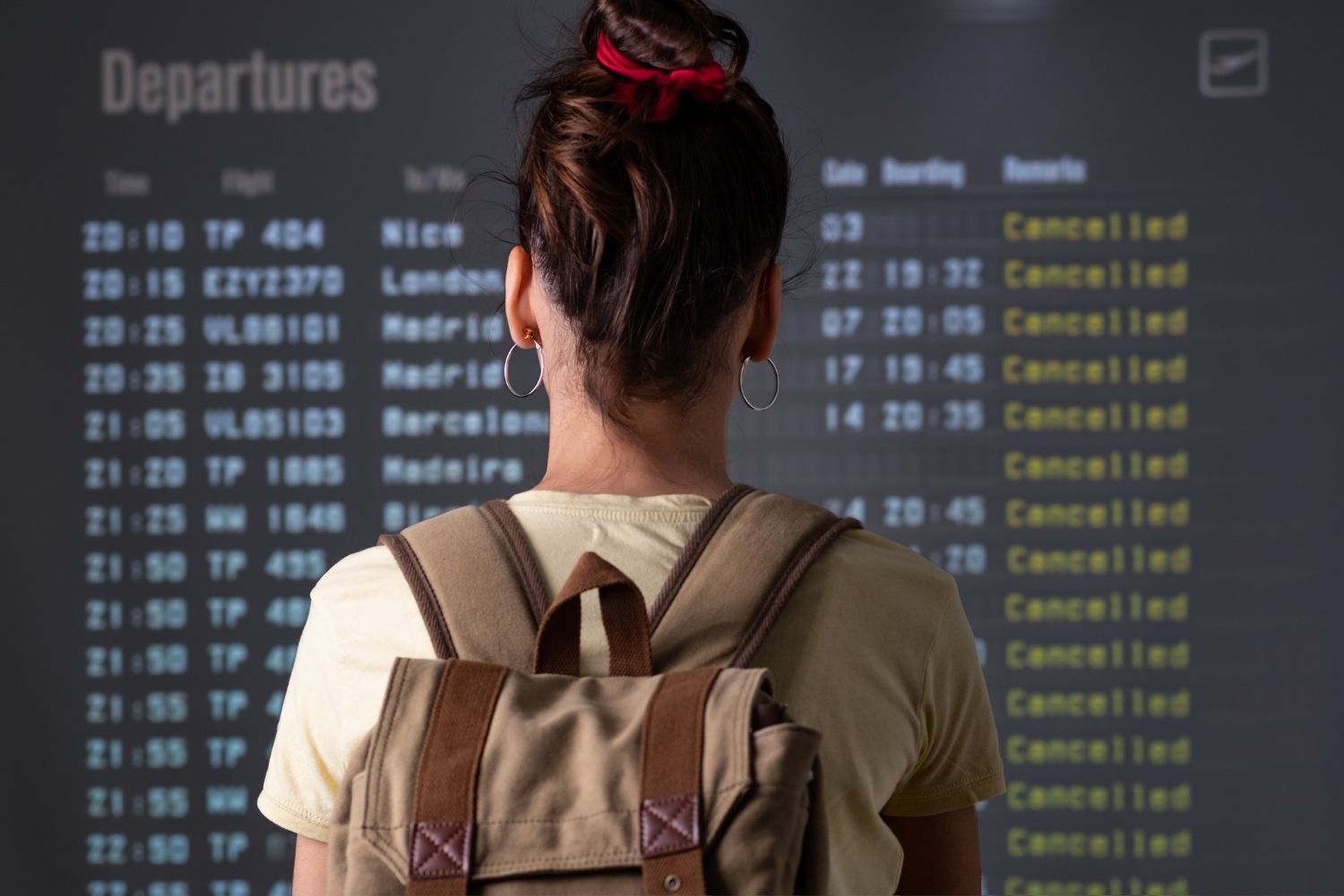
Around one hundred thousand passengers involved, four hundred departing flights cancelled, dozens of others diverted to Palermo while Comiso also limps along under the ashes. These are, in summary, the numbers of a complicated week for anyone who finds themselves having to fly to/from Catania Fontanarossa, paralyzed by the eruptions of Etna which have continued to pour volcanic ash onto the skies of eastern Sicily since 7 August. The airport management company, SAC, extended the stop to arriving and departing flights several times, while the INGV reported a volcanic tremor constantly at high levels, with the centroid of the sources located between the Voragine crater and the North-East crater. The chaos did not stop at the Sicilian borders, Comiso airport also suspended its activities and the Malta airport also announced cancellations and delays.
Because there is no compensation
If you are expecting the classic 250-600 euros expected for a flight canceled at the last moment, in this case you will be disappointed, because the eruption of a volcano falls within the so-called cause of force majeure, an event that no airline can in any way control or predict with sufficient margin. Regulation (EC) no. 261/2004, the community law that regulates the rights of air passengers, excludes precisely these circumstances from the right to financial compensation. That the event is unpredictable, moreover, remains to be demonstrated: Etna is certainly not a volcano that wakes up by surprise. However, this does not mean that passengers remain without protection, on the contrary.
What should the company do anyway
Even in the event of force majeure, the air carrier is obliged to guarantee assistance to passengers, through the provision of meals, drinks and, above all, the search for an alternative flight that allows them to reach the final destination. The new flight must be offered in the same class, or in a higher one, without additional costs, and within a reasonable time compared to the original travel date. If the re-routing flight leaves the next day or from another stopover, it is the company’s responsibility to organize and pay for accommodation and transfers. However, with an airport closed for days and tens of thousands of requests to manage, it happens that the promised assistance does not arrive in time. In that case the passenger can cover the necessary expenses himself and then request reimbursement, as long as he remains within the limits of reasonableness and keeps each receipt. The same principle applies for those who travel by their own means to another airport: taxis or public transport are paid out of pocket, but must then be reimbursed in full upon presentation of the receipts.
When is it best to ask for a ticket refund?
If the proposed alternative flight does not satisfy the traveler’s needs (incompatible times, stopover too far away, unwelcome additional stops), the option of a full refund of the ticket will always remain open. A principle that we have already discussed when talking about the European rules on refunds, remembering that passengers can choose between rebooking on the first available flight and refunding the price paid, and that any vouchers offered by the company are always optional, never an obligation. It is worth keeping all the documentation: boarding pass, original booking confirmation, receipts for expenses incurred independently. They are the same documents which, as we told you about the radar blackout that paralyzed the Northwest airports in June 2025, serve to build a solid complaint to be presented first to the airline and, if necessary, to legal proceedings.
