

They produce up to half of the world’s food and, in many regions of Africa, Asia and Latin America, this percentage rises to 80%. They are women, whose work for the land and on the land is more fundamental than ever. Yet, they continue to face unequal access to jobs, finance, training and resources.
This is what emerges from the data of the FAO, which declared 2026 as the International Year of the Women Farmer, precisely with the aim of bridging that strong gap between men and women in this sector, and aiming – why not – to increase the global GDP by a trillion dollars and reduce food insecurity for 45 million people.
Indeed, it is when women in agriculture have the necessary tools that food security improves, communities thrive and nature is restored.
Why is it essential to talk about it?
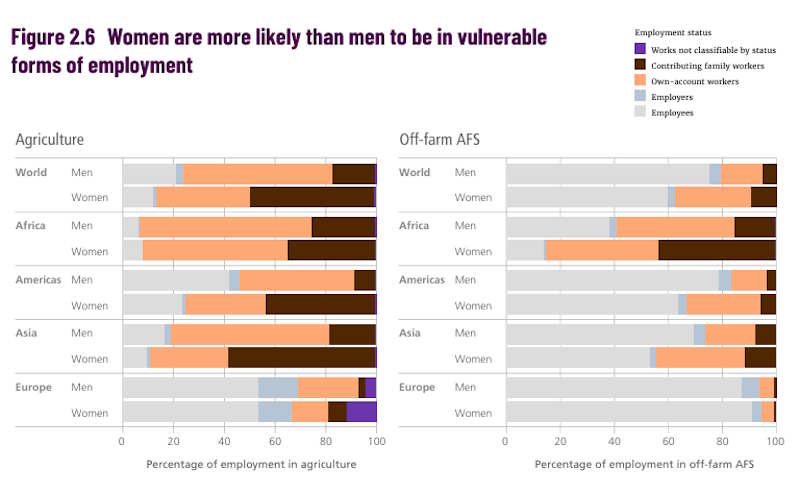
Women represent a fundamental part of the world’s agricultural workforce and are essential throughout the agri-food chain: from cultivation to processing, up to distribution and sale. Their contribution is decisive to guarantee food security and the nutritional well-being of families. According to the FAO report, in 2021 40% of female workers in the world were employed in agri-food systems, a share very close to the male one. Yet, their role continues to be little recognized and their working conditions often remain more unstable and disadvantaged.
Despite improved access to digital technologies and inclusive policies, women continue to face systematic limitations in terms of land ownership, wages and food security. Furthermore, climate shocks, conflicts and the COVID-19 pandemic have exacerbated existing vulnerabilities, increasing unpaid workload and the risk of violence.
How big is the climate crisis?
Climate change increases the female workload, making women real “shock absorbers” within families. According to sources, women tend to maintain the intensity of their work during weather shocks much more than men, who instead reduce the hours worked. Research conducted in Africa indicates that although heat waves and droughts reduce the overall hours spent on agriculture, this impact is 40% less for women than for men.
Furthermore, climate change exacerbates the workload through the following factors:
In short, the combination of discriminatory social norms and limited access to resources forces women to compensate for the effects of climate change with a massive increase in their unpaid work.
And in Europe and Italy?
The FAO report outlines for Europe, and partly for Italy, a picture in which women working in agri-food systems enjoy generally better conditions than those in developing areas, although significant inequalities persist.
In Europe and North America, women make up approximately 42% of the total workforce in agri-food systems. Europe is the only region where women are no less likely than men to work as paid employees in the non-agricultural segments of the agri-food system. However, even in this context, the share of women employed in primary agriculture has been slowly but steadily decreasing over the last twenty years.
The situation in Italy: care work and land rights
The report provides some specific data that allow us to understand the female condition in Italy:
Access to resources and the digital divide
At the European regional level, the gender gap in access to technologies and information is very small compared to other areas of the world:
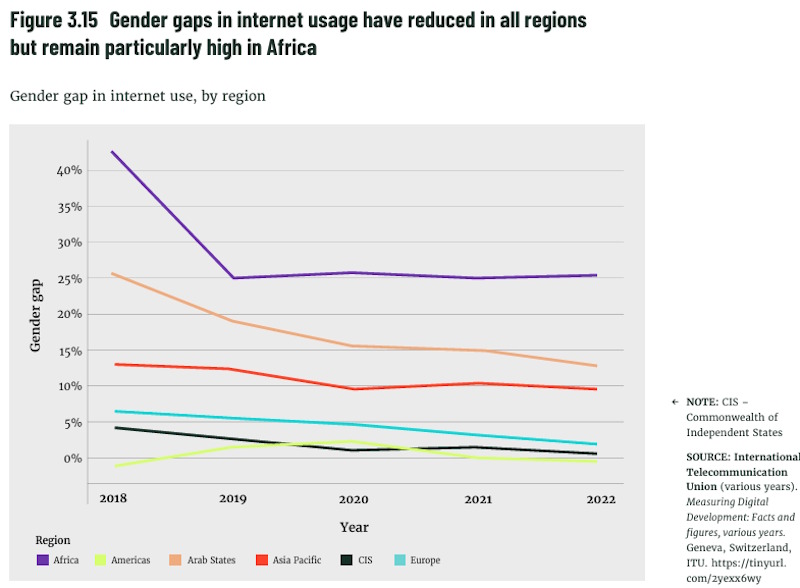
In summary, while the legislative framework and access to digital technologies appear advanced, women in Italy and much of Europe continue to manage a disproportionate burden of domestic responsibilities, which may limit their full opportunities for professional and entrepreneurial growth in the agricultural sector.
Globally? Reducing gender disparities in employment, education and income, according to FAO, could eliminate more than 50% of the persistently higher food insecurity gap among women, and empowerment through targeted development interventions would raise the income of an additional 58 million people, strengthening the resilience of 235 million people. Will this really be the turning point year?
