
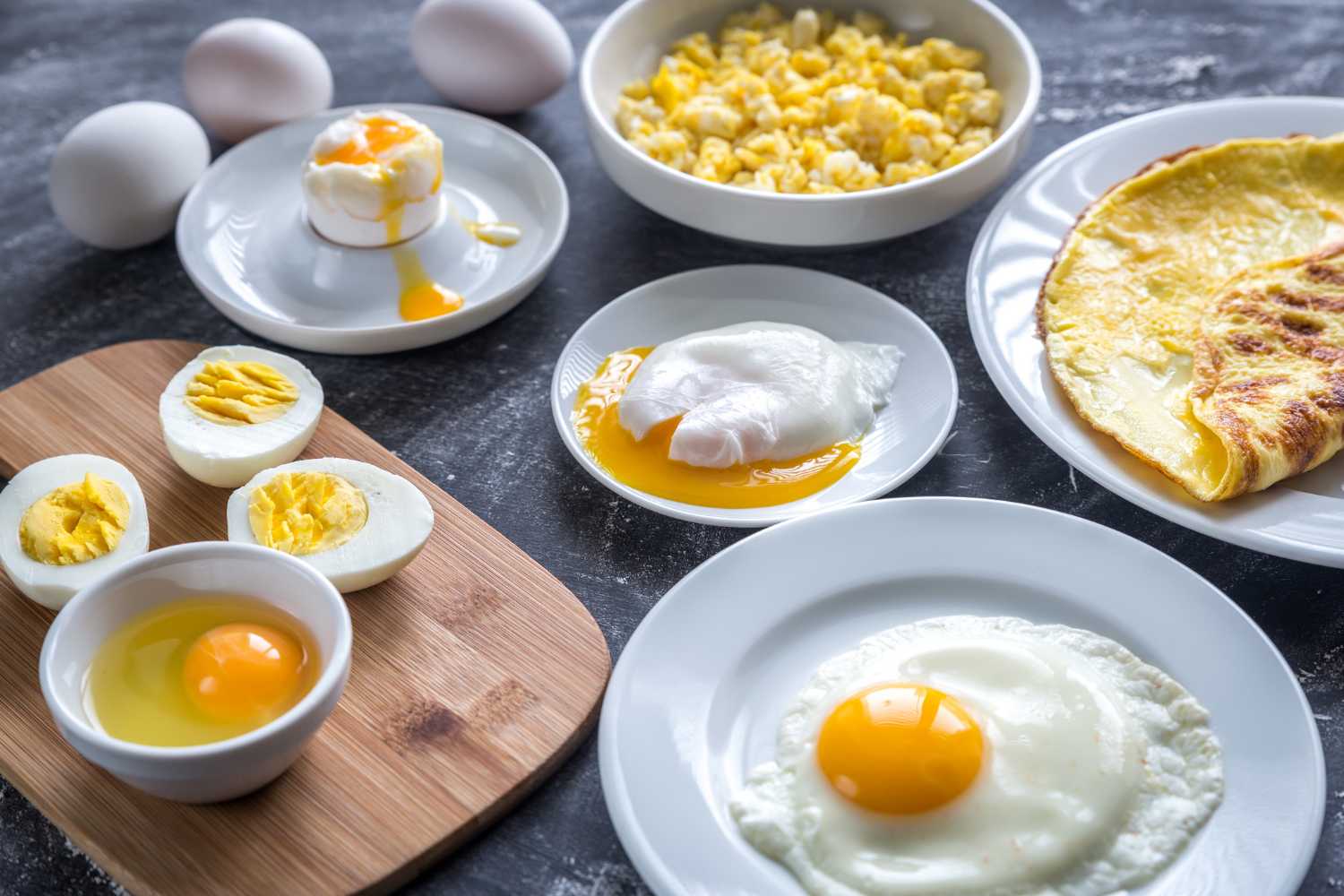
Let’s discover all the secrets to cooking eggs to perfection: cooking times, tricks to avoid breakages and practical advice for every size and consistency.
As simple as it is ingenious, the egg is a present-day food, the undisputed protagonist of the table, useful for breakfasts, lunches and snacks. Knowing how to cook it to perfection, however, is an art that requires a certain amount of attention, a good degree of precision and, above all, some scientific knowledge. Because yes, cooking an egg may seem easy, but all it takes is a minute too long (or too little) to compromise the result. Here you will find a complete guide to (almost) never make mistakes again.
A stopwatch for a friend: the science of the perfect egg
Let’s start with the basics: the key to optimal egg cooking is time. Every second counts, and relying on chance, or on your instincts, can turn a potential culinary masterpiece into a failure. Whether you prefer the egg white well set and the yolk still liquid, or a completely hard-boiled egg, the timer will be your best ally.
But be careful: cooking time is not the only factor at play. The size of the egg, the temperature at which it was stored, and even your altitude above sea level can affect the final result. Good news? By knowing some simple rules, you will be able to face every variable with serenity.
Size: S, M, L or XL?
Before we talk about minutes and seconds, you need to understand that not all eggs are the same. Size has a profound effect on cooking times, so the first thing to do is check the egg packaging. Here’s how they are classified:
Medium eggs are the ones we find most frequently, so all the times indicated in this guide refer to this size. For the others it will be sufficient, approximately, to add or subtract approximately 30 seconds.
Cooking times: soft, creamy or firm?
Do you want to range between different egg consistencies? Let’s see together the reference times to obtain the desired results:
A non-negligible detail concerns the temperature of the egg in the moments preceding cooking. If fresh out of the refrigerator, you’ll need to add about a minute to the cooking time, because a cold egg takes longer to reach the right internal temperature.
Another element to consider is altitude. The higher you go, the lower the boiling temperature of the water will be, which means that in the mountains you will have to extend the cooking times by a few seconds compared to those indicated.
How to avoid the “exploded egg drama”?
Anyone who has ever cooked an egg knows how annoying it can be to see it explode in the pan. The shell breaking and the egg white dispersing in the boiling water is a scene we would all like to avoid. But how to do it?
A much debated trick involves piercing the shell before cooking. In theory, this procedure would allow the air to escape gradually, preventing internal pressure from cracking the egg. However, we must highlight that several experiments, conducted on thousands of eggs, have shown that the hole does not make much difference: about 10% of eggs burst anyway.
A more effective method is to bring the egg to room temperature before immersing it in boiling water, in order to reduce thermal shock and, consequently, the risk of breakage. Adding a spoonful of vinegar to the water can help: if the shell breaks, the vinegar will quickly coagulate the egg white, limiting the damage.
Cool yes or no? It depends on the result
After cooking, cooling the egg under cold water is a very common practice. But is it really useful? The answer depends on the type of egg you want to get.
If you’ve cooked a soft egg, cooling is important to stop the cooking process and keep the yolk at the desired consistency. For hard-boiled eggs, however, this step is less critical, although it can make removing the shell easier.
Speaking of shell: is it true that breaking the egg immediately after cooking makes it easier to peel? There is no definitive answer, although many people consider it a valuable help.
Track your experiments
Although it might seem like an overzealous trick, keeping a small diary of our culinary experiences can make a difference in terms of results. Write down the cooking times, the size of the eggs and the results obtained: next time, you will know exactly how to replicate the ideal egg. And who knows, you might even discover your own “secret formula.”
Which eggs to choose?
There are 4 types of laying hen farms, identified by a code that indicates the breeding conditions:
Choosing eggs with code 0, coming from organic farms, is the best choice to guarantee maximum respect for animal welfare and obtain a high quality product. These chickens live with access to the outdoors, are fed exclusively organic food, and the use of antibiotics is limited. Organic eggs are rich in nutrients, such as Omega-3, and represent a more sustainable and ethical option, both for animals and the environment.
A small daily pleasure
Preparing an egg may seem like a banal gesture, but in reality it is a ritual that contains precision, care and a pinch of magic. Whether it’s for a quiet Sunday breakfast or a quick snack, being able to cook the perfect egg is always a source of great satisfaction. What if you’re wrong? No problem: there’s always next time to improve.
