
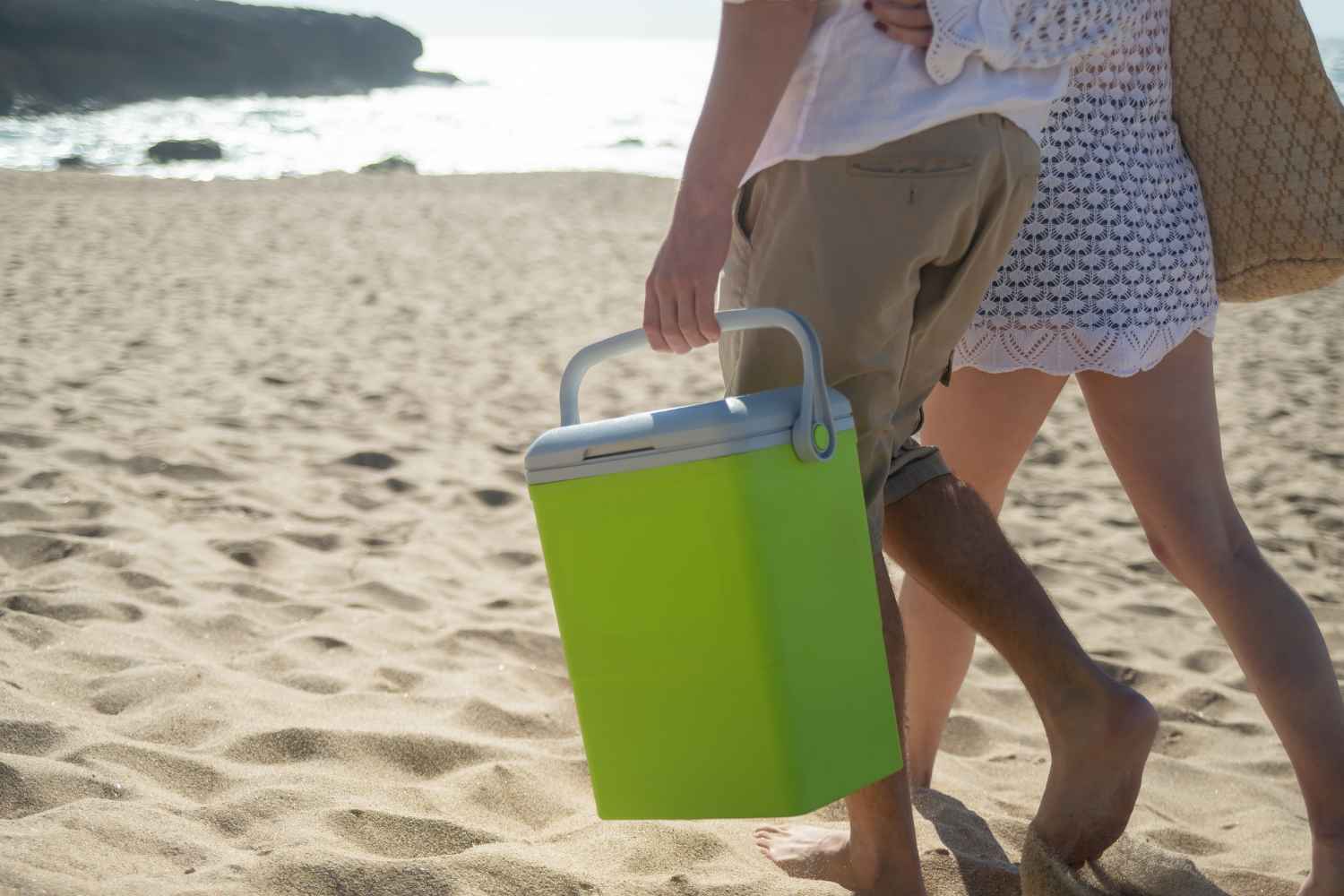
With the arrival of more intense summer temperatures, the cooler bag is now a fixed accessory for those who spend the day at the beach. Sandwiches, fruit, rice salads, drinks and snacks are prepared in the morning and placed in a cool place awaiting lunch. But there is a widespread mistake that can put food safety at risk: believing that the cooler maintains the same temperature as a refrigerator for the whole day.
In reality, these containers slow down the heating of food, but do not stop it completely. If they remain in the sun, are opened often or are filled poorly, the internal temperature rises quickly, creating the ideal environment for bacterial growth.
@Canva
The cooler bag is not a refrigerator
One of the most common misunderstandings concerns exactly how this tool works. Many people think that a few cooling tiles are enough to protect food for hours, regardless of external conditions.
In reality, the ability to retain the cold depends on several factors: the quality of the insulation, the temperature of the food when you leave, how many times you open the bag and, above all, the external heat. On the hottest days, with temperatures above 30 degrees, the accumulated cold dissipates much quicker than expected.
The most common mistake: opening it continuously
The behavior that most exposes food to risk is opening the cooler repeatedly during the day.
Each opening lets the accumulated cold air escape, replaced by warm air from the outside. If this is repeated several times to take a bottle, a snack or a piece of fruit, the internal temperature progressively rises.
Even a few minutes with the zip open can significantly reduce the effectiveness of the cooling tiles, particularly in the hottest hours.
The foods most at risk
Not all foods react to heat in the same way: some deteriorate much more quickly if they are not kept at appropriate temperatures.
Among the more delicate ones include mozzarella and fresh cheeses, cured meats, tuna, eggs, mayonnaise, yogurt, pasta or rice salads and pre-cut fruit. In these cases, heat favors the multiplication of bacteria, which can alter food and, in more serious cases, cause gastrointestinal disorders.
Particular attention should be given to sandwiches with fresh and perishable ingredients: if they remain at high temperatures for many hours, they can become risky even if they look and smell normal.
Where to place the cooler on the beach
Where you leave your bag during the day also makes a difference. Many place it directly on the sand, thinking that the umbrella is enough to protect it from the heat. In reality the sand can heat up very much and transmit heat to the bottom of the container.
To keep the cold for longer, it is best to place it in the most shaded area possible, preferably raised off the ground on a chair or support. Covering it with a light cloth also helps to limit overheating caused by the sun.
How to prepare it correctly before going out
Good conservation starts from home. Food should be placed in the bag only after having been cooled in the refrigerator: putting foods that are still warm immediately raises the internal temperature.
Water bottles can also be useful: freezing some the night before creates additional cold reserves that help keep the temperature lower during the day.
The cooling tiles must be distributed evenly, with the most delicate foods positioned as close as possible to the cold sources.
A problem that also concerns food waste
Storing food well is not just a question of health. Every summer large quantities of food end up in the garbage because they spoil during picnics, trips and days at the beach.
When fruit, sandwiches or ready meals don’t stay at the right temperature, they often become inedible and are thrown away. Using the cooler bag well therefore helps not only to avoid risks related to bacteria, but also to reduce waste and money spent needlessly.
Small measures that make the difference
The cooler bag remains a precious tool for those who want to avoid disposable items and organize sustainable lunches away from home. But to really work, it must be used in the right way.
Limit the openings, keep it in the shade, cool the food before leaving and consume the most delicate foods first: these are simple measures that make the difference between a safe and fresh lunch and food exposed for hours to temperatures ideal for bacterial growth.
