
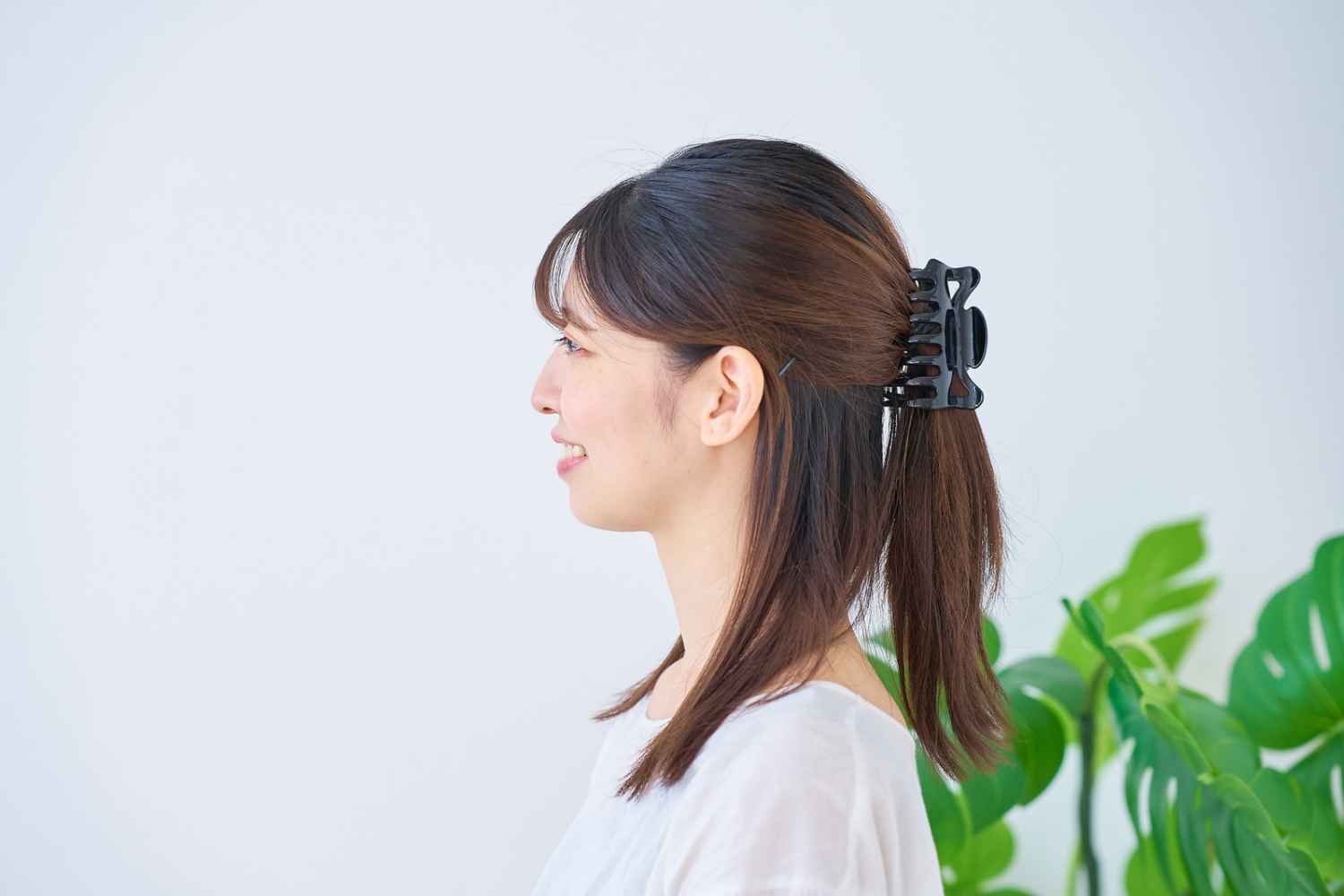
An emergency room doctor warns about the risks of hair clips worn while driving: in the event of an accident they can cause head injuries, especially if they are rigid or made of metal.
There are small gestures we do every day without thinking too much. We fasten our seat belt, adjust the mirror, start the engine and set off. But there is a detail that many people have probably never considered before getting behind the wheel: the accessory with which they keep their hair up.
The classic hair tongs, the large ones with teeth that we use to pick up a bun in a few seconds, are practical and very widespread. Yet, this seemingly harmless accessory could turn into a danger in the event of a road accident.
The alarm was raised by an emergency room doctor, known on social media as Dr Joe, who said he had personally witnessed incidents in which hair clips remained stuck in patients’ scalps, requiring surgery to remove them.
Because hair clips can be dangerous in the car
The problem mainly concerns the so-called claw clips, the clip-like pliers used to collect hair at the back of the head.
During a rear-end collision or a particularly violent impact, the head may be pushed sharply against the headrest of the seat. If there is a rigid clamp between the back of the head and the latter, the pressure exerted by the impact can cause wounds and injuries.
In a video shared on social media, the doctor recounted his experience in the emergency room:
«I have had to extract several of these pliers from the heads of women involved in car accidents. These small plastic objects can be really difficult to remove when they get stuck under the scalp.”
A testimony that surprised many users, accustomed to considering these accessories only as an aesthetic detail.
«I saw a patient with a skull fracture and a brain hemorrhage»
According to the doctor, particular attention should be paid to forceps made of metal, which are generally more rigid than those made of plastic.
Dr Joe recalled the case of a woman who came to hospital after a car accident. The patient was wearing metal clips in her hair and, following the collision, had suffered a skull fracture and a brain hemorrhage.
The story is certainly impressive, but it is important to make a clarification: it is a clinical experience reported by the doctor, not a scientific study that demonstrates how frequently these accessories cause injuries or what their exact role was in the accident described.
However, the risk remains plausible that a rigid object, especially if positioned behind the head, could aggravate the consequences of an impact.
The problem also affects the car’s headrest
Then there is another aspect that should not be underestimated: the position of the head in relation to the headrest, a safety device designed to limit excessive movements of the head and reduce the risk of cervical injuries, especially in rear-end collisions.
According to the Insurance Institute for Highway Safety (IIHS), the head restraint must be high enough and close to the back of the head to perform its function correctly. Excessive distance can reduce its protective effectiveness.
A particularly bulky clamp, placed right in the center of the nape of the neck, could prevent you from resting your head comfortably and create an obstacle between it and the safety device.
It doesn’t mean that every hair clip will necessarily cause damage in the event of an accident, but it is something to consider, especially when the accessory is hard, sharp or very bulky.
How to tie your hair up more safely when driving
The doctor’s advice is very simple: remove the rigid pliers before getting into the car, choosing softer and less bulky accessories.
For those who prefer to ride with their hair tied up, some practical alternatives are soft elastic bands, which do not have rigid or protruding parts, or fabric crunchies, useful for gathering hair without using clips. Alternatively, make soft braids, which allow you to keep your hair in order without bulky accessories.
It is also important to check that your hairstyle does not force you to keep your head too far forward from the seat and that the headrest is adjusted correctly.
Of course, these tips do not replace basic road safety precautions, such as always wearing a seat belt and maintaining an appropriate driving position.
The recommendation sparked surprise on social media. Some people admitted that they had never imagined that a simple clothespin could pose a risk; others said they already remove it habitually, because it is too uncomfortable when they rest their head on the seat.
A gesture lasting a few seconds, therefore, which could avoid an unnecessary risk. Because when it comes to car safety, even the smallest and most unsuspected objects deserve attention.
