
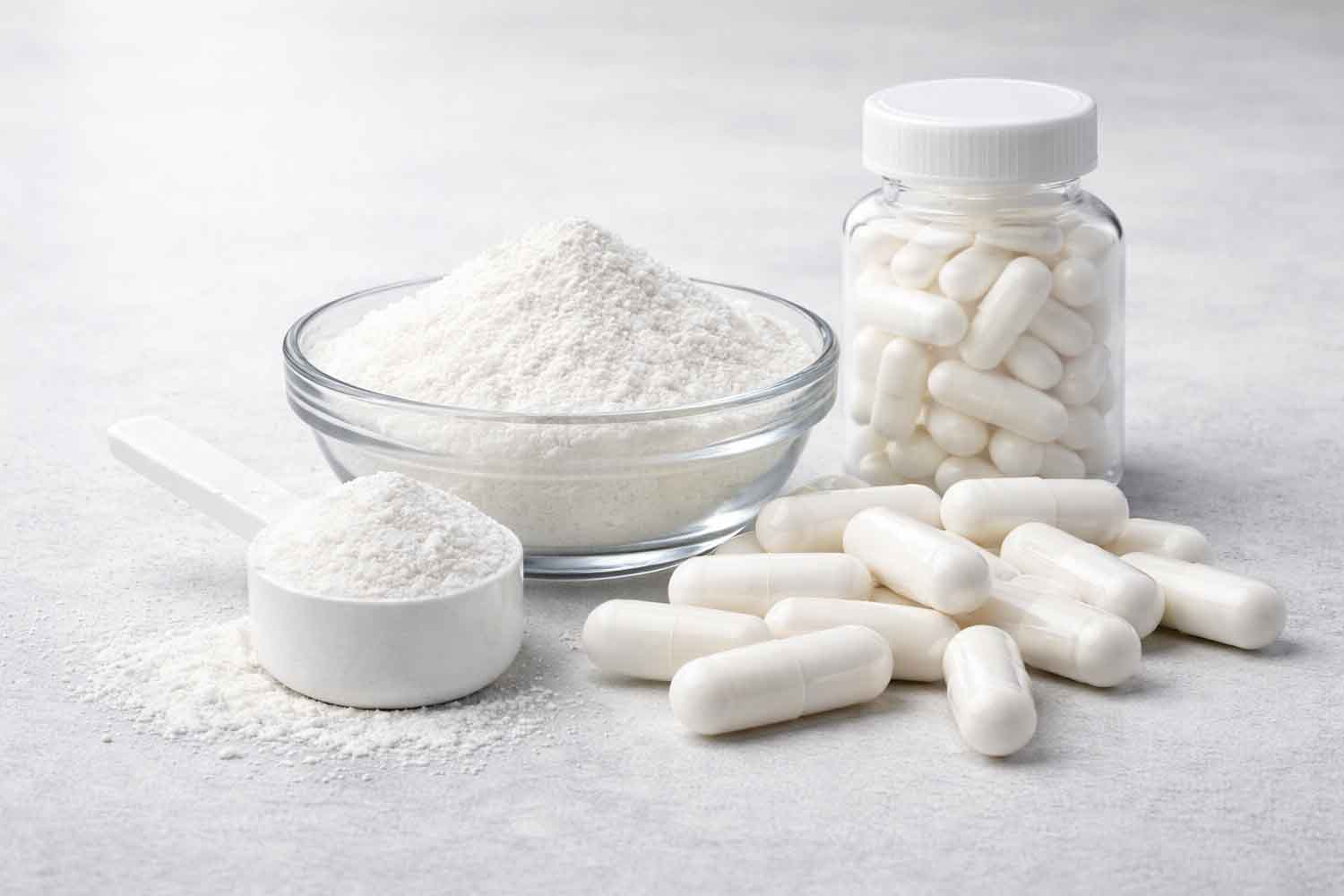
Creatine is one of the most used supplements in the world to improve strength, endurance and physical performance. Especially appreciated in the sports field, it is taken by both professional athletes and those who train at an amateur level. Despite its wide diffusion and a generally favorable safety profile, creatine can cause some side effects, in most cases mild but still worthy of attention. Among the most reported ones include weight gain, gastrointestinal disorders, muscle cramps and possible heat intolerance.
Weight gain
Weight gain is undoubtedly the most common side effect associated with taking creatine. This phenomenon is not linked to an increase in fat mass, but rather to the ability of creatine to draw water into muscle cells. From a physiological point of view, creatine is an osmotically active substance: when it enters the muscle fibers, it drags liquids with it, resulting in greater intracellular hydration.
This water retention may cause you to feel an increase in body weight, especially in the first one or two weeks of use. The effect is more marked in subjects who follow a loading phase, i.e. the intake of high doses to quickly saturate the muscle reserves of creatine. Typically, the load involves 20–25 grams per day for 5–7 days, while the subsequent maintenance phase is around 3–5 grams daily, a dosage much less associated with evident water retention.
It should also be considered that creatine can promote, over time, an increase in muscle mass, a goal sought by those who use this supplement. This aspect can also contribute to variations in weight on the scale.
Nausea and diarrhea
The side effects of creatine also include nausea and diarrhea, gastrointestinal disorders reported especially in the initial phases of supplementation. These symptoms are more likely to appear when high doses are taken in a short period of time, such as during loading.
Nausea can be linked to the simultaneous ingestion of a large amount of creatine and fluids, while diarrhea is often due to the fact that creatine draws water not only into the muscles, but also into the intestines, temporarily altering the fluid balance. Splitting the daily dose into several intakes or directly opting for a maintenance dosage can significantly reduce these discomforts.
Muscle cramps and stiffness
Some users report muscle cramps and stiffness, especially during physical activity. Many of the studies reporting these effects were conducted on athletes who, in addition to creatine, took other supplements or exceeded recommended doses.
Initially it was thought that the cramps were linked to possible dehydration, but more recent research does not confirm this hypothesis. On the contrary, some studies suggest that creatine may even reduce the incidence of cramps by improving cellular hydration. However, the scientific literature remains divided and further investigations are needed to definitively clarify the relationship between creatine and muscle health.
Heat intolerance and feeling of overheating during physical activity
Another possible reported side effect is the feeling of excessive heat, particularly during exercise or in high-temperature environments. This condition is sometimes described as heat intolerance.
Even in this case, the studies are not unanimous. Some research suggests a possible link to creatine supplementation, while other research indicates that overheating is more likely due to intense physical exertion rather than the supplement itself. The scientific community agrees that further investigations are needed to establish a clear causal link.
How to reduce the risk of creatine side effects
Although creatine side effects are generally mild and harmless, they can be uncomfortable. To limit its appearance, it is useful to maintain adequate hydration, as drinking enough helps the body manage fluids better and promotes the elimination of excess fluids. Regular stretching before and after training can also help reduce cramps and muscle stiffness.
Another useful measure is to moderate salt consumption, since a high sodium intake can accentuate water retention. If you have any concerns, particular medical conditions or persistent symptoms, it is always advisable to consult a healthcare professional before continuing supplementation.
You might also be interested in:
