
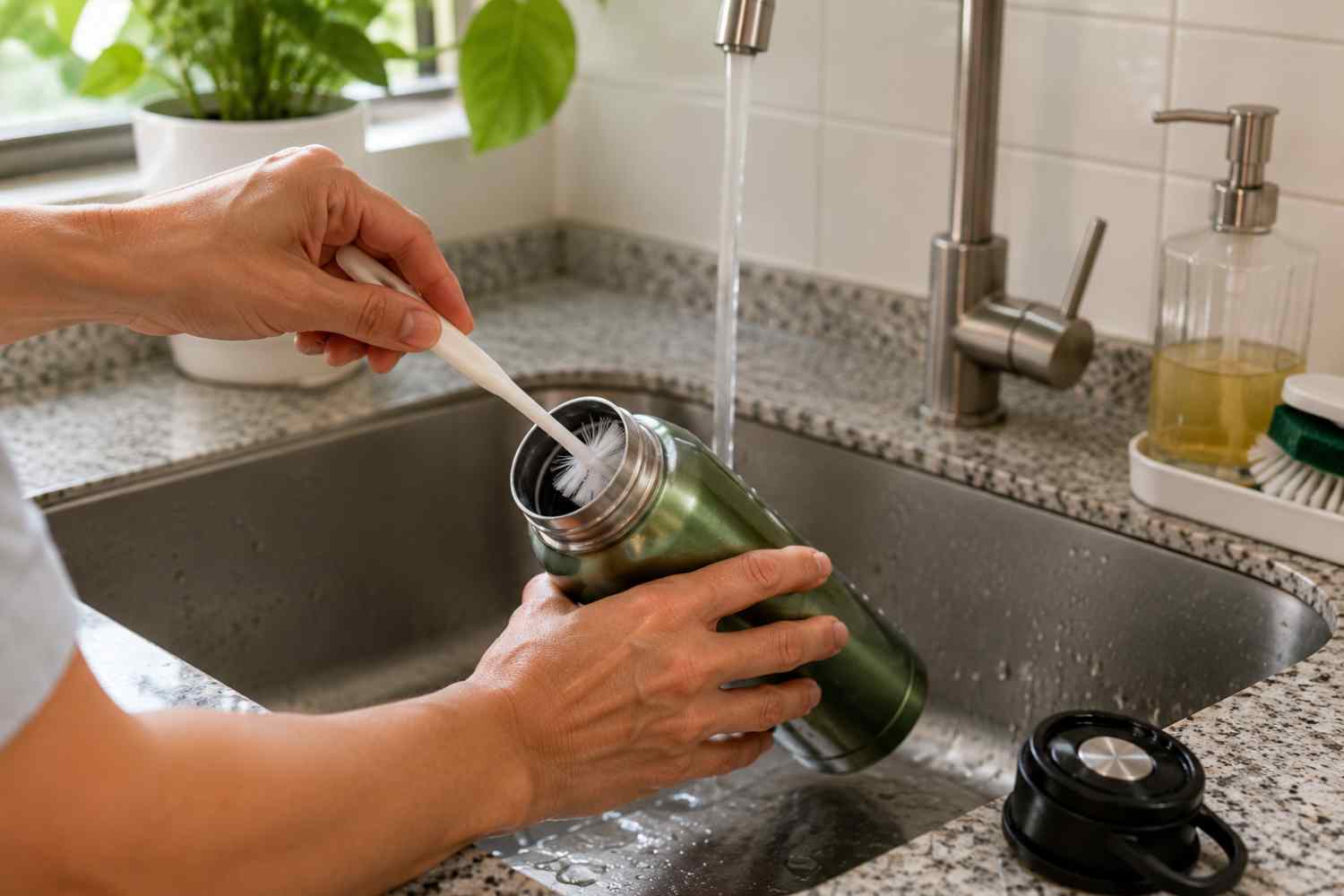
More and more people have replaced disposable plastic bottles with a reusable water bottle. A choice that allows you to reduce waste, limit the consumption of single-use plastic and save money in the long term. But there is a very common habit that can compromise the hygiene of this object: not washing it with the necessary frequency and accuracy.
Because a water bottle can become an environment favorable to microbes
Many use the same water bottle for days, simply refilling it when it is empty. However, according to a study published in 2024 in the scientific journal Cureusthe inside of water bottles used daily can encourage the growth of microorganisms, especially when the container regularly comes into contact with the mouth.
The constant humidity, the high temperatures typical of the summer months and the presence of organic residues create conditions favorable to bacterial proliferation and the formation of biofilms, thin microbial communities that can adhere to the internal surfaces of the container.
Each sip transfers bacteria into the container
Even those who use water exclusively are not completely safe from the problem. Every time you drink directly from the bottle, a part of the microorganisms naturally present in the mouth is transferred to the mouth and inside the container.
The study highlighted that direct contact with the mouth represents one of the main sources of microbial contamination in everyday water bottles.
Sugary drinks further increase the risk
The situation can worsen when iced teas, fruit juices, sports drinks, flavored water or other drinks containing sugars and organic substances are stored in the water bottle.
These residues can in fact provide further nourishment to microorganisms, promoting their growth if the container is not washed carefully after each use.
Cap and thread are the most critical areas
Contrary to what you might think, the most contaminated areas are not always the internal walls of the bottle. Various research has shown that the most critical points are often the cap, the thread, the seals and any spouts or straws.
These are areas where humidity and residues tend to accumulate more easily and which are often overlooked during superficial cleaning.
Daily washing and complete drying: the basic rules
Experts recommend washing your water bottle every day using warm water and a mild detergent. It is important to pay particular attention to the cap and seals, where most of the dirt is concentrated.
After washing, the container should be allowed to air dry completely before resealing. In fact, residual humidity can promote microbial growth even in the absence of visible residues.
Stainless steel can make maintenance easier
The material of the water bottle can also affect how easy it is to clean. Some research suggests that stainless steel models tend to retain fewer odors and are easier to maintain over time than some types of plastic.
However, this does not mean that they are immune from contamination: regardless of the material chosen, correct hygiene remains essential.
A sustainable choice that requires little attention
Using a reusable water bottle remains one of the most effective strategies to reduce the consumption of single-use plastic and limit waste production. To continue to benefit from the environmental advantages of this choice, however, it is essential not to neglect cleaning.
It only takes a few minutes a day to wash it properly and prevent the accumulation of bacteria, keeping the bottle safe, hygienic and ready to be reused.
