
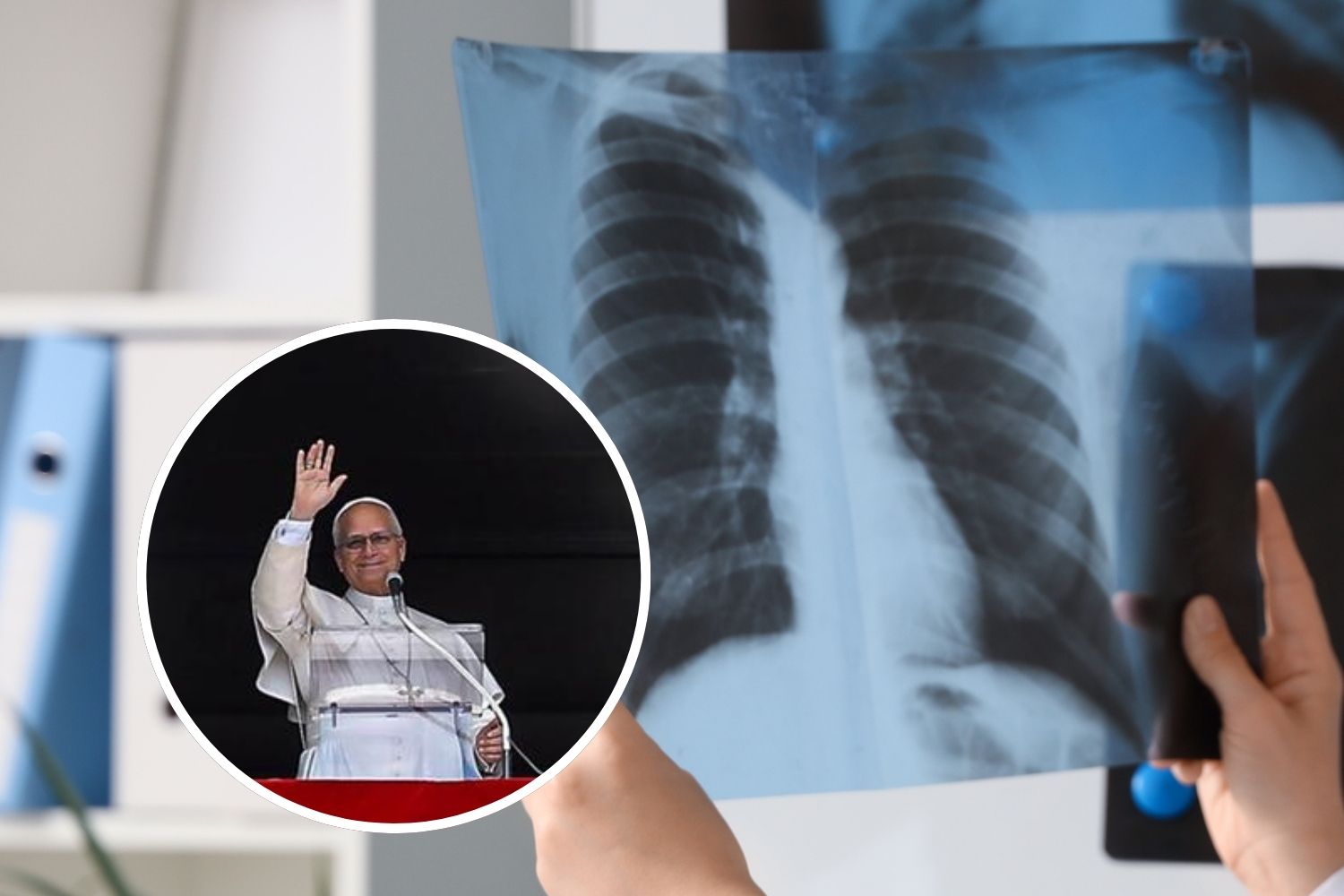
Pope Leo XIV will be hospitalized tomorrow, Tuesday 13 October 2026, at the Gemelli Polyclinic in Rome, where he will have to undergo surgery to remove a nodule in his lung. It was the Pontiff himself who publicly communicated the news to the faithful gathered in St. Peter’s Square on Sunday 11 October, at the end of the Angelus prayer. «Recently, during some checks, the doctors found a nodule limited to my lung. It was identified at a very early stage and well localized” explained Leo XIV. The Pope then clarified that he had decided to follow the instructions of the doctors, who deemed it appropriate to proceed with the surgical removal of the formation. Before taking leave of the faithful, the Pontiff thanked for the closeness he received, entrusting himself to the prayers of the Catholic community.
View this post on Instagram
The hospitalization and subsequent convalescence will lead to some changes to the commitments of the next few days. The expected length of hospital stay is approximately seven days, although the actual recovery time will depend on the progress of the operation and the doctors’ assessments. The intervention will take place at the Agostino Gemelli University Hospital in Rome, a structure that has already welcomed several Pontiffs. John Paul II, hospitalized several times in the Roman hospital, went so far as to define it as his “third Vatican”. Pope Francis was also assisted at Gemelli during his pontificate.
What is a lung nodule, how is it discovered and when should you worry
But what exactly is a lung nodule? It is a small formation, generally round in shape and with a diameter of less than 3 centimetres, which appears denser in radiological images than the surrounding lung tissue. Its identification is quite frequent and often happens randomly, during checks carried out for other reasons. The presence of a nodule in the lung, however, does not necessarily mean you have a tumor.
This was clarified to ANSA, after the announcement by Pope Leo The expert emphasizes that a lump can have very different origins. “The causes can be different: alongside the tumor lesions – explains Venuta – there are benign conditions, such as scars from old infections, small inflammatory granulomas or autoimmune alterations. Based on the circumstances in which the nodule is identified and its characteristics, as well as the patient’s characteristics (such as smoking habits) the doctor may request a computerized tomography (the so-called CT scan) of the chest to define its size, shape and structure”.
How do you arrive at the diagnosis? The first step is generally a CT scan of the chest, which allows the size, shape, margins and structure of the nodule to be assessed. When the nodule is very small, for example less than 6 millimetres, and has reassuring characteristics, a radiological check-up over time may be sufficient, according to the individual risk profile. However, if the formation is larger or has suspicious characteristics, further investigations may be necessary, such as PET or a biopsy, which allows a tissue sample to be analyzed.
In some cases, surgical removal is performed directly, especially when a biopsy is not feasible or does not allow a definitive diagnosis to be obtained. The histological examination will then clarify the nature of the lesion. If benign, it generally does not require further specific treatments; However, if lung cancer is diagnosed in the early stages, surgery may be sufficient, while in other situations pharmacological or radiotherapy may be necessary. It is important, therefore, not to draw hasty conclusions about the conditions of Pope Leo XIV. As Venuta points out, the presence of a pulmonary nodule requires careful medical evaluation, but does not in itself allow a diagnosis of cancer to be made. Without more detailed clinical information, it is not possible to know the nature of the training identified in the Pontiff nor to predict what the subsequent therapeutic path will be.
Sources: Pontifex/Ansa
