
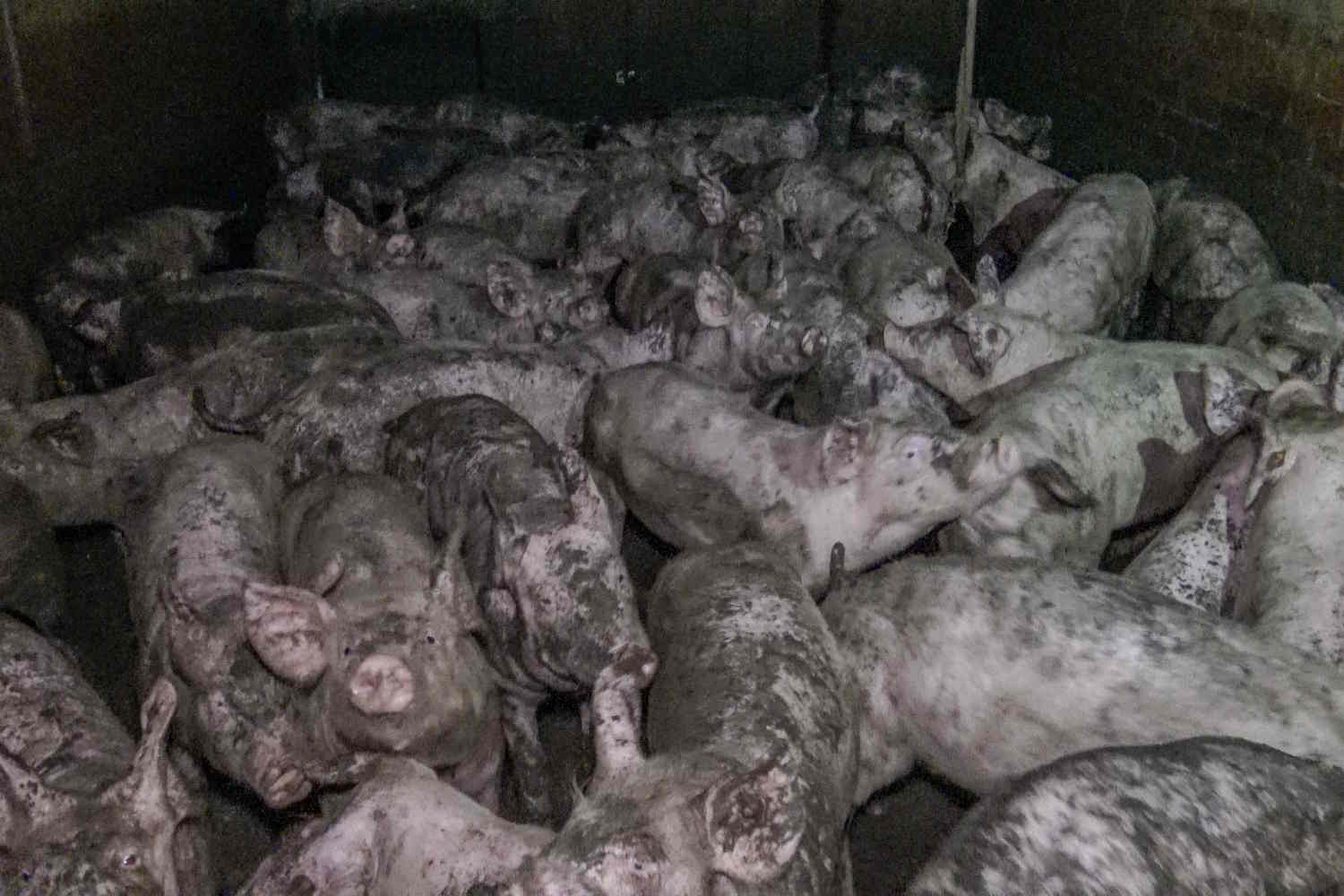
Piglets dying in farrowing crates, sick pigs left in the corridors without water or food, carcasses partially devoured by other animals and mice wandering around the feeders.
These are some of the images released byessereanimali, which has once again documented the conditions of three intensive pig farms in the provinces of Modena and Cremona.
Structures that house a total of around 25 thousand pigs destined for the production of DOP branded hams, among the best-known Made in Italy excellences, with hundreds of animals raised in cages amidst serious deficiencies in the management of their well-being and alleged violations of hygiene and health standards.
Dying piglets, cannibalism and mice in the feed
Among the most serious situations documented – and shown in a report broadcast on Mi Manda Rai Tre last Friday – there are piglets just a few days old, dying in farrowing cages without receiving the necessary care, and injured or sick pigs abandoned in the corridors without access to food and water. The images also show numerous animals with severely damaged tails and ears, in some cases completely amputated by the bites of other pigs. Furthermore, partially consumed carcasses were identified in the pens, while one animal had extensive lacerations to a limb.
@Being Animals
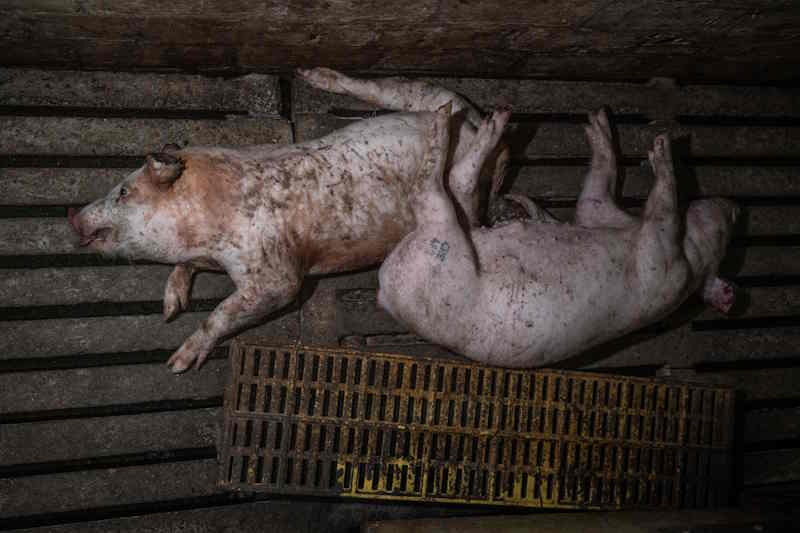
@Being Animals
The association has also documented thousands of pigs with their tails docked, a practice that European legislation prohibits from being carried out systematically, unless specific conditions are met.
As for (lacking) hygiene, an infestation of mice was documented in one of the structures, even present in the troughs, with excrement in the feed and a decomposing rodent carcass left in the same place for over a week. Other videos show pigs covered in excrement, pens without straw and an animal intent on ingesting its own feces.
As if that weren’t enough, there are also images of sows confined in cages during insemination, farrowing and breastfeeding.
The paradox of PDO hams and the proposal stalled in the Senate
The PDO brand protects the link between a product and its territory of origin, guaranteeing compliance with specific production regulations, but not everyone knows that it does not constitute a general certification of animal welfare.
For many people in our country the DOP brand is synonymous with a guarantee of quality and practices that respect animal welfare. Hams and cured meats with this brand are considered Made in Italy excellence, yet the images we spread today show a reality that clashes with the narrative we are used to: terrible irregularities, serious hygienic-sanitary violations and above all a cruel but still legal practice in our country, cage farming. Around 600 thousand sows in Italy spend the farrowing and breastfeeding period in a space measuring approximately 2 meters by 60 centimetres, with a height of 80 centimetres. A space so limited that it doesn’t even allow them to turn around. How is it possible to define all this as “excellence”?, declares Chiara Caprio, head of institutional relations atessereanimali.
Meanwhile, the release of the images comes while Parliament is awaiting discussion of a popular initiative bill to ban the use of cages on farms intended for food production.
Launched byessereanimali in March 2026, the collection of signatures ended on September 14th, well exceeding the threshold necessary for the presentation of the proposal. Over 62 thousand citizens have signed to ask for an end to cage farming. The text was delivered to the Senate and assigned to the ninth permanent commission, responsible for agriculture and industry, but – according to the association – the discussion has not yet begun, despite the November 7 deadline indicated for its start.
According to the Senate’s internal rules, the Commission should have started discussing the proposal within three weeks of its assignment, on November 7. This has not yet happened, but the Commission still has the possibility of continuing the process to introduce a ban on cages on farms and thus make a difference for over 40 million animals who every year live locked up in restricted spaces where they cannot express their needs, concludes Caprio.
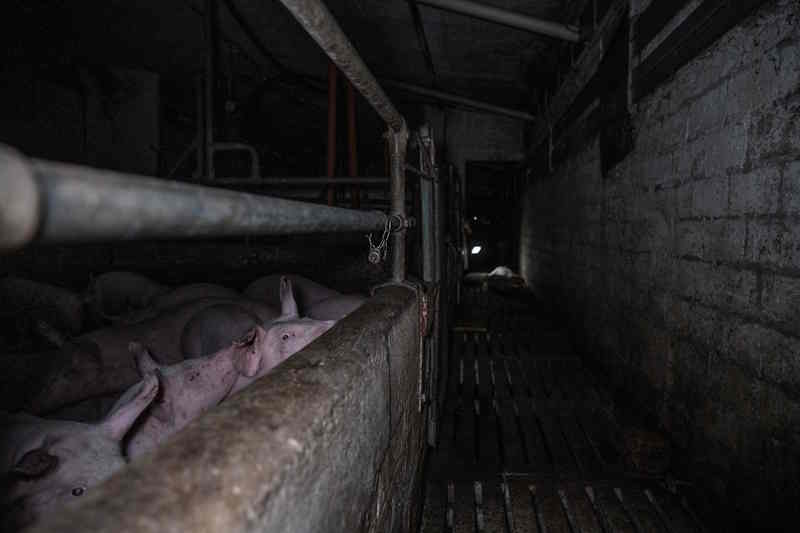
@Being Animals
While on the one hand the images released byessereanimali do not, on their own, allow us to establish criminal or administrative responsibilities, which require investigations by the competent authorities, on the other hand they bring attention to the distance between the quality attributed to food products and the living conditions of the animals from which they come.
Let’s remember this well: a ham can respect a production specification but, at the same time, come from a farming system that allows the confinement of sows in cages. And other atrocities.
