Iceland is a land that seems suspended between legend and reality: geysers that blow like ancestral breaths, glaciers that shine and volcanoes that recall the dynamism of our Planet. It is no coincidence that it is celebrated as one of the world’s last wild frontiers. Yet, behind this image, there is a controversy that scratches the idyll: the persistence of whaling. A theme that not only concerns marine fauna, but also the international reputation of a country which, for many, represents a natural sanctuary.
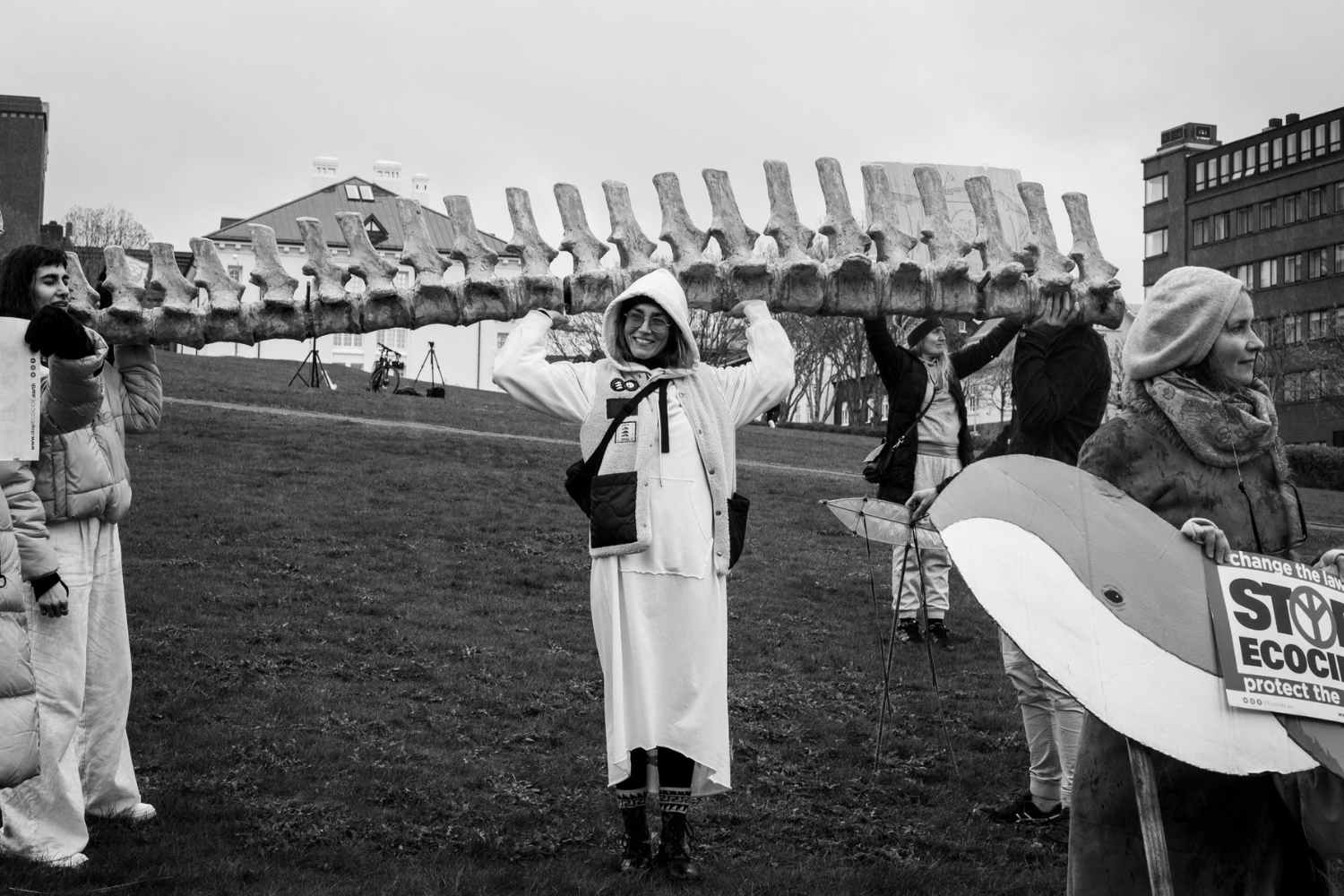
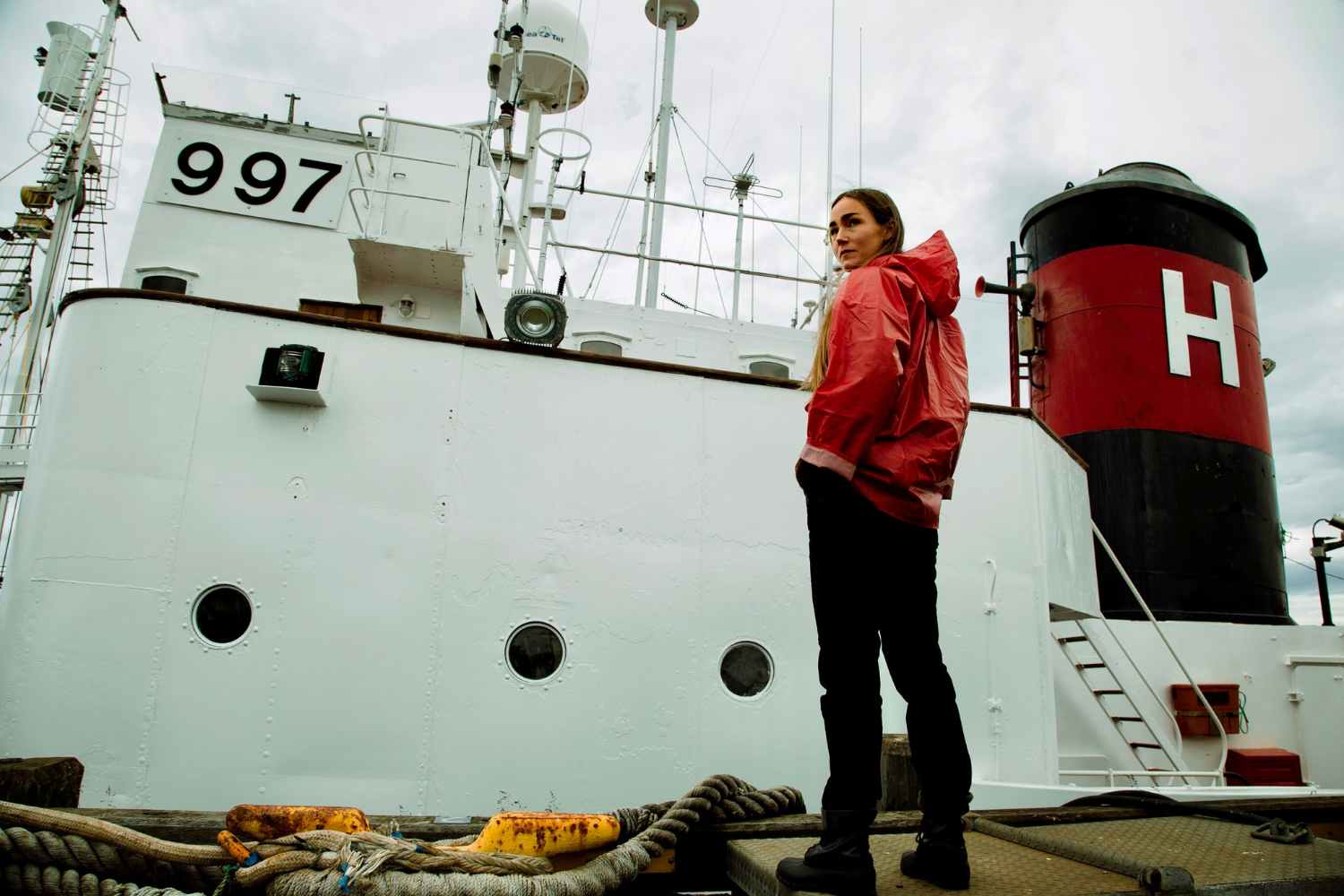
It is in this context that the voice of Hvalavinir (“Friends of the Whales”) is raised, a campaign created to defend the oceans and promote responsible tourism in Iceland. Leading it, with strength and sensitivity, is Johanna Maggý, influencer and activist.
Health coach, pilates teacher, but above all activist, Maggý has become the face of a movement that calls for responsibility and awareness. But his activism does not arise from a political urgency but, he tells me, from something deeper.
True connection with the environment does not come from the mind, but from the heart. It is a primary instinct that lives within me, the need to plant a seed for human beings to recover the relationship with the source of life.
Action speaks louder than words – explains Maggý – We live in a world where people are driven to obsessively look at their phones, ignoring what is really happening around them. My goal is not to impose, but to empower, to offer the opportunity to break the illusion of individualism. When you belong, you find love. And when you find love, you care.
The myth of whale meat
One of the central points of the campaign is to expose a deep-rooted misconception: the idea that eating whale meat is an Icelandic tradition.
It is not part of Icelandic culture – says Maggý – It is, rather, a myth built around the sea, seen as mystical and threatening. But Iceland was actually the first country in the world to ban whaling, more than 85 years ago, thanks to a national protest.
The data emerging from the Hvalavinir Campaign confirms this: over 81% of Icelanders have never eaten whale meat and less than 2% consume it regularly. Maggý herself, born and raised in the country, says she has never seen it served in her home. “It is considered by most Icelanders to be oily, unpleasant. It does not belong on our table.”
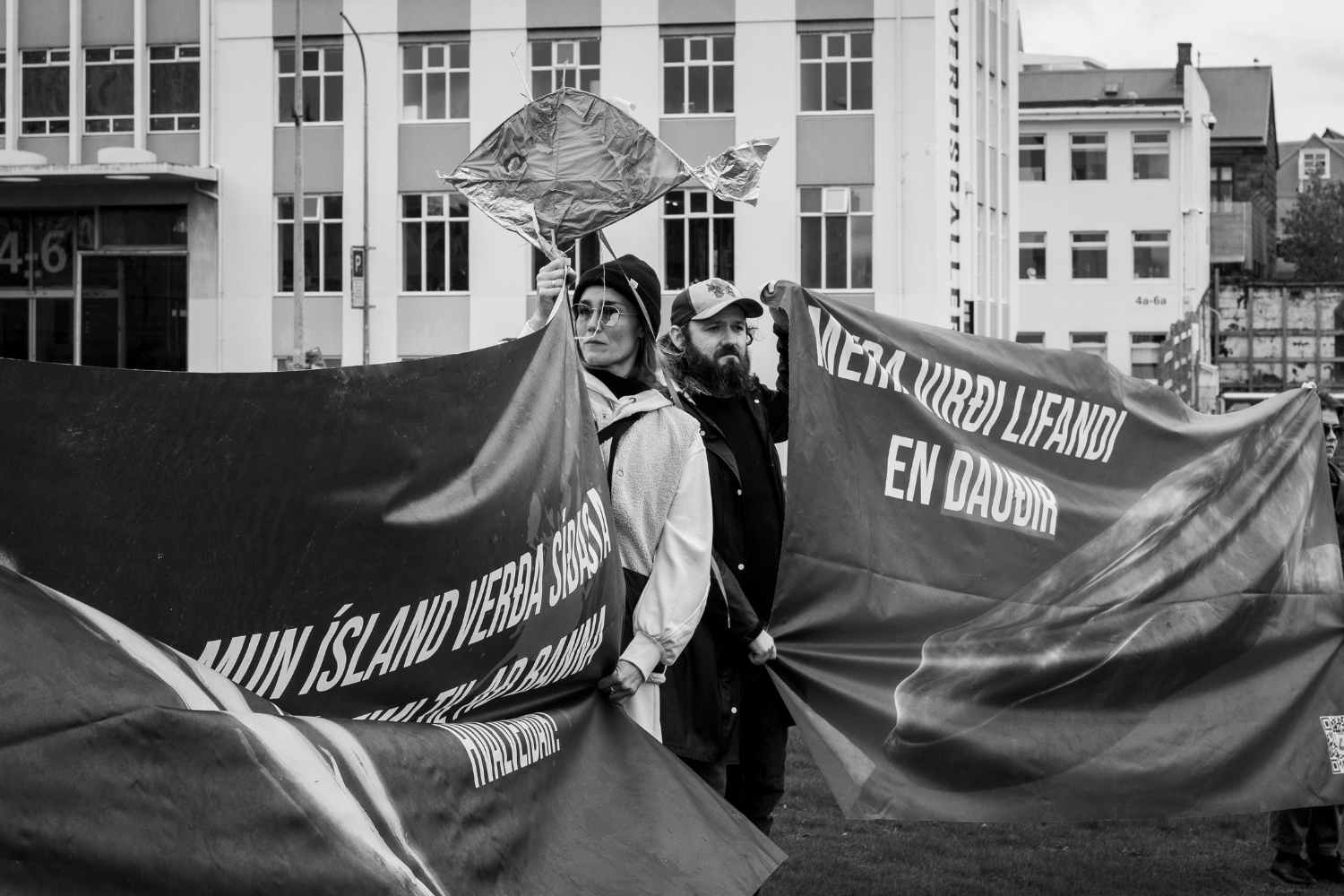
Today the hunt is carried out by a single entrepreneur, and the meat is aimed almost exclusively at tourists, says Maggý. The paradox is evident: a false ritual passed off as tradition, which survives only for profit. Much of the catch even ends up in Japan, in vending machines or transformed into dog food.
The responsibility of tourists
Tourism is therefore part of the problem, but it can also become part of the solution. The Hvalavinir campaign encourages visitors to support wildlife-friendly experiences and restaurants. “Our appeal is simple: don’t go to restaurants that serve whale meat. Every choice, every drop counts”, says Maggý.
The movement has already seen tangible successes: some businesses have eliminated meat from menus after public pressure and the release of a letter signed by Hvalavinir. More than 145 artists have joined, strengthening the campaign.
Maggy points out that it’s not just about food, it’s about ethics.
It’s a problem of greed and self-centeredness. Entrepreneurs cannot only think about immediate profit: every business choice has consequences. We are facing global crises that require unity and responsibility.
Whale watching: the ethical alternative
For travelers who want an authentic experience, there is only one answer: whale watching. “The companies work with scientists and environmental specialists. I have seen with my own eyes captains who treat the whales with care and respect. And the whales come closer, have fun, say hello. It is an encounter that remains in the heart”, confides Maggý.
The contrast is stark: on the one hand an industry founded on respect, on the other a practice driven by greed. “Whales are precious, especially alive – underlines Maggý – Their songs create harmony, they are a gift for humanity”.
The discussion on ethics does not stop at the sea. Maggý also reflects on the arrival of global brands in Iceland. “Starbucks in Iceland is nonsense. We have a beautiful culture of coffee shops, spaces where we work, read, converse. Their opening is just a question of greed.”
As for McDonald’s, closed since 2009, its absence has become a symbol. “His last meal was put in a museum. Icelanders are a healthy people, they love life outdoors. For me that food is chemical, it’s not food. It’s good that he didn’t come back,” explains Maggý.
A love letter to Iceland
Hvalavinir is much more than a campaign: it is a collective invitation to respect a land that belongs to the whole world. The campaign uses a respectful and encouraging tone to invite tourists to be part of the solution. “Every time I travel I hear that Iceland is not visited because of whaling. This profoundly damages the image of a country I love. We must protect the oceans and strengthen the laws that protect them”, underlines Maggý.
Maggý’s message to travelers is an invitation to kindness.
Explore Iceland with love. Don’t buy wildlife products, support ethical experiences. Whales are worth so much more alive — for nature, for tourism, for future generations. Your journey can and should be an act of conservation.