
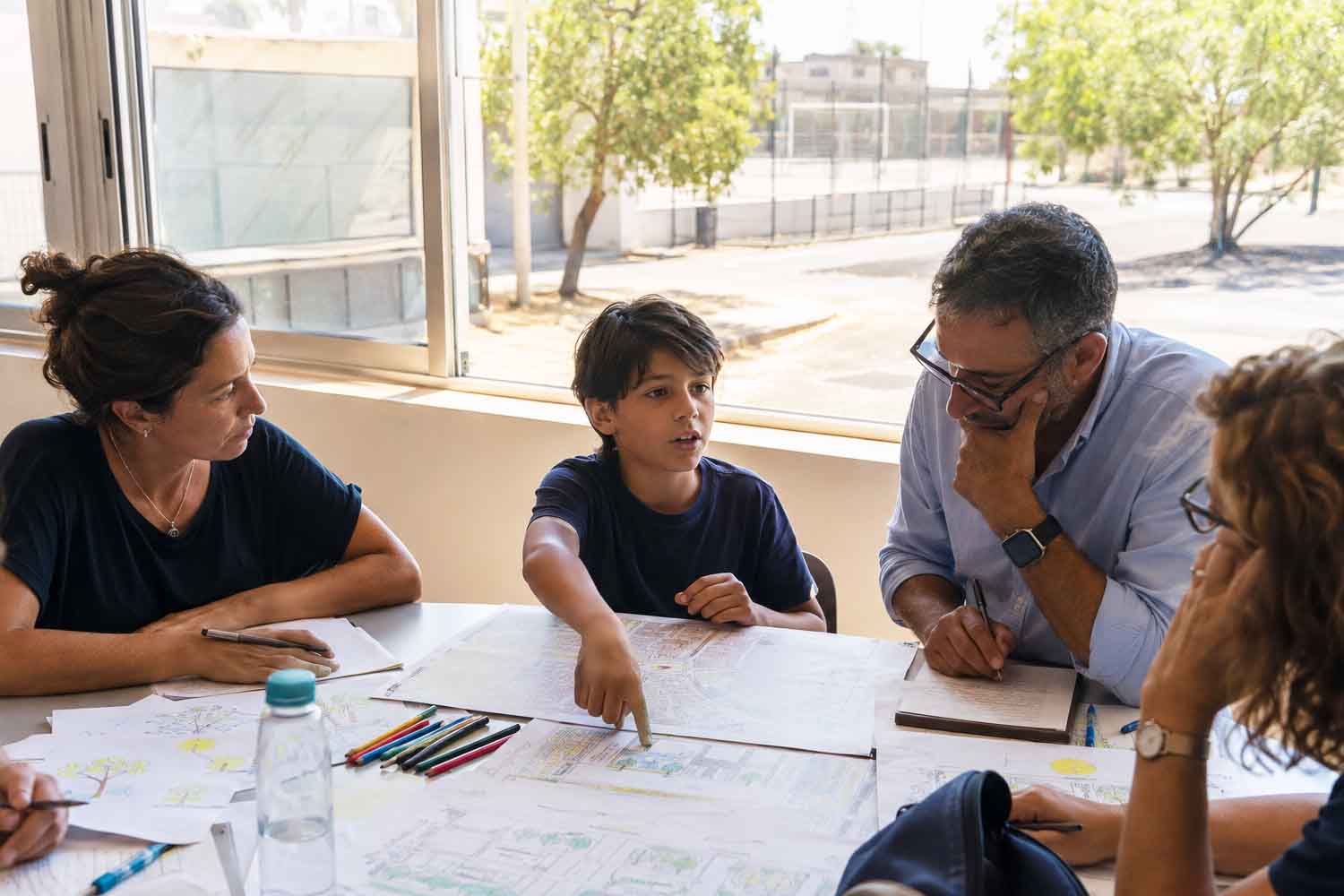
We have entrusted children with a significant amount of the future. They will live in the cities we are heating, in the homes we are building, with the consequences of the climate decisions we make today. Then comes the time to decide how to adapt to that world and their voices become surprisingly small. In Sri Lanka, says one of the experts interviewed in a study published on PLOS Climatechildren could participate in climate activities when the planning had already been completed. They had invited them to the table. Except that the menu had already been chosen.
The work tries to understand how to change this dynamic and truly bring children’s health, experience and voice into climate adaptation policies. The researchers interviewed 18 people involved in developing or implementing National Adaptation Plans in 11 countries and five continents. From their answers something rather simple emerges: considering children as recipients of policies is much easier than considering them as interlocutors.
Children are there, especially when they are “vulnerable”
The same group had already analyzed the national adaptation policies of 160 countries in 2024. In 28% of the documents none of the 19 areas of intervention specifically relevant to child health identified by the researchers appeared; 31% included only one. Just five countries faced at least seven. None included direct interventions dedicated to children’s mental health.
There’s also a problem with how we tell them. Putting a four-year-old child and a teenager together in the comfortable “vulnerable” box erases differences in age, autonomy, exposure and needs. The new study also speaks of institutional adultism: the adult perspective ends up being automatically considered more legitimate, while children and young people are represented by parents, experts or organizations that work with them.
A child probably won’t know how to design an urban drainage system. However, he knows which underpass he crosses every morning, which school courtyard becomes unlivable during a heat wave and which spaces in the neighborhood he stops frequenting when it is too hot outside. An urban planner has the technical skills; whoever uses that space has a piece of experience that deserves to be included in the project. The two things can easily be at the same table.
From ecoanxiety to the possibility of taking action
Psychology also comes in here. In the large international study published on The Lancet Planetary Health10,000 people between 16 and 25 years old from ten countries were questioned about their emotions related to the climate crisis and the response of governments. 59% said they were very or extremely worried, 84% were at least moderately worried. Climate distress was also associated with negative evaluations of the government response.
Of course, we are talking about associations and a sample made up of older adolescents and young adults. The study does not prove that having children participate in a municipal consultation reduces eco-anxiety, but the feeling of having little power in the face of a huge problem is part of the climate experience of many young people.
Pedagogy can do something more than explain the greenhouse effect, color the recycling bin and remind you to turn off the light. The OECD, in the framework Agency in the Anthropocene developed in support of the PISA 2025 scientific framework, it focuses on the ability of fifteen-year-olds to understand environmental problems and to act individually and collectively with knowledge, hope and effectiveness.
We have spent years explaining to children that they must turn off the light when they leave the room, turn off the tap while brushing their teeth and carry a water bottle. Meanwhile, big decisions about cities, transport, energy, schools and climate adaptation continue to be made almost exclusively by adults. The educational disproportion is discreet.
Involving them also means avoiding the opposite mistake: burdening them with the responsibility of fixing a problem that was largely built before they were born. Giving opportunities for action means offering knowledge, tools and an age-appropriate space to make an impact. It’s quite different from handing a child a water bottle and, at the same time, the keys to the planet.
Listening to them is also a right
In 2023, the United Nations Committee on the Rights of the Child dedicated the General Comment n. 26 precisely to children’s rights and the environment, with particular attention to the climate crisis. The document calls for environmental decisions with major consequences for children to offer opportunities for effective and meaningful participation and for their opinions to be given due weight.
This time the UN tried to apply the principle as it wrote it: the process collected 16,331 contributions from children from 121 countries, through surveys, focus groups and consultations.
Also the study of PLOS Climate recounts concrete attempts. Participatory climate games have been tested in Sweden; in Ethiopia some young people brought poems about their future to a scientific conference. Other countries have organized tables and consultations. The problem comes a step later: interviewees recount cases in which children and adolescents are invited when priorities have already been established, or listened to without it being clear how much their contribution has changed decisions. An extra chair does not automatically equal an extra voice.
The interesting passage lies between consultation and influence: explaining what was accepted, what was excluded and why; go back to the kids after the decision; use different tools according to age. The same study suggests involving them from the identification of priorities through to the implementation and evaluation of policies, with mechanisms that show how their observations have been used.
We talk all the time about the planet we will leave to children. We transform them into the moral measure of the future, into the final recipients of promises, plans and campaigns on sustainability. Then that future takes the very concrete form of a school to be cooled, a neighborhood to be redesigned or a flood plan, and we easily return to talking among adults.
Maybe we can stop just asking children what planet they would like to find when they grow up. Part of the answer is already in the world they are living in now. You also have to want to listen to it.
