
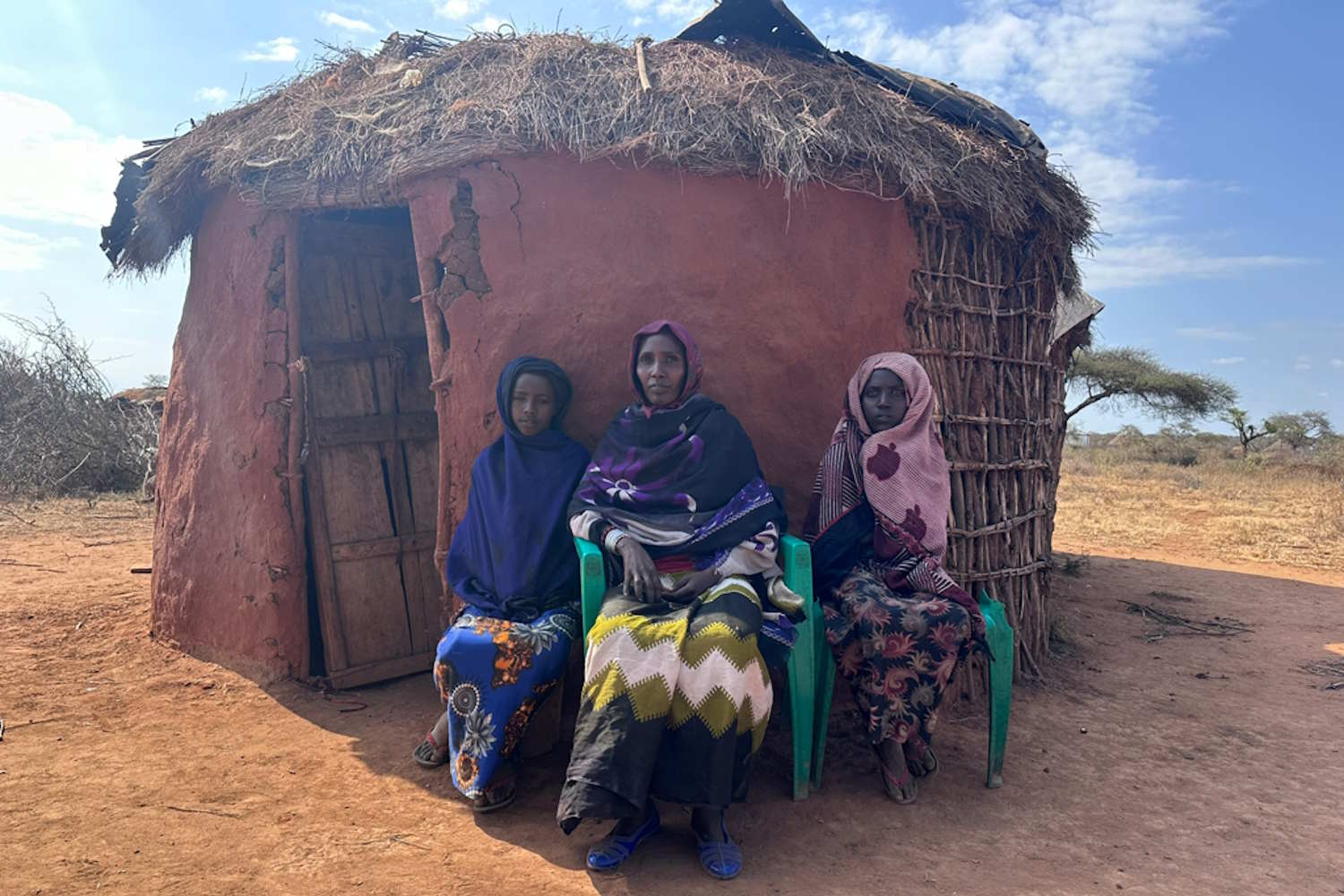
We already know where it might hit, when the worst consequences will arrive, and how many people risk losing crops, livestock and access to food. Yet, once again, we risk intervening when it is too late.
By the end of 2027, El Niño could push another 49 million people into acute hunger, bringing the number of those suffering from severe food insecurity from 225 million to 274 million in 45 countries already in crisis. An increase of 22%, according to estimates by the World Food Program (WFP).
CESVI raised the alarm on the occasion of COP31 in Antalya, the UN climate conference scheduled until 20 November. highlights that the problem is not only the scale of the climate phenomenon, but the chronic lack of resources: in 2025, to combat food insecurity in crisis contexts, just 10.55 billion dollars arrived out of the 29 needed. Just over a third.
El Niño is the first major climate crisis that can be identified months in advance: we know where it will strike, in what period and how many people risk losing crops, homes and access to food. Yet, the aid system continues to move when an emergency is declared, when the costs are higher, the damage greater and the consequences, especially for children, can be irreversible. On the occasion of COP31 we ask that aid starts when the alert arrives, not after the disaster has already occurred. This is what we mean by anticipatory action, declares Stefano Piziali, general director of CESVI.
What could happen
According to the World Meteorological Organization (WMO), surface temperatures in the tropical Pacific could reach 3.8°C above average between November 2026 and January 2027, an exceptional anomaly.
The general secretary of the WMO, Celeste Saulo, spoke of an event potentially unprecedented in intensity, even “outside the monitoring maps” used in the last forty years.
Furthermore, the consequences of El Niño will not be the same everywhere. In East Africa, the risk of intense rainfall and floods will increase, while southern Africa could face new drought conditions, after the devastating one in 2023-2024.
And there is also the risk linked to extreme temperatures: a preliminary projection from the University of Chicago’s Climate Impact Lab estimates around 857 thousand deaths associated with heat in the period between June 2026 and March 2027. An assessment that has not yet been subjected to scientific peer review and which, therefore, should be considered with caution.
Somalia, from drought to floods
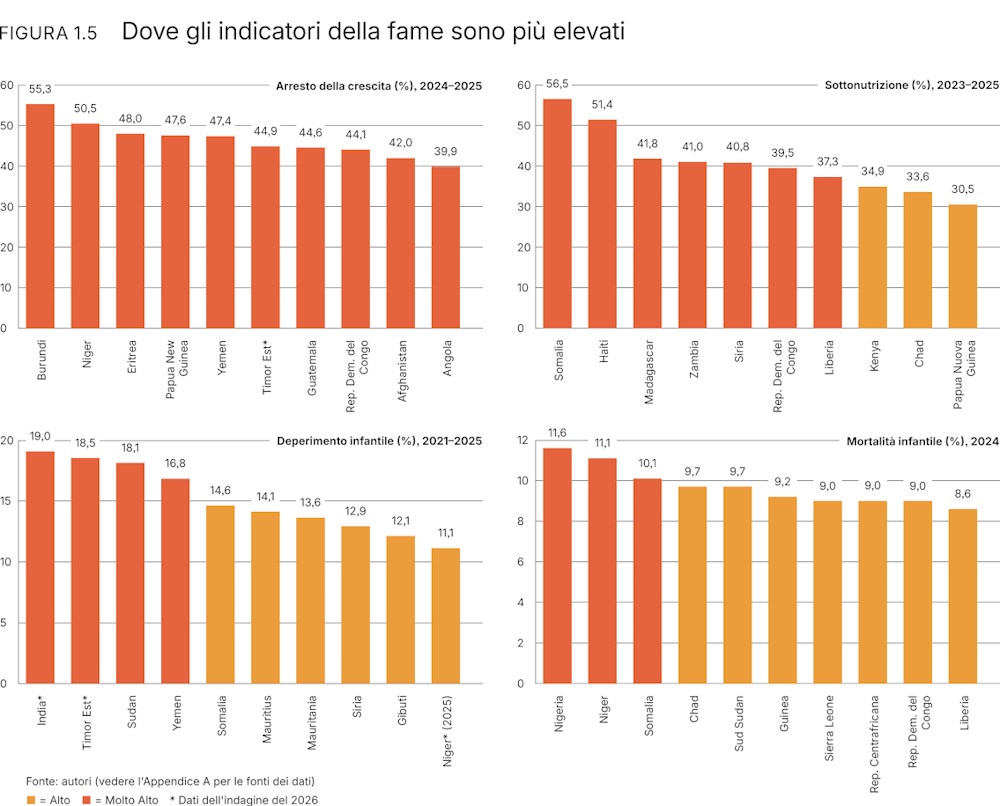
Among the most vulnerable countries is Somalia, which records the worst score in the 2026 Global Hunger Index, 47.0, with 56.5% of the population undernourished. Here the climate crisis risks taking a particularly cruel form. After months of drought, communities must prepare for possible flooding.
@CESVI
According to estimates by the International Organization for Migration and the Danish Refugee Council, 874,319 people could be forced to abandon their homes between October and December, in 92% of cases due to floods.
Yet, to prepare for and respond to the emergency, IOM received only 14.4% of the $16.62 million needed.
In the Hiraan and Mudug communities where we work, families have already lost livestock, water and income to the drought and are now at risk of losing their homes too. Intervening after the flood means treating already malnourished children in overcrowded settlements. Intervening early means planned evacuations, supplies of water and food already in place and money to families before the river overflows its banks, explains Diego Regosa, Regional Program Manager East Africa of CESVI.
Why does help always come later?
According to CESVI, the alternative exists and is called anticipatory action: using weather forecasts to distribute resources, protect crops and evacuate communities before the disaster occurs.
WFP has already activated interventions of this type in six countries, including South Sudan, Chad and Guatemala, allocating over 14 million dollars to around half a million people. CESVI is testing the same approach in Pakistan, through early warning systems and preventive economic aid, and in Ethiopia, where it has supported 1,145 families and contributed to the vaccination of over 223 thousand heads of livestock.
@CESVI
And so, while climate adaptation and financing are discussed at COP31, CESVI asks governments for three concrete commitments: financing interventions before emergencies, guaranteeing multi-year resources for food security and investing in data collection systems.
Because for 14 countries, including Sudan, South Sudan and Yemen, the 2026 Global Hunger Index could not even calculate a full score due to lack of information.
No new promises are needed. It is now essential that funds arrive before emergencies. Helping a family before it loses its harvest means preventing its members from joining the 49 million individuals at risk of hunger: more lives are protected and damage is reduced. In Antalya, governments can demonstrate that food security comes before the next crisis, not after, concludes Piziali.
Because, if a catastrophe can be predicted months in advance, waiting for it to become an emergency is no longer just a question of unpreparedness. It’s a choice about which lives to protect and when to do so.
