
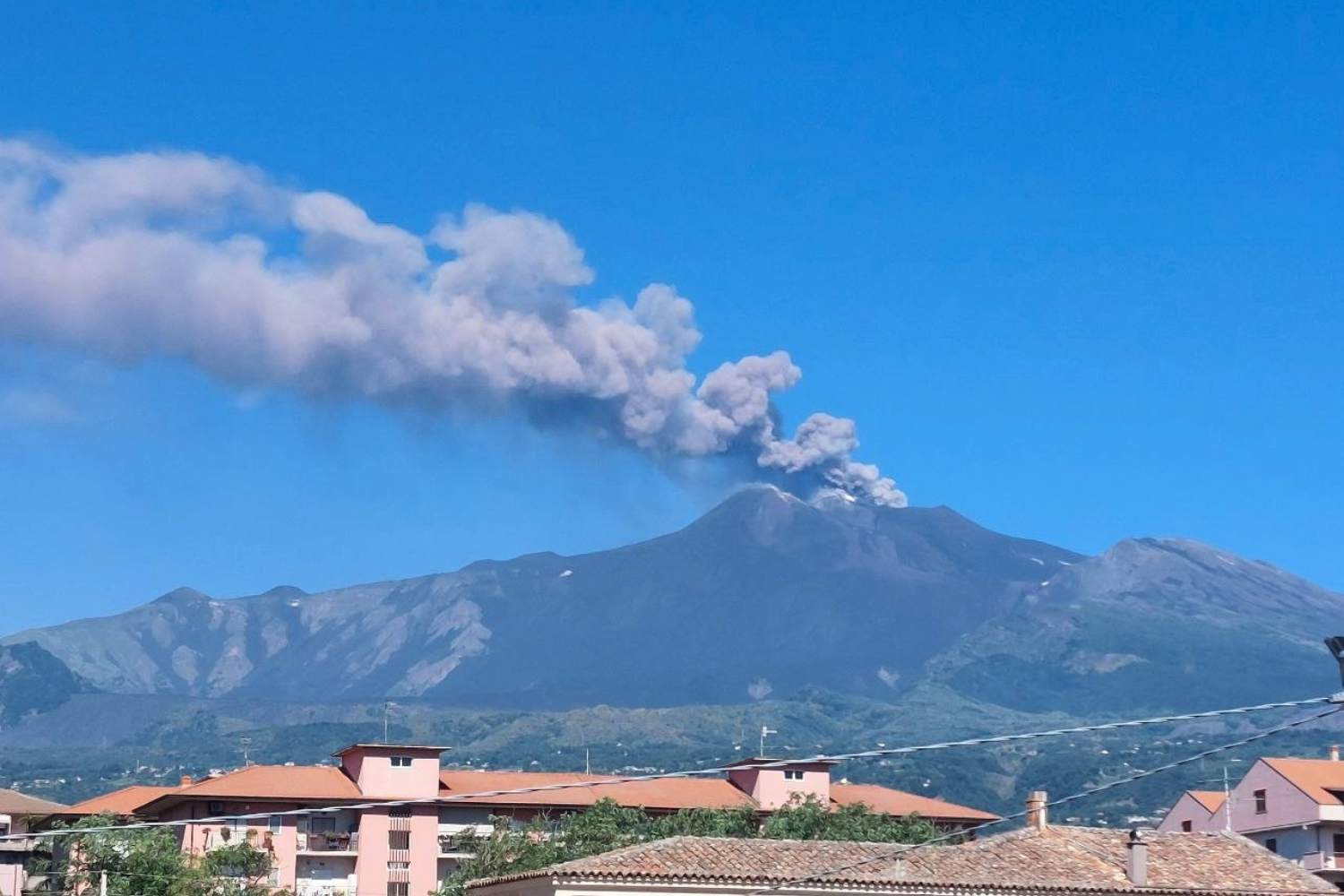
Etna is back in the news. In the early hours of this morning, the highest active volcano in Europe intensified its eruptive activity from the Voragine crater, giving rise to a significant emission of ash which rose into the sky above the summit and which had immediate repercussions on air traffic. For safety reasons, in fact, Catania airport has suspended all incoming flights, while technicians continue to monitor the evolution of the phenomenon.
@greenMe
According to what was communicated by the National Institute of Geophysics and Volcanology (INGV) – Etna Observatory, the first ash emissions were observed around 7.45am from the vent located on the high eastern flank of the Voragine crater. The activity progressively increased during the morning and around 8.45 am the eruptive cloud reached approximately 1.5 kilometers in height above the top of Etna. The winds then pushed it towards the southern and south-south-eastern sectors of the volcano. This is the latest episode of a phase of activity that had already shown signs of growing intensity in recent days.
Stop at arrivals at Catania airport
The emission of volcanic ash had immediate consequences on air links. Sac, the company that manages the Vincenzo Bellini international airport in Catania, has in fact announced the suspension of incoming flight operations.
“Following the volcanic activities of this morning, Sunday 5 July, the closure of sector B2 and the reduction of arrivals to 5 flights per hour until 9pm local time.” we read in the note.
The company encourages all passengers to check the status of their flight directly with the airline before traveling to the airport. Some flights were diverted to other Sicilian airports, such as Palermo.
An activity that lasts for days
As anticipated, today’s episode was not sudden. In recent days the volcano had continued to demonstrate lively Strombolian activity, characterized by intermittent explosions and the emission of volcanic material. In the meantime, the lava flow originating from an eruptive vent located at around 3,030 meters above sea level, active since 26 June, gradually dried up until it stopped on 4 July. Furthermore, between the night of 2 and 3 July a second small lava flow had formed which had traveled just over a hundred meters before stopping a few hours later. These phenomena already indicated a phase of instability of the volcanic system, culminating in the intensification observed today. INGV reports that the level of internal activity on Etna remains high. In the last few hours, important signs of agitation of the volcano have been recorded, with constantly growing values and marked fluctuations in activity.
The point from which these signals come continues to be located in the area of the Voragine crater, one of the most active sectors of Etna in recent months. For the moment, no critical issues have been reported for the inhabited centers, but the volcano is constantly monitored by experts who will follow the evolution of the phenomenon in the next few hours.
In addition to the inconvenience for air traffic, the emission of ash could affect the municipalities of Etna, filling roads, crops, roofs and creating temporary inconveniences, especially to traffic.
Sources: INGV/Fontanarossa Airport
