
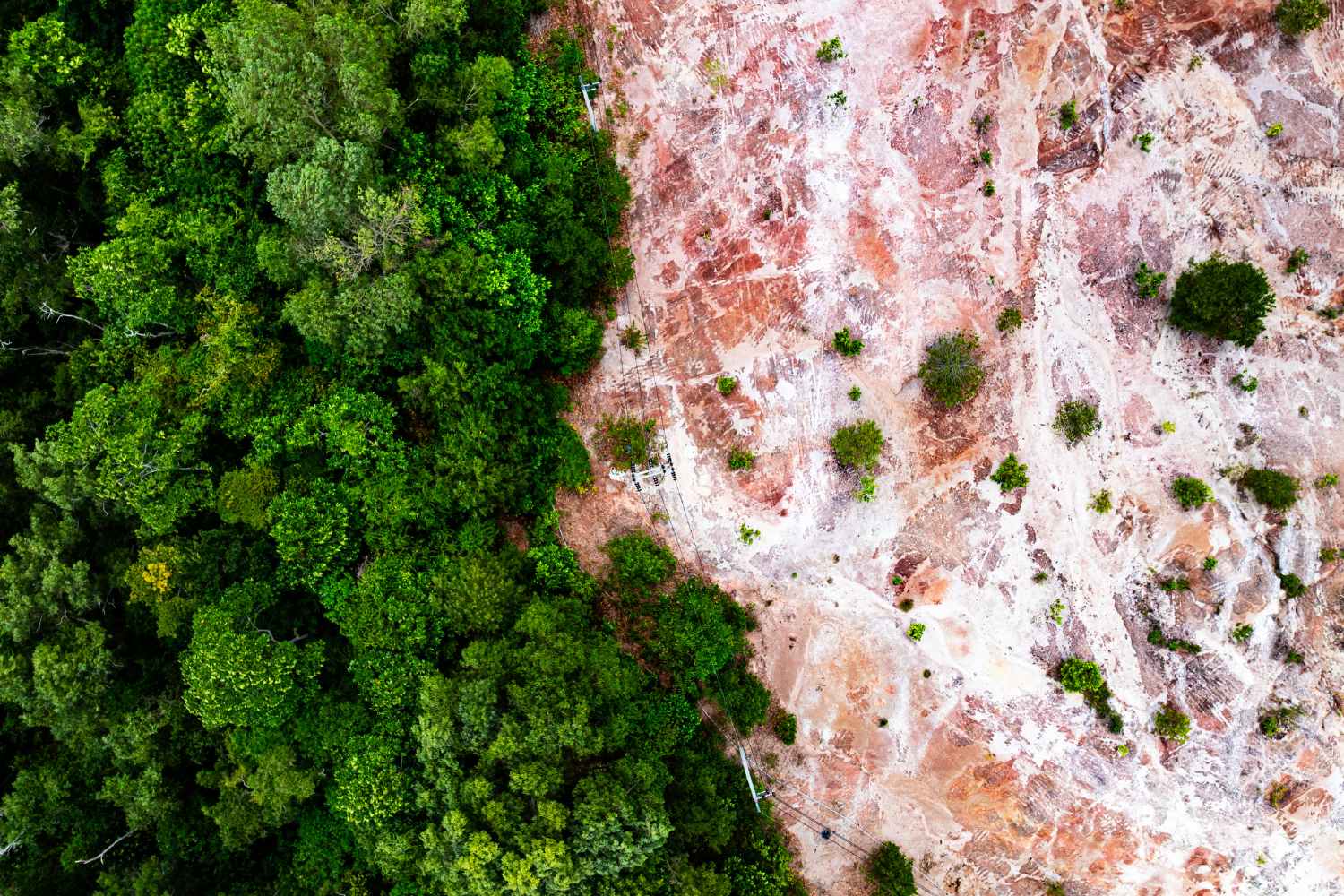
From IT problem to environmental capitulation. An alleged technical hitch was enough for the European regulation against deforestation (EUDR), considered one of the pillars of EU climate policy until a few months ago, to be first postponed, then dismantled piece by piece. Yesterday the European Chamber delivered the final blow: with 402 votes in favour, 250 against and 8 abstentions, Strasbourg confirmed the one-year postponement of entry into force and approved changes that significantly reduce the obligations for companies.
What is the EUDR and why it matters
The rule, adopted in April 2023, aimed to prevent products such as cocoa, coffee, palm oil, soya, wood and cattle sold in the EU from coming from deforested land. In this way, companies importing these products would have to demonstrate that they do not come from areas where trees have been cut down. An ambitious goal, considering that European consumption is responsible for 10% of global deforestation and that between 1990 and 2020 the planet lost 420 million hectares of forests – an area greater than the entire surface of the European Union, according to data from the FAO (the Food and Agriculture Organization of the United Nations).
The new (longer) times and reduced obligations
Now large operators will have until 30 December 2026 to comply, micro and small businesses until 30 June 2027. But it’s not just a question of calendar. The changes approved by the European Parliament lighten the transparency requirements: micro and small operators will only have to submit a simplified, one-off declaration, instead of the more stringent controls initially envisaged. Furthermore, books, printed newspapers and other printed products were excluded from the scope – an exemption that WWF Italy defined as a betrayal of the original agreements. It means that the paper used to print these products will no longer have to be traced to verify that it does not come from felled forests.
The European Parliament scuttles the EU regulation against deforestation
A few days after the end of COP30, the EU turns its back on forests, creating regulatory uncertainty and putting the global fight against deforestation at risk
https://t.co/dRtspDvyA9 pic.twitter.com/b83OQY1szA
— wwfitalia (@WWFitalia) November 26, 2025
From technical emergency to political excuse
The story took a surreal turn. In October, the von der Leyen Commission reported technical difficulties in the IT system that was supposed to manage companies’ declarations of conformity. Instead of solving the problem and moving forward, Brussels has succumbed to pressure from member states (with Italy at the forefront), industrial lobbies and large companies, proposing simplifications and postponements. The European Council (where national governments sit) and now Parliament have taken the opportunity to further water down the law, even calling for a review by 30 April 2026 – before the law actually comes into force.
“What started out as an IT problem has turned into a chaotic and unmanageable situation, to the detriment of forest ecosystems and the most virtuous companies that have invested to comply with the Regulation,” declared Bernardo Tarantino, European and International Affairs specialist at WWF Italy. The environmentalist association denounced how this decision penalizes the companies that moved early to make their supply chains sustainable, while rewarding those who waited or put pressure to weaken the rule.
Who loses: virtuous companies and forests
The S&D group (the socialists and democrats) in the European Parliament spoke of a “threat to the applicability of the law”, while the WWF raised an even clearer alarm: “After the COP30 in Belém, in the heart of the Amazon, the European Union is now focused on how to dismantle climate and environmental laws at home”. The reference is to the climate conference just concluded in Brazil, where the countries of the world discussed how to save tropical forests. While there was talk of protection, Europe was backtracking on the concrete tools it had put in place.
The rhetoric of competitiveness, used to justify these steps backwards, does not hold up according to environmental organizations. There is no evidence that postponing or weakening the EUDR increases the profitability of companies. On the contrary, regulatory uncertainty harms those who have already invested in controlled and traceable supply chains, creating an unfair competitive advantage for those who have not adapted.
Parliament is now ready to start negotiations with member countries on the final form of the law, which must be approved by the end of 2025 for the postponement and changes to come into force. But the real game is played on the stability of the original structure of the regulation. WWF is calling on the European Commission to stop the dismantling of the EUDR and to reject the Environmental Omnibus which will be presented in the coming weeks – a package of measures that risks further weakening European green policies.
Behind this debacle we can glimpse a parliamentary alliance that is reshaping the environmental balance of the EU: the EPP (the centre-right European People’s Party) and the far right voted together to weaken the rule, overcoming the resistance of the social democrats and the Greens. A coalition that seems destined to repeat itself on other environmental dossiers, transforming what was supposed to be the Green Deal legislature into a progressive retreat on all fronts of the ecological transition.
The destruction of Amazon forests and other crucial ecosystems is already compromising global climate stability. The idea that Europe can afford to procrastinate is a dangerous illusion, for which future generations will pay dearly.
