
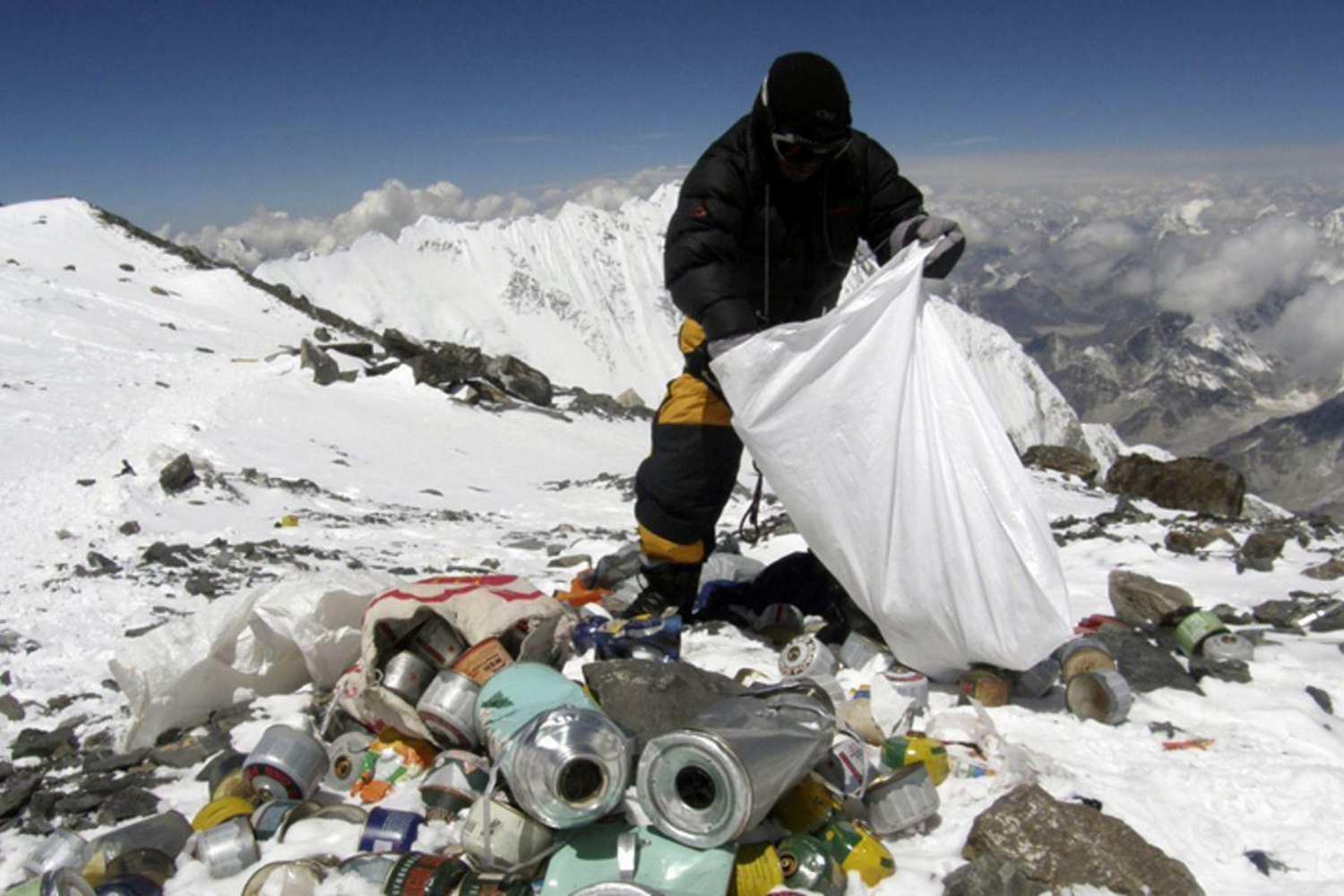
Mount Everest, the world’s highest peak, is not only threatened by global warming, but also by a growing waste problem. At over 8,000 meters above sea level, where temperatures drop below -20°C and oxygen is scarce, the mountain is invaded by debris left by climbers and tourists, creating a true environmental and health emergency.
In recent years, Nepal has tried to manage the situation with a deposit system: each climber had to pay $4,000 and bring back at least 8 kilograms of waste to get a refund. However, the strategy proved insufficient. Many bulky objects, such as tents or empty oxygen tanks, remained on the upper slopes, while lighter waste was collected in the lower camps. Thus, the summit and the extreme areas continued to suffocate under tons of rubbish accumulated over time.
View this post on Instagram
A new strategy for cleaning Everest
Now Nepal is aiming for a more direct approach, based on the concept of payment by results. As revealed in an interview with BBCthe refundable deposit has been eliminated and replaced by a mandatory non-refundable fee of approximately $4,000, earmarked for a Mountain Security Fund.
This fund will finance professional cleanups, entrusted to specialized teams and supported by modern technologies, such as drones capable of transporting up to 15 kilograms of waste from the Death Zone to Base Camp in just a few minutes, an operation that would take a Sherpa hours to complete.
Not only waste, but also frozen excrement and chemical debris threaten the biological safety of Everest and the rivers below, crucial for more than a billion people downstream. The combination of microplastics, toxic substances and bacteria makes it clear that pollution on the world’s highest mountains is not just a mountaineering problem, but a global environmental crisis.
Stricter rules and mountain protection
In addition to drones, the new rules impose a mandatory inventory of every item brought on an expedition, including ladders, flags and consumables. Even prayer flags must be biodegradable, eliminating the era of synthetic materials left to rot for decades.
Climbing Everest remains an expensive undertaking, between 45,000 and 75,000 dollars, but now the costs are increasing further, justified by the need to safeguard the ecosystem of the highest mountain in the world. Nepal thus sends a clear message: Everest can no longer be treated like a landfill.
You might also be interested in:
