
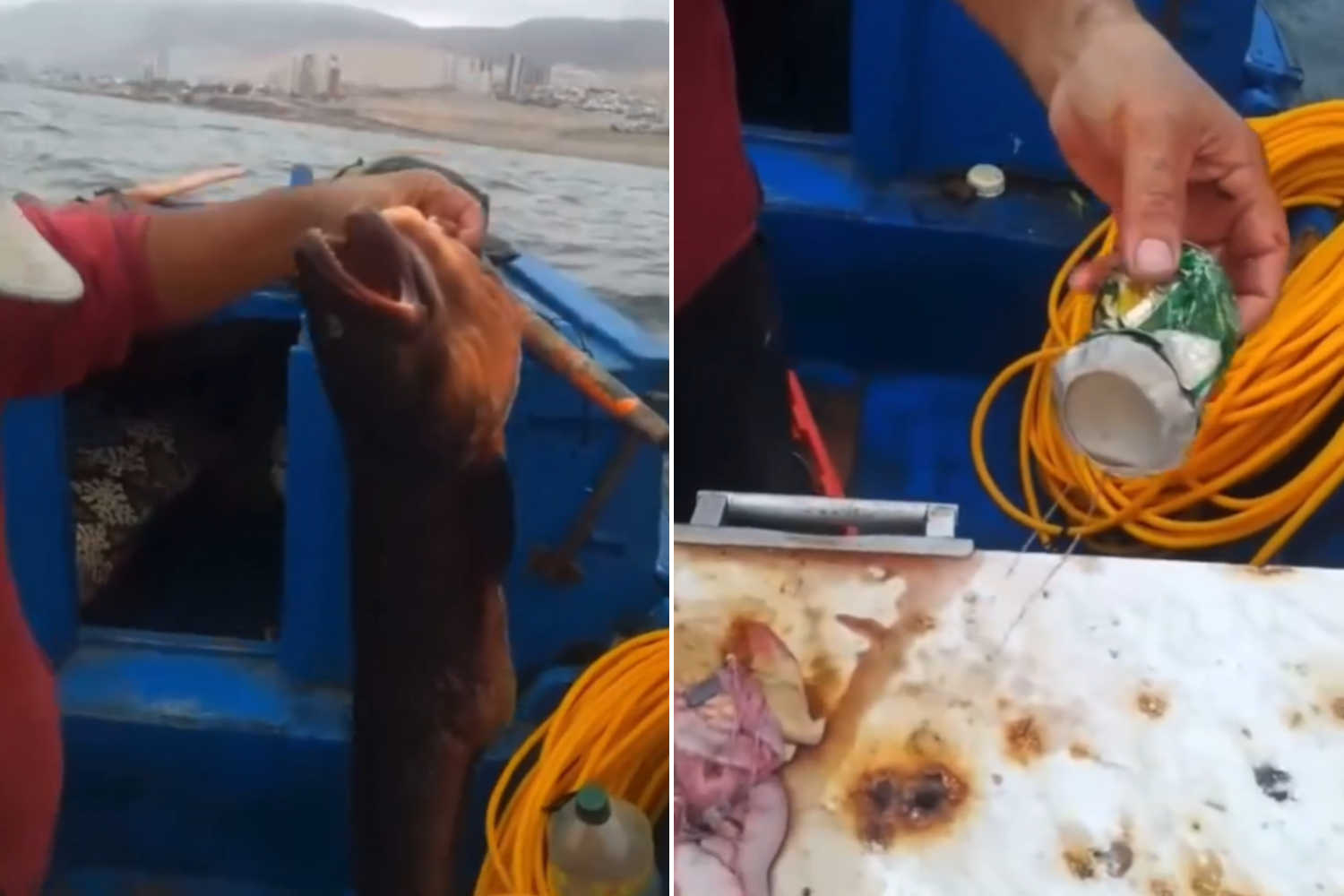
During an ordinary fishing trip along the Chilean coast, a group of fishermen – amidst laughter and jokes, even if there is very little to be happy about – came across a chilling discovery to say the least: inside the stomach of a red conger eel they found one beer can. The moment was captured in a video that inevitably went around the web, showing once again the impact of human pollution on marine ecosystems.
The red conger eel (Genypterus chilensis) is a characteristic species of the Chilean coasts, known for its elongated body and its reddish color. It can reach considerable dimensions, with lengths ranging from 50 centimeters to over three metres. These fish live mainly on rocky bottoms and feed on small fish, molluscs and crustaceans. However, as demonstrated by this finding, they are immune to the effects of waste that invade their habitats.
The episode represents a serious reminder of the impact of our waste on marine environments. The beer can, made of aluminum, is an example of how recyclable materials can transform into dangerous pollutants when they are abandoned in nature.
The enormous damage to marine species
Although aluminum is known for its ability to be reused many times, a can lost in the ocean can cause serious damage to marine species. In fact, ingesting such objects can cause internal injuries or obstructions that endanger the lives of animals.
In addition to the direct risks for marine fauna, waste contributes toaccumulation of debris in the aquatic ecosystem. This accumulation not only threatens the survival of marine organisms, but also impacts the water quality and, consequently, on food chainwhich also involves humans. Every waste left in the environment represents a danger for the entire ecosystem, triggering a cycle of negative consequences that have repercussions on multiple levels.
A shocking episode that highlights the urgency of a more responsible waste management and greater awareness of the impact of human activities on the oceans. Protecting marine habitats means preserving not only biodiversity, but also the future of generations who depend on these ecosystems for food and natural resources.
View this post on Instagram
