
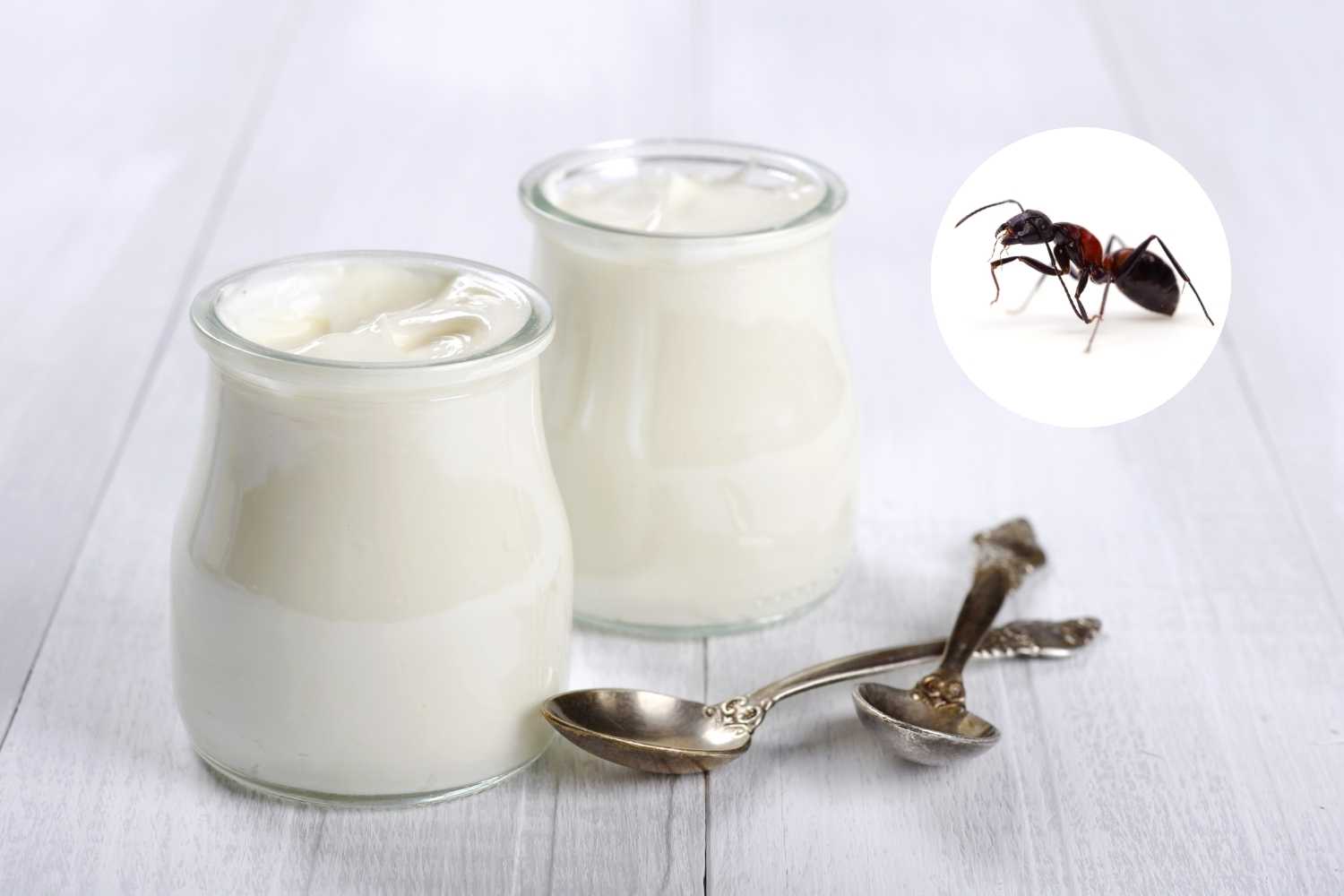
There is a jar of fresh, warm milk, with four live ants swimming inside. The jar is covered with gauze and buried in an anthill, you wait overnight and the next morning the milk has solidified. It has a sour flavour, with herbaceous notes, and is reminiscent of butter from grazing cows. Here is the ant yogurt served.
It sounds like the plot of an off-the-wall culinary reality show, but it’s real science. A group of researchers has revived a forgotten practice from the Balkans and Turkey, where red wood ants were used to ferment milk. The study published in the journal iScience does not just tell a folkloristic curiosity: it demonstrates how our ancestors had access to a much richer and more varied microbial universe than the one we know today.
An ethnographer and a lost recipe
The story begins with Sevgi Mutlu Sirakova, a doctoral student at the Ludwig Maximilian University of Munich in the Rachel Carson Center for Environment and Society. Growing up in Bulgaria, she had heard her relatives talk about a strange recipe: yogurt made with ants. It seemed like a simple legend, yet the old people of his home village, Nova Mahala, insisted. Those ants, there Rough ant to be precise, they really knew how to transform milk.
So Sirakova convinced some fellow scientists to accompany her. They followed the instructions of the locals: four whole ants in a jar of warm milk, buried inside an anthill to keep it warm during the night. In the morning, the pH of the milk had dropped to 5 (industrial yogurt reaches around 4.2). The milk had coagulated, a sign of the success of the experiment.
The microscopic orchestra inside an ant
What exactly happens when you dip ants in milk? Red wood ants produce formic acid, which can make up as much as 10% of their body weight, an acid that immediately lowers the pH of milk, creating the acidity needed to coagulate proteins and thicken yogurt. And it’s just the beginning!
Ants host lactic and acetic bacteria in their bodies, including the Fructilactobacillus sanfranciscensisthe same microbe that gives sourdough bread its characteristic flavor. When ants enter the milk, these bacteria move in and begin to multiply, producing lactic and acetic acids that ferment the milk.
Then there is a third element: ants and their microbes secrete protease enzymes, which break down milk proteins. These enzymes help create different textures, bringing the final result closer to a fresh cheese or mascarpone. It’s a three-layer system: formic acid, fermenting bacteria, proteolytic enzymes, for what appears to be an extraordinarily complex biochemical orchestra.
Only live ants work
The researchers also tried with frozen or dehydrated ants. Nothing to do. Only live ants managed to create the right microbial community to obtain a stable and pleasant yogurt. The dead insects instead favored the growth of spores Bacillus and other unwanted bacteria.
This aspect raises a question of food safety, because live ants can carry parasites, so precautions are needed: the researchers used microbiological grade sieves to eliminate any risks before letting diners taste the yogurt. It’s not a recipe to try at home without the right skills, there’s no doubt about it.
From the laboratory to the Michelin star
To test the culinary possibilities of this prehistoric yogurt, the team collaborated with Alchemist, the famous two-Michelin-star restaurant in Copenhagen famous for experimental cuisine. The chefs created three preparations: an ant-shaped ice cream, goat’s cheeses with a pungent flavor similar to mature pecorino, and a cocktail clarified with “milk wash”, a technique that dates back to the 18th century.
The most interesting aspect is not the gastronomic show, but rather the teaching about lost biodiversity. As Leonie Jahn of the Technical University of Denmark explains, modern yoghurts are produced with just two bacterial strains, while traditional yoghurts had much greater biodiversity, which changed according to location, family and season, bringing more flavours, textures and personalities.
Memory and innovation
We may never see ant yogurt on supermarket shelves, because European novel food regulations and species conservation concerns make commercial production unlikely. However, the study has a value that goes beyond the recipe: it reminds us that our ancestors did not have refrigerators, sterile laboratories and selected bacterial cultures, yet they knew how to exploit the surrounding environment to create fermented, safe and nutritious food. They used ants, leaves, bark, they trusted in the invisible, such as the bacteria that lived on insects, or in the spores transported by the wind.
Who knows, maybe one day, instead of asking if you prefer Greek or Icelandic yogurt, they will ask you: “Red ant or black ant?”
View this post on Instagram
