
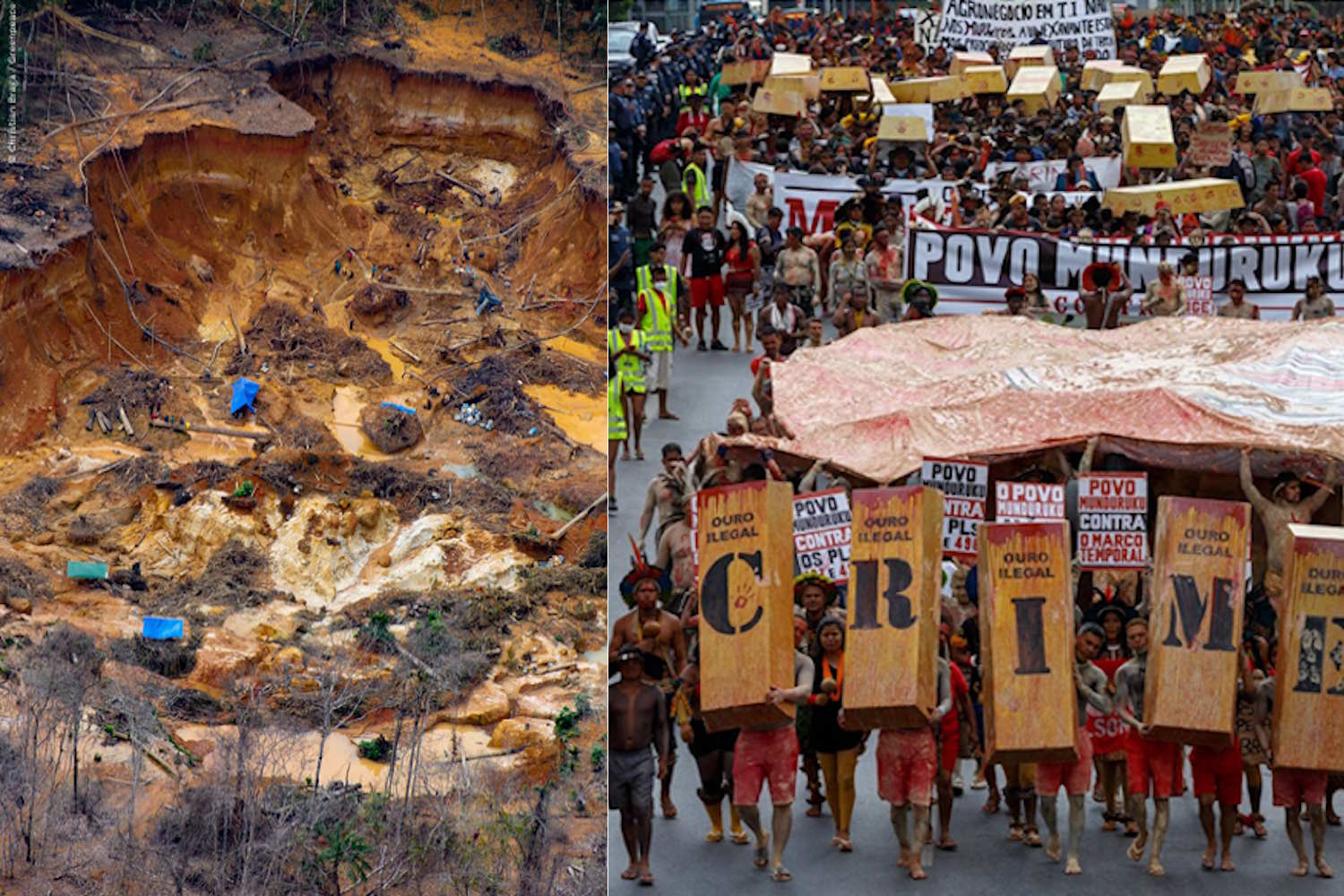
There is an invisible thread that connects the Amazon forest to the windows of jewelry stores, bank vaults and financial markets around the world. It’s a golden thread. And according to Greenpeace, it is too often tainted by deforestation, human rights violations and the destruction of indigenous territories.
In the new report Gold Laundering in the Amazon: Anatomy of a FraudGreenpeace Brazil denounces how illegal gold mining continues to advance in the largest tropical forest on the planet, favored by regulatory flaws and a control system incapable of guaranteeing real traceability of the precious metal.
In short, behind jewels, ingots and investments, an opaque supply chain could be hidden that starts from the devastation of the Amazon.
The report
Between 2023 and 2025, over 5 thousand hectares of forest were destroyed by mining activities within indigenous territories. By September 2025, illegal mining had already affected almost 100 thousand hectares of protected areas.
And it is a phenomenon that does not only concern the loss of trees or natural habitats: when mining activity penetrates indigenous lands it brings with it roads, illegal camps, pollution, social conflicts and a growing climate of violence that especially affects the most vulnerable communities.
@Greenpeace Brazil
According to Greenpeace, the problem also arises from the so-called Lavra Garimpeira permitsi.e. authorizations created to regulate artisanal mining. In many cases, however, these permits would be used as a cover to place gold from areas where mining is prohibited on the market.
The result is that illegally mined metal can be “cleaned” and fed into global trade chains through refineries, intermediaries and international trading centers. Once it enters the system, reconstructing its origin becomes extremely difficult. And so gold can also reach European countries such as Italy, Switzerland, France and Germany, as well as Canada and the United Arab Emirates.
The “ghost mines”
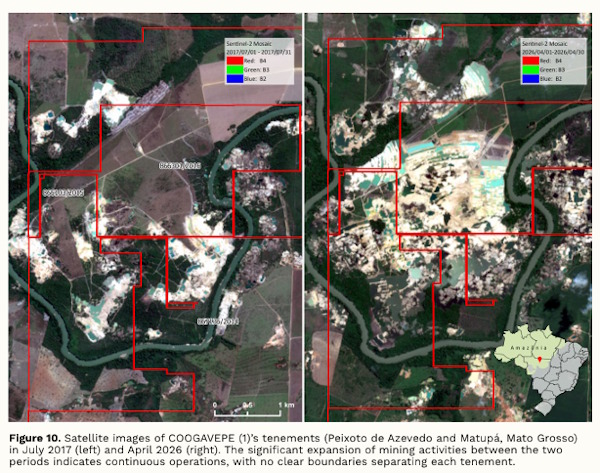
The Greenpeace investigation also reveals the existence of hundreds of so-called “ghost mines”, real mining concessions that are formally active but which, according to satellite data and field checks, do not show activities compatible with what has been declared. In practice they would exist only on paper, acting as a legal cover for gold mined elsewhere.
According to the report, 94% of mining processes analyzed between 2018 and 2026 would fall into this category or would be incompatible with the regime for artisanal mining.
@Greenpeace Brazil
Indigenous populations
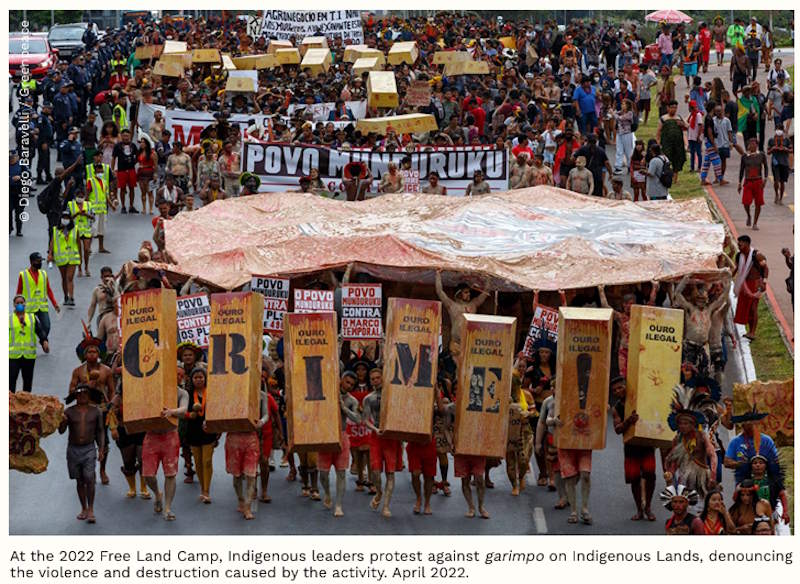
The consequences, it goes without saying, are not just environmental. From 1985 to 2022, illegal gold mining in Brazil increased by 1,100% and 91% of the activities are concentrated in the Amazon. Indigenous populations often pay the highest price, seeing their territories, water sources, food security and health compromised.
@Greenpeace Brazil
Particularly serious is the problem of contamination by mercury, a substance used to separate gold from sediments. A study by the Fundação Oswaldo Cruz conducted in the lands of the Munduruku people found that 98.5% of pregnant women tested had mercury levels above thresholds considered safe. A fact that is worrying not only for the health of mothers, but also for that of children and future generations.
According to Greenpeace, the Brazilian Supreme Court’s recent decision to declare the presumption of good faith in the purchase of gold unconstitutional represents an important step forward. But, without an effective traceability system and independent controls along the entire supply chain, the risk is that illegal gold will continue to reach international markets.
For the environmentalist association, it is not enough to intervene in Brazil. Importing countries and the European Union should also strengthen the rules on the origin of the precious metal, preventing products linked to the destruction of the Amazon from being marketed as sustainable or without environmental impacts.
HERE you can find the full report.
You might also be interested in:
