
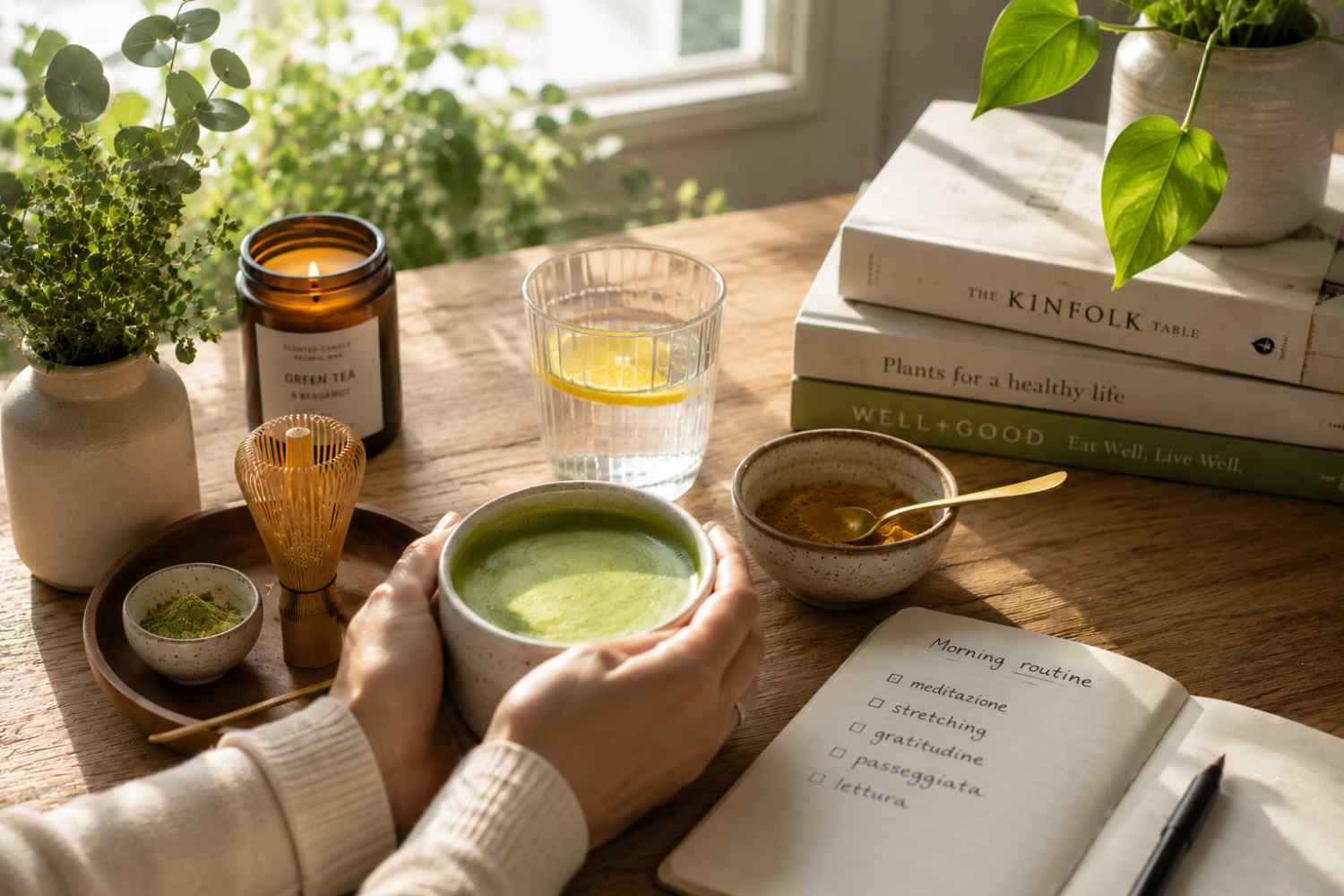
The alarm rings, the moka is still on the stove, but something has changed. More and more people start the day with a cup of matcha, a turmeric golden milk or a mushroom coffee, often accompanied by a few minutes of meditation, a walk in the fresh air or a short stretching session. It’s not just a question of nutrition: it’s a new way of interpreting well-being, made up of small daily gestures that aim to improve energy, concentration and balance.
In recent years the concept of wellness has in fact changed its skin. If it was once synonymous with a rigorous diet and gym, today it looks to a more conscious lifestyle, in which nutrition, mental health, movement and sustainability are intertwined. The market is also following this evolution, with a constant growth of so-called “functional foods”, i.e. foods and drinks enriched with ingredients that promise to offer something more than simple nutritional intake. However, it is important to distinguish between current fads and what scientific research has actually proven.
Matcha: the green tea that conquered the West
Among the protagonists of this revolution there is undoubtedly matcha. Born in Japan and used for centuries in the traditional tea ceremony, today it has become one of the symbolic ingredients of contemporary lifestyle.
Unlike leaf green tea, matcha is consumed in the form of a finely ground powder, allowing you to consume the entire leaf. It is naturally rich in polyphenols and contains caffeine associated with L-theanine, an amino acid that helps make the stimulating effect more gradual than that of coffee.
Its success is not only due to its nutritional characteristics, but also to its ability to represent a ritual: preparing it takes a few minutes, invites you to slow down and transforms a simple drink into a moment of pause.
The return of “functional” drinks
Alongside matcha, other drinks are growing that combine taste and the search for well-being. Golden milk, chai, kombucha, drinking kefir and botanical infusions have firmly entered the habits of many consumers, especially among Millennials and Generation Z.
The key word is “functional”: don’t drink simply to quench your thirst, but choose ingredients that can fit into a lifestyle oriented towards prevention and self-care. It is a trend that also reflects a greater attention towards plant-based, organic foods and products with more transparent supply chains.
From mushroom coffee to supplements: a rapidly evolving market
The growing interest in medicinal mushrooms has favored the birth of a new generation of products: not only drinks like mushroom coffee, but also capsules, powders and mixtures designed to be included in the daily routine. The market offers different solutions, united by the use of species such as Lion’s Mane (Hericium erinaceus), Reishi, Cordyceps and Chaga, used for centuries in traditional Asian medicine and today the subject of numerous scientific studies.
Among the brands that are helping to spread this culture in Europe is French Mush, a French company specializing in organic food supplements based on medicinal mushrooms. The brand offers capsules, powders and alternatives to coffee formulated with extracts of species such as Lion’s Mane, Reishi and Cordyceps, focusing on a certified European supply chain and extraction technologies designed to increase the bioavailability of the active ingredients.
Naturally, the rule that experts have been reiterating for some time also applies in this case: food supplements do not replace a balanced diet or a healthy lifestyle. They can represent support in specific situations, but their use should be part of an overall approach to well-being.
Wellbeing also means ritual
Perhaps the real reason for the success of these new drinks lies not only in the ingredients. Preparing a matcha with the traditional bamboo whisk, slowly sipping a mushroom coffee while planning the day or dedicating five minutes to breathing before checking your smartphone are small rituals that help create a break in the daily frenzy.
Numerous behavioral psychology studies show how repeated and conscious habits contribute to making a healthy lifestyle more stable. The value of the ritual, therefore, goes beyond the contents of the cup.
A new attention to quality
Another characteristic of contemporary wellness is the growing attention to the origin of ingredients.
Consumers are demanding greater transparency on production chains, the sustainability of raw materials and manufacturing processes. It is no longer enough to read “natural” on the label: we are looking for certifications, traceability and information on production.
It is in this context that companies such as French Mush, specializing in supplements based on medicinal mushrooms, fit in. The brand has chosen to develop a European supply chain between France, Finland and Spain, focusing on organic cultivation, traceability of raw materials and extraction technologies designed to improve the bioavailability of the compounds present in mushrooms.
From biohacking to normality
Until a few years ago, terms such as adaptogens, superfoods or nootropics were the heritage of biohacking enthusiasts. Today they are part of common language and appear on supermarket shelves, in cafes and pharmacies.
This does not mean that every new trend represents a scientific revolution. Rather, it talks about how consumers are increasingly interested in building a personalized wellness routine, choosing products consistent with their lifestyle.
However, experts urge you to maintain a balanced approach: no food or supplement can replace a varied diet, regular physical activity, adequate sleep and medical checks when necessary.
The well-being of the future
The success of matcha, mushroom coffee and other functional drinks speaks above all of a cultural change. More and more people are trying to slow down, pay attention to daily rituals and choose products that reflect values such as naturalness, sustainability and transparency.
Whether it is a cup of green tea, a traditional coffee or a blend enriched with mushroom extracts, the message remains the same: well-being does not arise from a single miraculous ingredient, but from the sum of many small habits which, day after day, contribute to improving the quality of life.
