
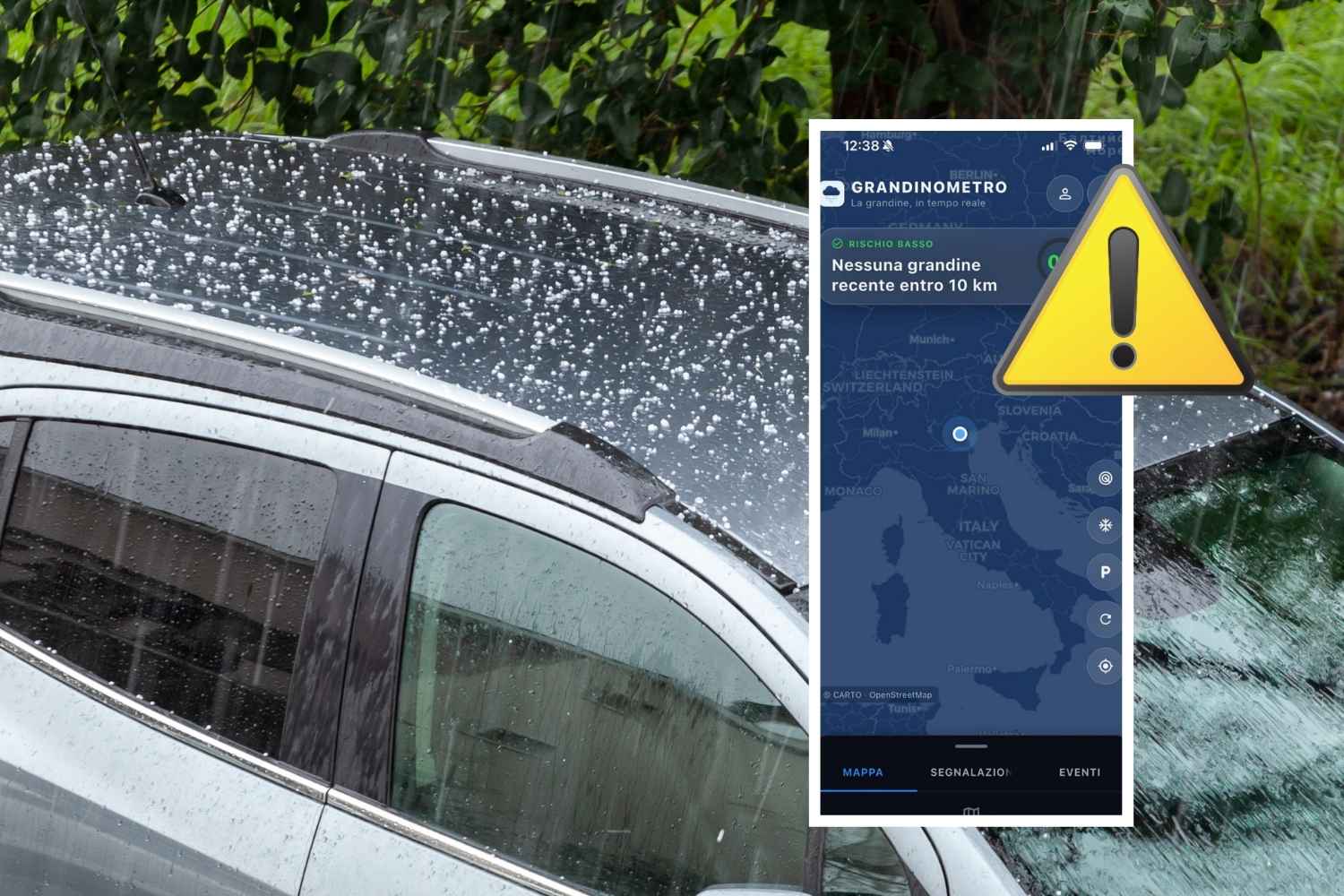
Sometimes great technological innovations are not born in the glossy laboratories of Silicon Valley, but in the folds of daily frustration and sudden damage. In fact, it was 2023 when a violent disturbance hit the Padua area with unprecedented ferocity, destroying the roof of Davide Agostini’s home.
Faced with fragmented meteorological information and incapable of preventing the real damage suffered by citizens, the economics student and developer from Vigonza decided to transform his anger and impotence into a technological opportunity. Without large capital or corporate structures behind him, he independently designed the “Grandinometer”, a software entirely focused on safeguarding vehicles and personal property before the ice chips hit the ground.
@Hans/Pixabay
How the hail civic network works
The secret of the success of this platform lies in overcoming the classic regional forecasting models, which are often too abstract for those who have to protect their car on the road. The application combines public radar data provided by the Civil Protection with a dense network of real-time geolocalized reports sent directly by users. With just a few taps on the smartphone, anyone can document the atmospheric phenomenon taking place in their municipality. A crucial test took place last August 28, when the system sent an alarm 26 minutes in advance of the actual impact of the disturbance in the Padua area.
A record success and a counter-current model
Completely free, without advertising and without the transfer of data to third parties, the platform is supported solely by the voluntary contribution of the community. Available for both Android and iOS devices, the application quickly climbed the rankings of the Italian App Store, reaching first place in the Weather category of the Italian App Store.
An achievement that demonstrates how individual ingenuity can fill the gaps in large institutional systems, transforming every single smartphone into a human sensor at the service of the community (and often of the wallet).
