
Greek salad (horiatiki) is a typical dish of the summer table, to be served both as a side dish, as a light appetizer, but also as a single dish, being complete and nutritious. There are numerous variations of the original Greek salad, as this dish is easily adaptable to everyone’s tastes.
With the Greek salad you can give an edge to your summer dishes, especially because you will have the main seasonal ingredients available, namely tomatoes and cucumbers. Choosing fresh ingredients and the best seasonings is obviously the secret to bringing the perfect Greek salad to the table.
Let’s find out how to easily prepare Greek salad at home according to the original recipe and its variations.
Greek salad, the original recipe
The original Greek salad recipe calls for tomatoes, sliced cucumbers, onions, feta, Kalamata olives, salt, oregano and olive oil. Depending on the location, other ingredients are added such as capers – sometimes even their leaves – or green peppers. These are green peppers cut into fillets or small sweet green peppers that are good to eat raw. You can also add croutons.
Vegan Greek salad with tofu
Preparing the vegan Greek salad is very simple and requires only a small substitution. Instead of using traditional feta, simply replace it with tofu, which can be marinated for added flavor. The other classic Greek salad ingredients remain unchanged: crunchy cucumbers, juicy tomatoes, tasty olives and, if you like, a little red onion for a touch of spiciness. Season everything with extra virgin olive oil, a splash of lemon juice and a pinch of oregano. This way you will get a fresh, tasty and completely vegan salad, perfect for a light and nutritious meal.
Gluten-free Greek salad
Some versions of the Greek salad include croutons. You can decide to omit this ingredient or choose gluten-free croutons for your gluten-free Greek salad.
Italian Greek salad
Italian-style Greek salad is a delicious twist on the traditional Greek salad, combining Mediterranean flavors with an Italian twist. The main ingredients include fresh lettuce, juicy cherry tomatoes, intensely flavored black olives or Taggiasca olives, and creamy feta. For seasoning, high quality extra virgin olive oil and a pinch of dried oregano are used, which enhance the flavors and give a characteristic aromatic note. This Italian version of the Greek salad is perfect as an appetizer or side dish, offering a combination of freshness and flavor that will satisfy any palate.
Greek salad with tzatziki sauce
The tzatziki sauce, made with yogurt and cucumbers, is the perfect accompaniment to the Greek salad. If you love homemade sauces to pair with salads, all you have to do is experiment.
Greek salad with capers
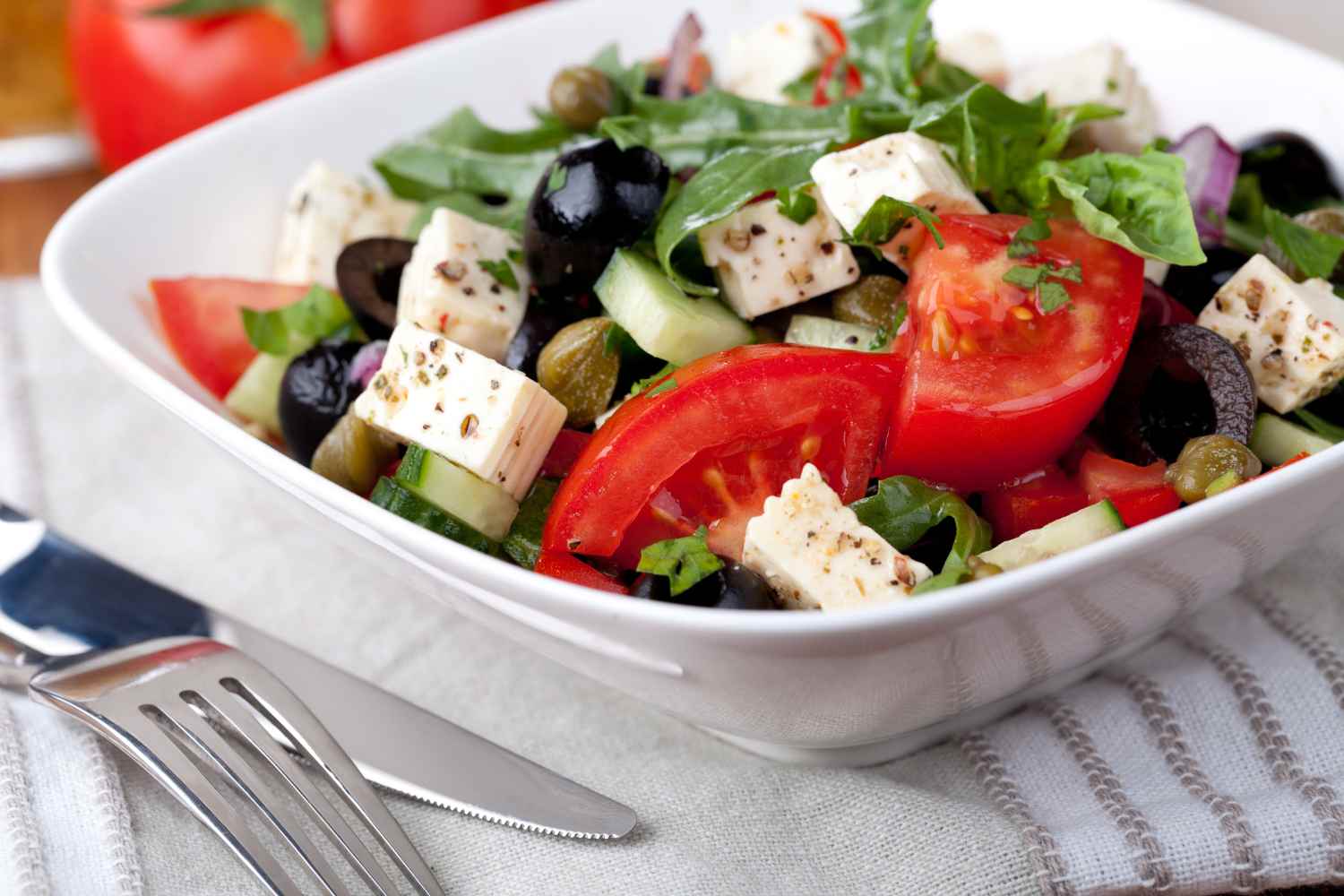
The addition of capers to this traditional dish is a typical characteristic of the Greek islands, which gives it a unique touch and an unmistakable flavour. This particular version of the Greek salad, enriched with capers, comes from the enchanting island of Santorini. The capers, collected and preserved with care, add a saline and slightly acidic note that goes perfectly with the sweetness of the cherry tomatoes and the freshness of the cucumber. The salad is then completed with black olives, red onion, slices of feta and dressed with extra virgin olive oil and a sprinkling of oregano. This touch of Santorini transforms an already delicious dish into an authentic culinary experience full of Mediterranean flavors, perfect for bringing a piece of Greece to your table.
Greek salad with melon and black olives
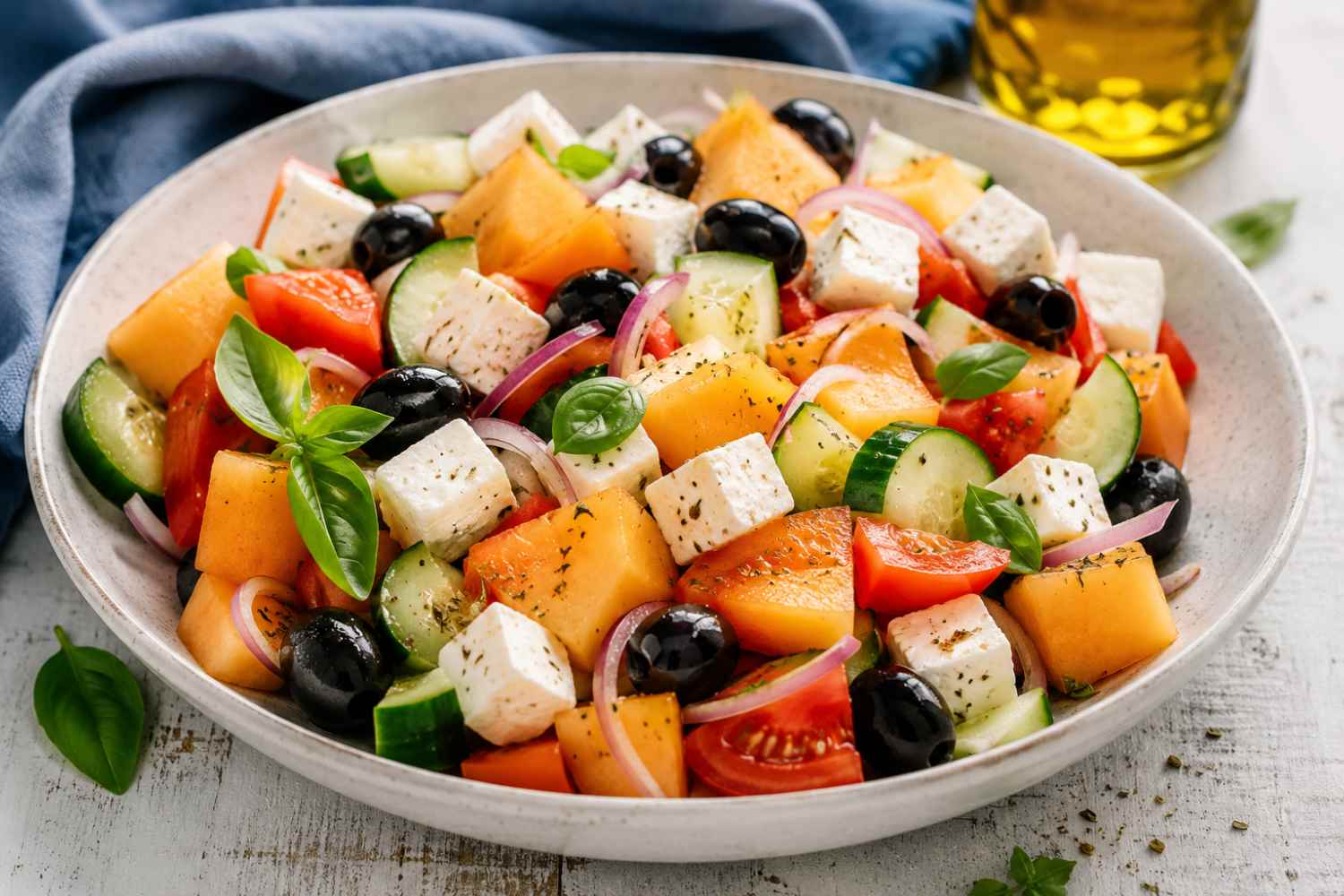
Melon, especially in the more fragrant and less watery varieties, pairs surprisingly well with feta and olives. Cut it into cubes and add it to the traditional Greek salad ingredients.
The result is a dish with a balanced taste, in which the sweetness of the melon meets the savory and aromatic notes typical of Greek cuisine. Perfect for the hottest days of summer.
Greek salad with red peppers
Some traditional recipes for preparing Greek salad, especially in inland regions, include the addition of peppers, which add a touch of crunch and color to the dish. Sweet green peppers are usually used, cut into thin fillets, but you can also opt for red or yellow peppers, as they also offer excellent flavor when eaten raw.
Cut the peppers in half, remove the seeds and internal white filaments and then cut them into thin strips or cubes, depending on your preferences. Combine chopped peppers with other salad ingredients, such as crunchy cucumbers, juicy cherry tomatoes, crumbled feta and black olives, to create a delicious, balanced mix of flavors and textures.
Dress the salad with high-quality extra virgin olive oil, a squeeze of fresh lemon juice for a touch of acidity and a generous sprinkling of dried oregano to bring out the Mediterranean flavors. This version of the Greek salad, enriched with fresh and colorful peppers, will be a pleasure for the palate and a perfect addition to your summer table.
Greek salad with olive bread
Prepare olive bread or olive sandwiches at home to accompany your Greek salad which for an original buffet you can serve in glass jars.
Greek salad with green and black olives
If you don’t have Greek olives available to prepare your salad, you can easily replace them with a mix of green and black olives, which will still add an excellent flavor to the dish. Green olives, with their slightly bitter and crunchy taste, combine perfectly with black olives, which tend to have a sweeter, richer flavor.
Add the olives to the fresh, crunchy cucumbers, cut into rounds or cubes, and to the juicy, sweet cherry tomatoes, cut in half. The feta, crumbled on top of the other ingredients, will add a creamy and savory note that perfectly balances the freshness of the vegetables.
To complete the salad, drizzle everything with plenty of extra virgin olive oil, a squeeze of fresh lemon juice for a touch of acidity, and a generous sprinkling of dried oregano. You can also add a handful of capers for an extra burst of flavor.
This version of the Greek salad, while not using traditional Greek olives, will still be delicious and refreshing, perfect as a starter, side dish or light main course.
Greek salad without onion

Those who don’t like onions, don’t digest them well, or prefer not to consume them, still have the opportunity to enjoy an excellent Greek salad by simply omitting this ingredient. At the restaurant, it is easy to order the Greek salad without onion, specifying your preference to the waiter. At home, making your own version of Greek salad is just as simple. Just keep the classic ingredients such as olives, cucumbers, tomatoes, feta and oregano, which guarantee a mix of fresh and authentic flavours.
To give an extra touch and add variety to the dish, you can incorporate peppers cut into thin strips. Peppers, with their crunchiness and sweetness, offer a pleasant alternative to onion, adding color and flavor to the salad. Another excellent addition are capers, which with their saline and slightly acidic note, enrich the overall taste of the dish.
Season everything with plenty of extra virgin olive oil and, if you like, a splash of lemon juice for an extra touch of freshness. This version of Greek salad without onion remains just as delicious and refreshing, adapting perfectly to your tastes and dietary needs.
Greek salad without cucumbers
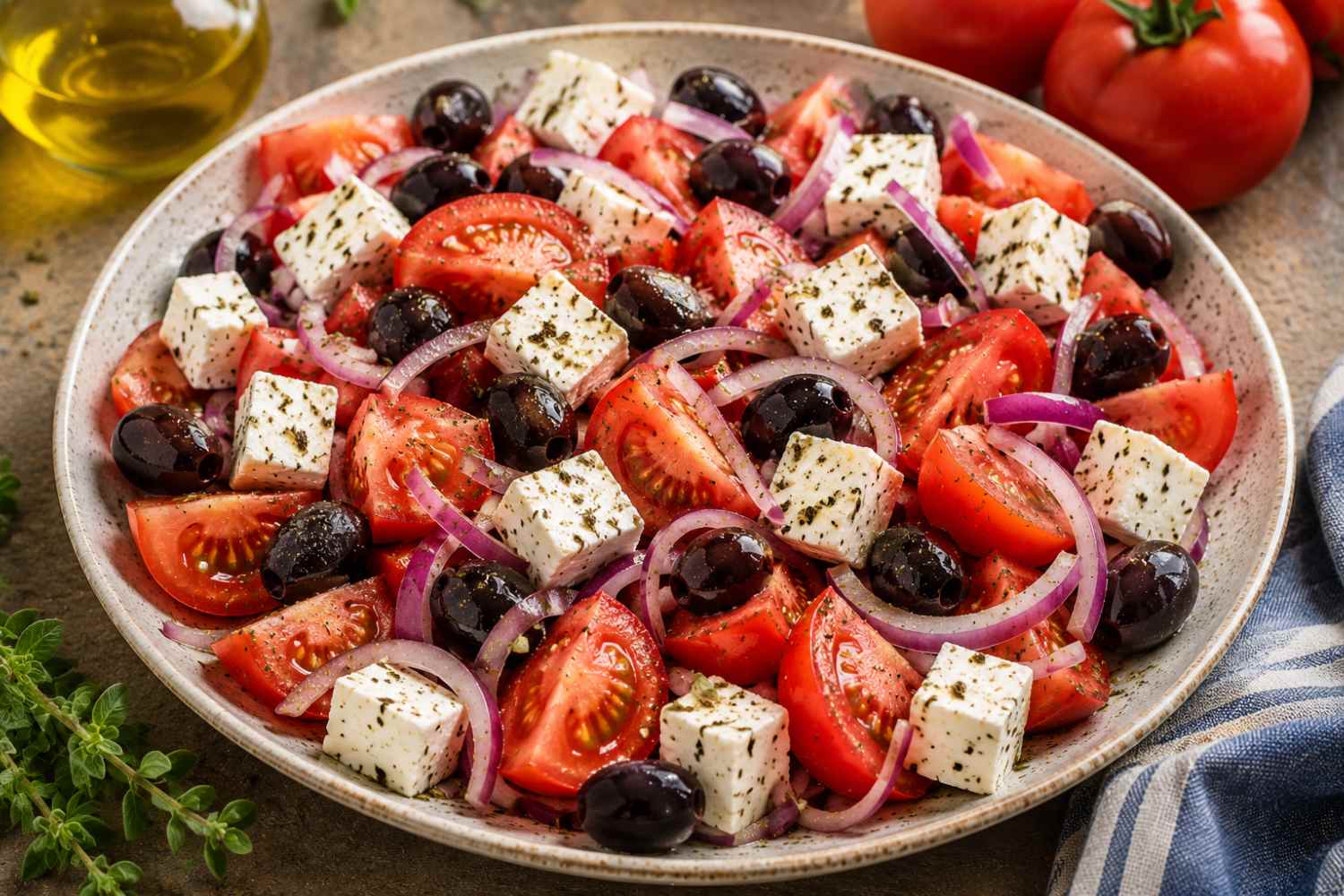
Even those who don’t like cucumbers or can’t digest them can easily prepare a customized version of the Greek salad by simply omitting this ingredient. Without the cucumbers, you can give more emphasis to the other delicious components of this traditional salad. For example, increase the amount of feta, which with its creamy texture and slightly salty taste offers a pleasant richness to the dish. You can add more tomatoes, choosing sweet, juicy varieties that balance the flavors perfectly. Black olives, with their intense and slightly bitter flavor, will add depth to your salad. Furthermore, enrich the dish with thinly sliced red onion, which will give a light spicy note, and season everything with plenty of extra virgin olive oil, a splash of fresh lemon juice and a pinch of dried oregano. This personalized version of the Greek salad maintains all the freshness and goodness of the original, adapting perfectly to your tastes and digestive needs.
Greek salad with peaches and feta
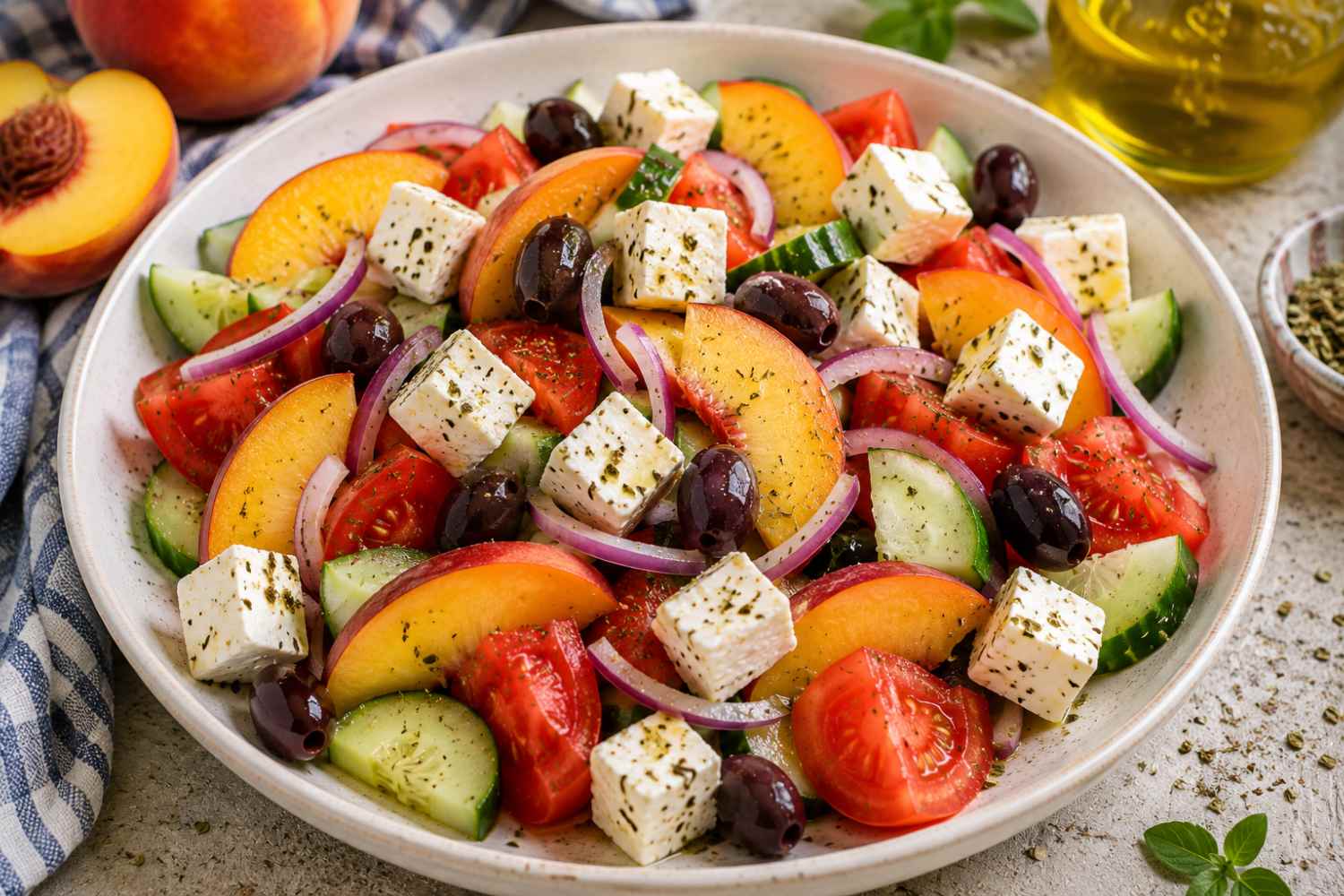
Ripe but still firm peaches can transform the classic Greek salad into a surprising and refined dish. Cut them into thin wedges and add them to the tomatoes, cucumbers, olives and feta.
The sweetness of the fruit creates a pleasant contrast with the flavor of the cheese and olives, while the oregano and extra virgin olive oil bind all the flavors perfectly. A fresh and colorful summer variant, ideal for a light outdoor lunch.
Greek salad with edible flowers
To bring a spectacular and original dish to the table, you can enrich the Greek salad with edible flowers such as nasturtiums, marigolds or cornflowers. In addition to adding color, some flowers add slightly spicy or herbaceous notes.
The traditional ingredients remain the protagonists, but the final result is elegant and perfect for a summer dinner or an outdoor buffet. Remember to only use edible flowers from safe crops.
Greek salad with fresh figs
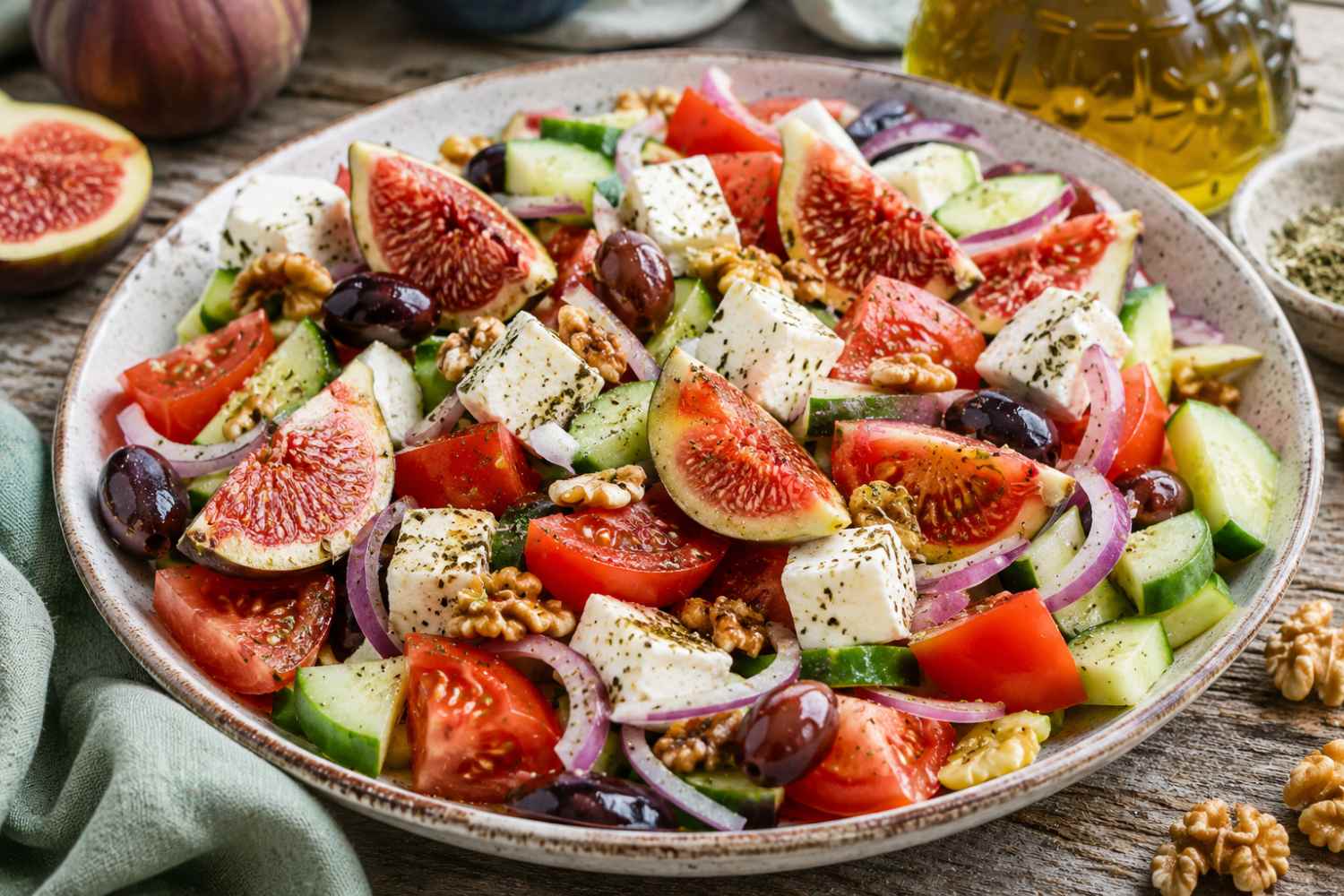
When figs are in season, they become an ideal ingredient for reinterpreting Greek salad. Cut into wedges and added to tomatoes, cucumbers and feta, they give a sweet and delicate note that enhances the Mediterranean flavours.
To complete the dish, you can add some chopped walnuts and a light emulsion of extra virgin olive oil and lemon. A simple proposal but full of character.
Greek salad with wild aromatic herbs
In many areas of the Mediterranean, wild herbs are used to enrich summer salads. Try adding a handful of purslane, wild fennel, fresh mint or rocket to your Greek salad.
These herbs give intense aromas and greater aromatic complexity, keeping the dish light and natural. An original way to enhance often forgotten ingredients.
“Blue” Greek salad with heirloom tomatoes
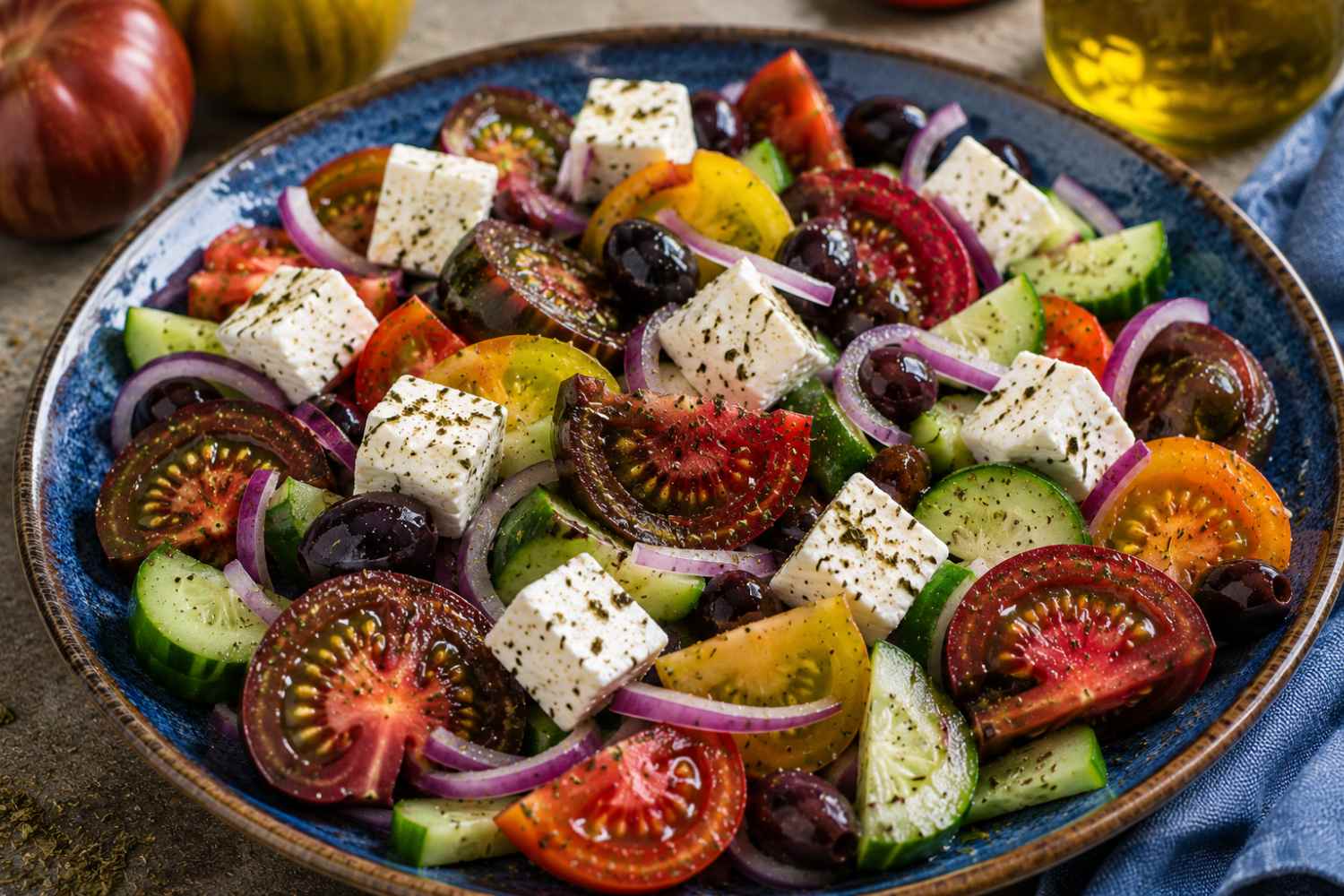
For a particularly spectacular version, use varieties of tomatoes with unusual colors, such as purple, black or striped ones, together with the classic cucumbers and feta.
In addition to the visual effect, these varieties offer different nuances of flavor, often more intense and aromatic than common tomatoes. A simple idea that allows you to rediscover agricultural biodiversity and bring a truly out of the ordinary salad to the table.
What are your custom versions of Greek salad?
