
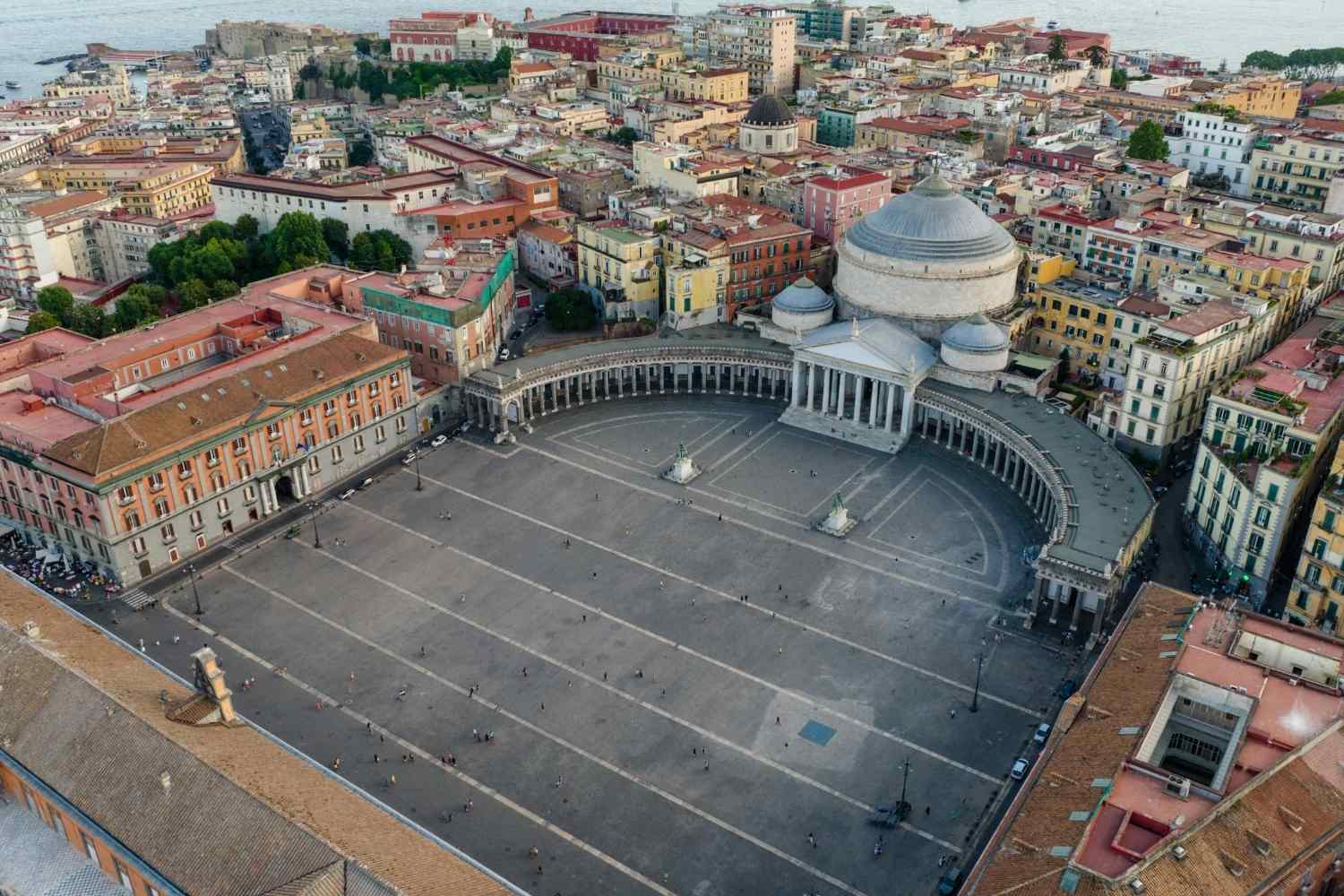
Imagine flying over a city and finding yourself faced with an unexpected sight: hundreds of domes dotting the urban landscape like precious pearls scattered across a precious fabric. This is not an oriental mirage, but the reality of one of the most fascinating metropolises in the Mediterranean: Naples.
In the eighteenth century, travelers and intellectuals who observed the Campania capital from panoramic points were enchanted by a recurring element: domes. Many, many domes emerging from the urban fabric, creating an unmistakable profile. From here was born the epithet that still defines the Neapolitan city today: the “City of 500 Domes”.
This name is not simply a symbolic number, but testifies to the extraordinary density of religious buildings that characterizes Naples. Churches, basilicas, convents and oratories are intertwined with the beating heart of daily life, making the spiritual dimension inseparable from the earthly one.
The domes of Naples
Among the hundreds of domes that characterize the Neapolitan urban profile, some stand out for their architectural magnificence and decorative richness. The Basilica of Santa Chiara fascinates not only for its external dome, but above all for the famous majolica cloister, a triumph of colored ceramics which represents one of the masterpieces of Neapolitan art. Equally evocative is the majolica dome of Santa Maria dell’Aiuto, whose glazed tiles shine under the Mediterranean sun creating a unique chromatic effect in the city panorama.
The interior of the Church of Sant’Agostino degli Scalzi literally leaves you breathless: here the dome is transformed into a work of art thanks to the sumptuous white stuccos created by Lorenzo Vaccaro, which create plays of light and shadows of extraordinary elegance. No less impressive is the dome of San Domenico Maggiore, admirable from the inside for its particular decoration with hexagonal lacunars, covered in gold and lapis lazuli during the eighteenth century, which give the space an almost regal solemnity.
The Church of Gesù Nuovo surprises with the contrast between the austere piperno ashlar façade and the sumptuously decorated interiors, crowned by a dome that dialogues harmoniously with the entire baroque apparatus. The Cathedral of Naples also houses one of the most precious treasures of the city: the Chapel of the Treasure of San Gennaro, whose frescoed dome represents one of the pinnacles of Neapolitan sacred art.
For those who want to take in the entire city with their gaze, the Certosa di San Martino offers an unforgettable experience. Its domes stand out on one of the most spectacular panoramic points of Naples, offering breathtaking views of the Gulf and Vesuvius. In the Sanità district, the Basilica of the Incoronata Madre del Buon Consiglio dominates the neighborhood with its characteristic “priest’s hat” dome, a distinctive architectural element that gives the profile of the basilica an unmistakable identity. The church of Donnaromita also contributes to the heritage of majolica domes, testifying to a decorative tradition deeply rooted in Neapolitan artistic culture.
The hidden meaning of a famous saying
“See Naples and then die” – how many times have we heard this phrase without understanding its true meaning? Goethe was not pronouncing a death sentence, but singing a love song. The great German poet tried to express the impossibility of describing in words the emotional intensity that Naples can provoke.
It’s like saying: after having lived this total experience, after having savored this concentration of life, culture, history and beauty, everything else pales. It is not a threat, but a recognition of the exceptional nature of an experience that marks the soul.
Beyond the domes
But reducing Naples to its churches would be limiting, every corner hides a story, every alley whispers legends. The scent of coffee mixes with the smell of the sea, the voices of street vendors create a unique urban symphony, social contrasts coexist in an apparently precarious but surprisingly vital balance.
Naples is baroque opulence and popular simplicity, it is profound devotion and ironic skepticism, it is a glorious past and a vibrant present. It is a city that does not allow itself to be categorised, which escapes any attempt at a univocal definition.
The 500 domes are there, still today, to remind us that some cities are not simply visited: they are lived, breathed, carried within forever.
