
Home water usually remains in the background. It flows from the tap, fills a bottle, ends up in a pot, accompanies the day without asking for attention. Then comes local news, one of those that moves the air inside a family: contamination by PFAS and microplastics, absent public funds, solution entrusted to individual citizens. From there, for Mia Heller, the issue stopped belonging to the technical dossiers and entered the scope of urgent things. His answer took shape between the kitchen and garage of his home, in a research that began in 2024 and was transformed into a working prototype at the beginning of 2025.
The intuition came by observing a gesture repeated too many times. The parents had installed an advanced purification system at home, useful, complex and above all maintenance-hungry: membranes to be replaced often, high costs, little practicality. Heller saw in that routine the structural flaw of many domestic filters and decided to pursue a different path, lighter, cheaper, more sustainable. The objective was clear from the beginning: get rid of the membranes and build a system capable of working with less waste and fewer continuous interventions.
After months of tests, attempts and adjustments, the first operational model has arrived. You described it as a sort of “rotating vial”, a device that initially already worked in terms of separating microplastics, even if the recovery of the filtering material was still incomplete. From there the most difficult part began, the one that often separates the brilliant idea from the object that really stands up to reality: making the passage of water, the capture of plastic particles, the magnetic separation and the reuse of the fluid used for filtering coexist in the same system.
How it works
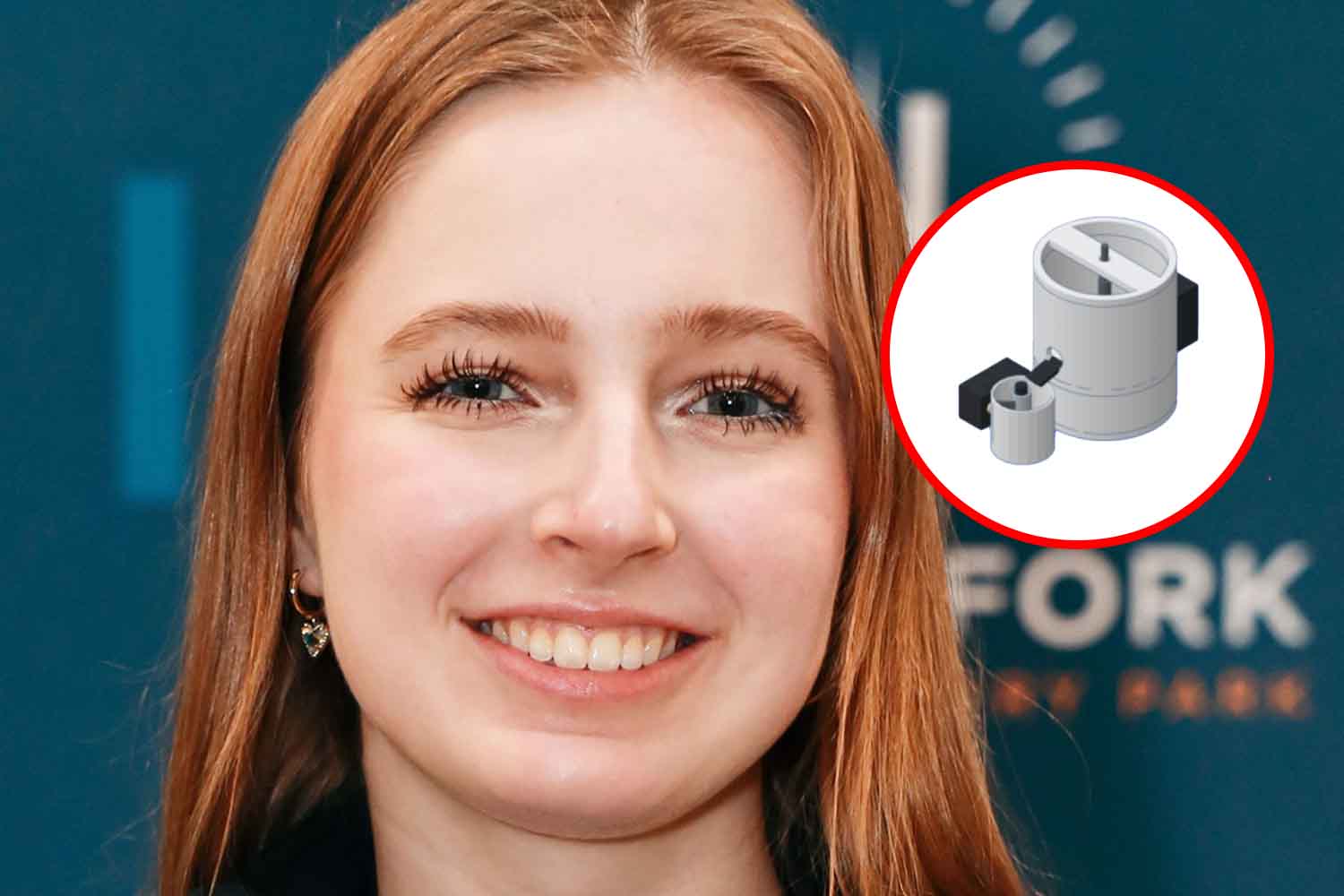
The heart of the project is ferrofluid, a reusable magnetic oil which, when subjected to a magnetic field, manages to bind to microplastics suspended in water. In the current version the prototype is made up of three modules: one contains the contaminated water, one stores the ferrofluid, the third hosts the decisive phase, the one in which the magnetic field attracts the captured particles and allows the fluid to be recovered and put back into circulation in a closed cycle. In practice, the system aims to clean itself as it works, drastically reducing maintenance.
Then there was another step to solve, less obvious yet decisive: measuring the result precisely. Heller therefore also developed a turbidity sensor to monitor the amount of residual particles and calculate the performance of the device. The tests returned numbers that alone explain the reason for so much attention: 95.52% of microplastics removed and 87.15% of ferrofluid recovered. To give a concrete measure of the data, the Smithsonian recalls that traditional drinking water treatment systems generally eliminate from 70% to over 90% of microplastic components. Here, inside an experimental domestic system about the size of a sack of flour, the threshold has risen significantly.
The project also earned her a top award at the 2025 Regeneron International Science and Engineering Fair, one of the world’s best-known student science competitions. In detail, Heller received a special $500 award from the Patent and Trademark Office Society for the “Self-Recycling System for Microplastic Removal” project.
Traditional filters that remain expensive
Ultimately, the point remains this: microplastics have long since ceased to belong only to seabeds, rivers or documentaries. The EPA defines them as plastic particles between 5 millimeters and 1 nanometer, tiny dimensions that facilitate their spread practically everywhere. In recent years they have been identified in many animal species and in various human tissues; a 2024 study also quantified its accumulation in the human placenta. On the health front, the literature continues to move with caution: the WHO still speaks of open questions and the need for further research, despite a framework of growing attention.
It is within this framework that Heller’s invention gains weight. Traditional filtration systems remain effective in many contexts, yet they bring with them costs, chemical treatments, frequent maintenance and an accessibility threshold that often leaves out families and less equipped areas. The American high school student’s project tries to intervene right there, at the point where technology stops being elegant on paper and must become truly usable in everyday life.
For the moment, the most realistic approach seems to be that of a domestic filter to be installed under the sink or directly in the home water system. Heller herself considers this the most sensible application, also because ferrofluid still remains expensive to produce on a large scale. Then there is another very concrete issue, and it must be kept firmly in place: once captured, those microplastics must be managed and disposed of well, without transferring the problem a meter further. Even the toxicologist Matthew Campen, interviewed by the Smithsonian, indicated this as one of the steps to be carefully validated.
Caution, at this stage, has enormous value. Heller wants to verify the results in professional contexts before making any further leaps. The ambition, however, remains intact and has the simple form of good ideas when they still retain some light: bringing the system to the market. For now there is an eighteen year old girl, a community that had a water problem and a homemade magnetic filter that has already forced many to look better inside a glass.
You might also be interested in:
