
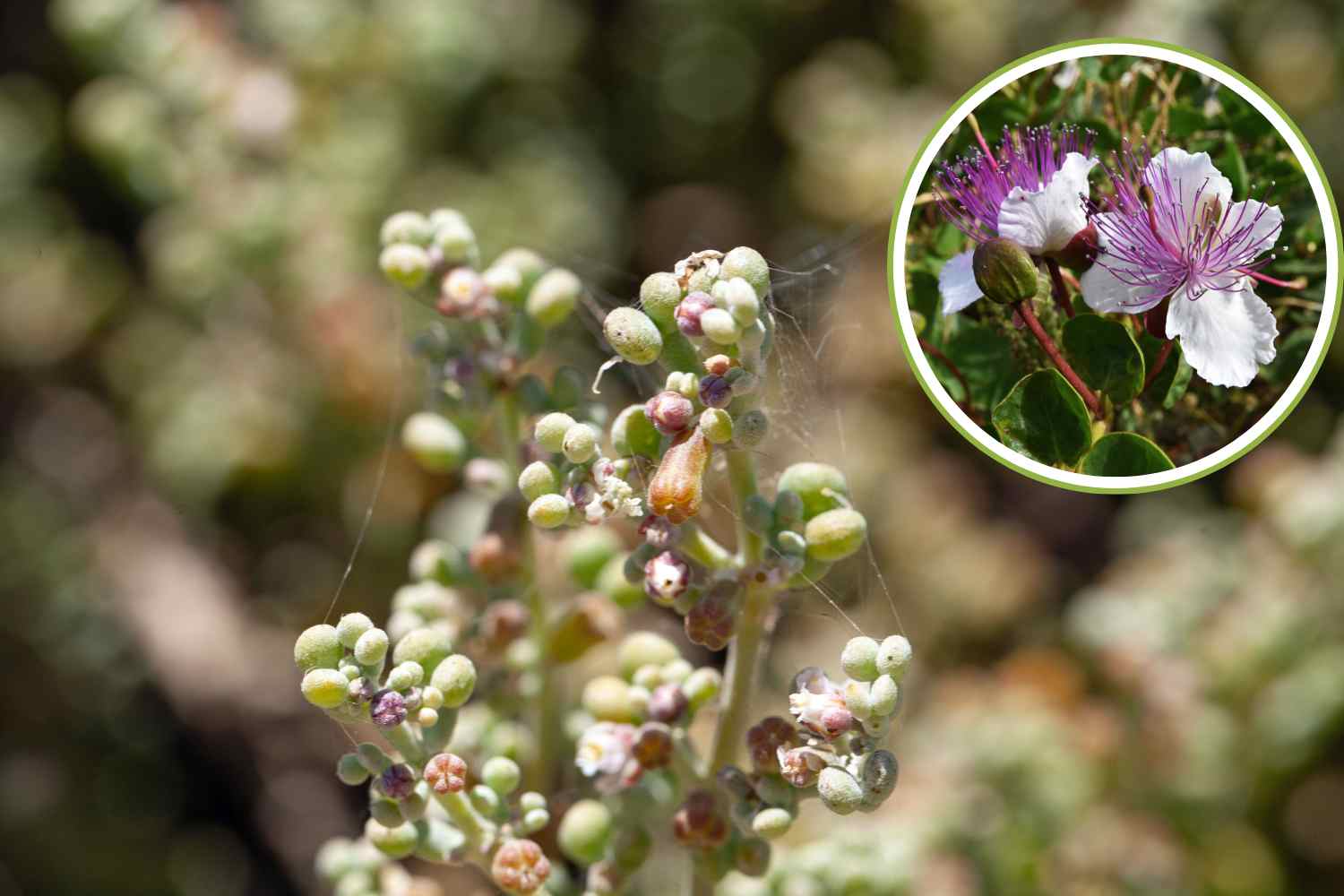
What color is the flower of the caper? Perhaps not everyone knows that the capers grow on a real screw of white flowers and nothing else are only open flowers.
Just as for the artichoke, even the cape is collected before flowering for this reason many do not recognize the flower itself: let’s say that we are used to seeing it in our tables in a different way.
But as we said, the buds of the flower of the homonymous plant are called capers. In addition to the capers, among the edible buds we find nasturzio, calendula and lion tooth.
The cape flowers are hermaphrodite and white in color with shades ranging from pink to violet, they are made up of four oval petals while the pistil is supported by a very long peduncle. The Mediterranean plant blooms from May onwards and until the autumn colors nature.
The plant of the Caparis Spinosa It needs a lot of sun and fears the frost, it is part of the capecidaceous family and its flowers also reach 5 centimeters in diameter. The fruit, on the other hand, is a berry that contains numerous seeds inside.
Often the capers are grown in the cracks of the walls and between the stones, where it is easier for the seeds to take root, but also in peat or sand boxes. They are known for their beneficial properties, it is no coincidence that they are officially inserted among traditional Italian agri -food products, while the typical capers of Pantelleria have received the protected geographical indication (IGP).
The capers are still gathered closed and can be kept in salt, but are the protagonists of the kitchen for their thousand uses: from the Sicilian aubergine caponata, to the Gazpacho to the couscous. The capers are also excellent as an additional ingredient in the preparation of focaccia and rice or green summer salads, as well as to make the fillings of fresh homemade pasta more tasty.
In addition to their gastronomic use, capers played an important role also in popular medicine. In the past, the infusion obtained from the roots was used to stimulate appetite and encourage digestion, while the leaves were used for soothing compresses against joint pain and inflammation. Among the many properties are the diuretic and healing ones as regards hemorrhoids, varices and gout. They contain vitamin A, vitamin C and vitamins of group B. are rich in mineral salts such as calcium, potassium, iron and phosphorus. To know all the properties click here.
Today these practices are less widespread, but the plant continues to attract the interest of phytotherapy for its natural antioxidant and anti -inflammatory properties.
How the collection and conservation of capers takes place
Another curious aspect concerns their collection: it is a meticulous and manual job, because the buds must be caught at the right time, when they are still small and turgid. If they are left too much on the plant, they quickly open in bloom and lose the commercial value. After the collection, the capers do not consume immediately: they must undergo a process of salting or conservation under vinegar to develop their typical decisive and aromatic flavor. It is precisely this transformation that makes them so unique in Mediterranean cuisine.
