
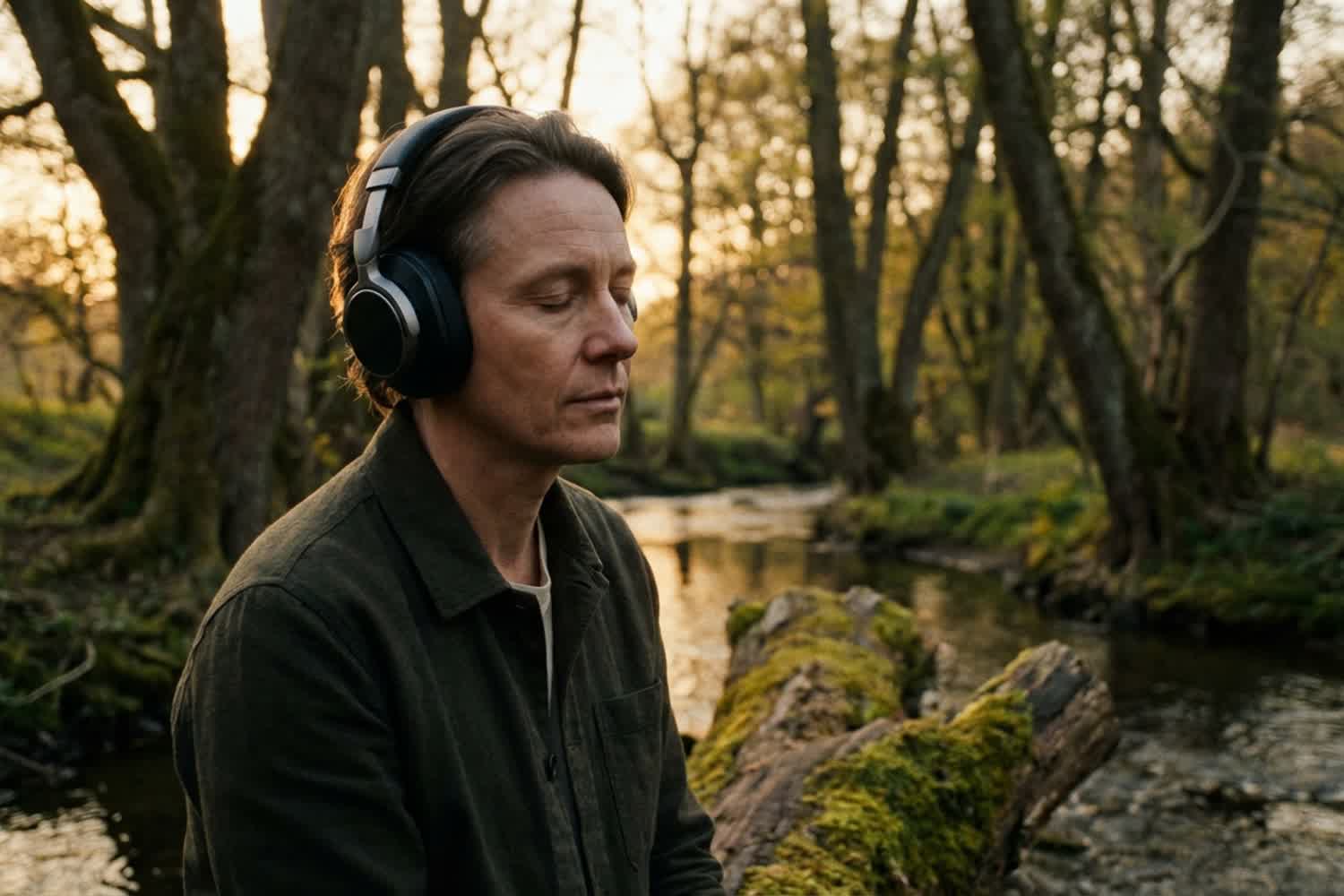
Are your ears the same age as you on your ID? It’s not said. A viral test that is making the rounds on social media is making thousands of people discover that their hearing is already that of someone much older — and the thing, beyond the game, has very solid scientific basis.
Hearing loss is one of the most underestimated phenomena of aging, but the most recent data from the World Health Organization speak clearly: over 1.5 billion people in the world live with some form of hearing impairment, and it is estimated that by 2050 there will be 2.5 billion. It’s not just a question of the elderly: more and more young people are showing early signs of hearing deterioration, thanks to chronic exposure to high volume music via earphones and headphones.
But why do ears age? The hair cells present in the cochlea — the spiral structure of the inner ear — are responsible for the transduction of sound into nervous signals. These cells are extraordinarily delicate and, above all, they do not regenerate. Once damaged by loud noises, ototoxic drugs or the simple passage of time, they are lost forever.
It is precisely for this reason that scientific research in recent years has focused heavily on the regeneration of hair cells: studies on stem cells and gene therapies are opening up promising scenarios, but we are still in an experimental phase. In the meantime, prevention remains the only real weapon.
With the progressive deterioration of these cells, the range of frequencies that our ear can perceive narrows. Under optimal conditions, a young and healthy ear perceives from 20 to 20,000 Hz. With age — or with noise damage — we first lose the ability to hear high-pitched sounds (high frequencies), then gradually also the lower ones.
This is why you struggle to understand lines in a movie, or miss half the words when someone talks to you in a noisy environment: it’s not distraction, it’s physiology.
New studies link hearing health to brain health: research published in The Lancet confirmed that untreated hearing loss is a major modifiable risk factor for developing dementia. The brain deprived of sound stimuli “works” harder to process sounds, taking away cognitive resources from other functions. One more reason not to ignore the signals our ears send us.
Do you want to find out how old your ears are?
The Italian TikToker @NickAntik has created a hearing test that proposes a sequence of sounds at increasing frequencies: based on the last frequency you can hear, the test returns an approximate age of your ears. Frequencies above 12,000 Hz are generally the first to disappear from perception when hearing begins to decline.
Try it below — it’s a fun and informative test, it doesn’t replace an audiometric visit or a consultation with a specialist, but it can be an excellent starting point to start taking care of your hearing:
@nickantik If I reach 50 it’s already good
#socialexperiment #socialexperiment #nickantik #doctor #humanbody #anatomy
♬ original sound – Nick Antik


Some practical tips to protect your ears:
We also recommend:
