
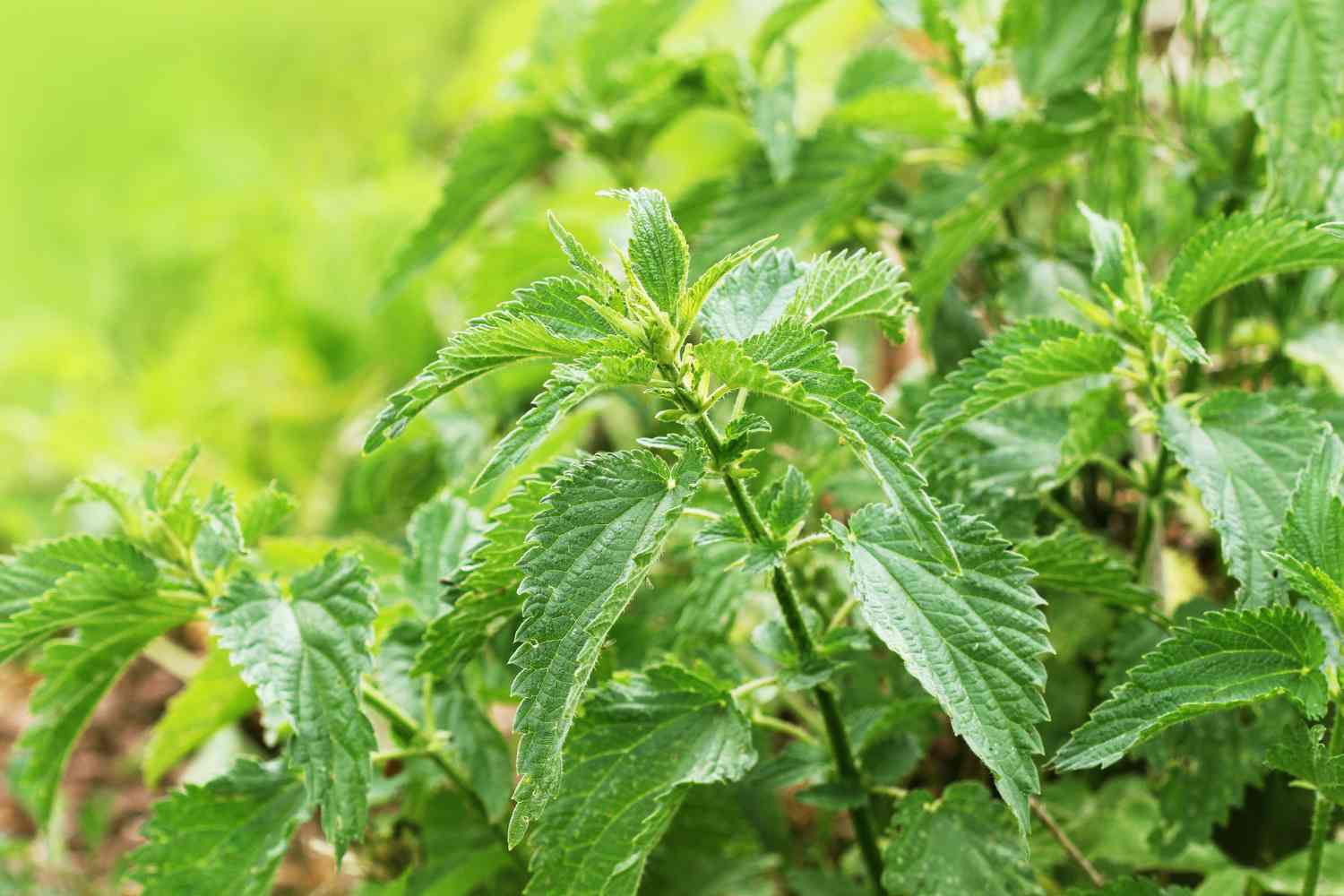
Nettles are often unwanted guests that invade our potted plants or flowerbeds, infuriating all people with green thumbs. Nettle not only ruins the aesthetics of our gardens, but it could also cause skin irritation when we touch it. For this reason there are numerous chemical substances on the market that are useful for getting rid of this wild weed, however there are also other ways of doing so that are decidedly more organic and which, above all, can allow the reuse of nettle in various ways. Let’s find out which ones.
@ljubovb/123rf.com
Before you start: how to protect yourself
Before dealing with nettles, it is essential to equip yourself correctly, regardless of the method chosen to eliminate them. You need gloves with a thick consistency, so that the hair of the sole does not come into contact with your hands, as well as long trousers, shoes that cover the entire foot and ankle, and long sleeves. In fact, the plant owes its stinging power to thick hair which, in contact with the skin, releases irritating substances capable of causing burning and even intense itching.
(Read also: This weed that covers your vessels is unexpectedly capable of burning fat and speeding up your metabolism)
Get rid of nettles organically
The main problem with using chemicals to combat the spread of nettles in pots is the possibility that they could also ruin the infested plant. Eliminating nettles without using chemicals is not easy, but it is certainly more effective in protecting the environment around you. There are two ways of removing the herbaceous plant that we recommend:
Because manual removal remains the best choice
Of all the available methods, the mechanical-manual one remains the most recommended by gardening experts, because it combines effectiveness and respect for the surrounding environment. We proceed first by eliminating the stems with a scythe, then collecting the cut portions with a rake, to finally eradicate the rhizome by hand or with a special grubber. The key point, as also mentioned in the original article, is not to leave root fragments in the soil: even a minimal portion is sufficient to restart the growth of the plant in the following weeks.
Reuse nettle
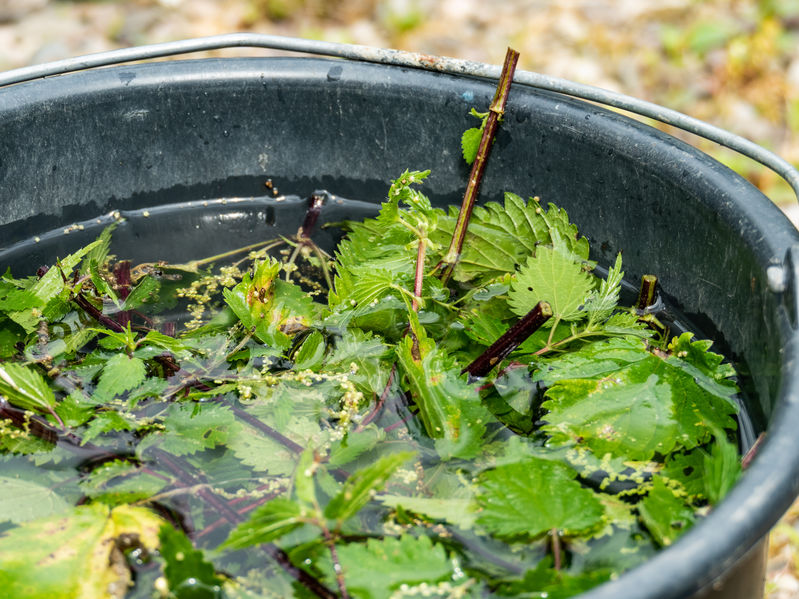
nettle brew a natural fertilizer made from fermented stinging nettles (Urtica dioica)
What you perhaps don’t know about nettle is that this plant has beneficial and healing properties, which make it an effective medicinal plant, particularly used in herbal medicine, but it can be used in the kitchen for the preparation of tasty dishes.
Beneficial elements include potassium, phosphorus, iron, vitamin A, vitamin C, calcium and potassium. Its richness in trace elements makes it a plant with remineralising properties, useful for those suffering from rheumatism. It can be useful for donating calcium to bone mass in menopausal women or offering iron to those suffering from this particular type of anemia.
Let’s explore 5 of the possible uses of nettle.
Nettle fertilizer
Nettle is an extremely effective fertilizer due to its high nitrogen, magnesium and iron content. Collect the nettle leaves using gloves and place them in a large container without pressing them. Add water to cover the nettles and close with a lid. The composition of water and nettles must remain closed for about three weeks. After this time, filter the mixture and store it in a bottle equipped with a special dispenser. Once ready, dilute the mixture with sparkling water and put it in a spray bottle.
Those who prepare nettle macerate as a fertilizer or pesticide can extend its life over time with a little trick: adding 5-10% of vinegar to the mixture serves to block the fermentation process, allowing it to be preserved for longer without losing its properties. Nettle leaves are stinging because they contain salicylic acid and formic acid, the two chemical substances that make the macerate effective both as a fertilizer rich in nutrients and as a natural repellent against parasites.
Nettle tea
Fill a basin with lots of nettles, cover with water and leave them for a couple of weeks. Nettle tea is great for all those plants that require nitrogen, just apply it once a week during the growing season.
You can also use the mixture of water and nettles in a spray bottle to combat aphids that nest on roses and fruit plants. Simply spray directly on the aphids to kill them or at least repel them.
Nettles in the compost
Nettles are a great plant to add to compost because their roots can reach deeper than other plants and they release nutrients from the soil. When adding nettles to your compost bin, remove any flowers that may contain seeds.
Homemade nettle-based tincture
Leave 10 grams of dried leaves to macerate in 100 grams of alcohol for liqueurs, with the addition of 30 milliliters of water. Remember to use a dark glass bottle or bottle and leave it to rest in the dark for ten days. You can now use a few drops of this nettle-based dye to massage your scalp, in order to strengthen your hair and try to prevent seasonal hair loss.
Nettle infusion
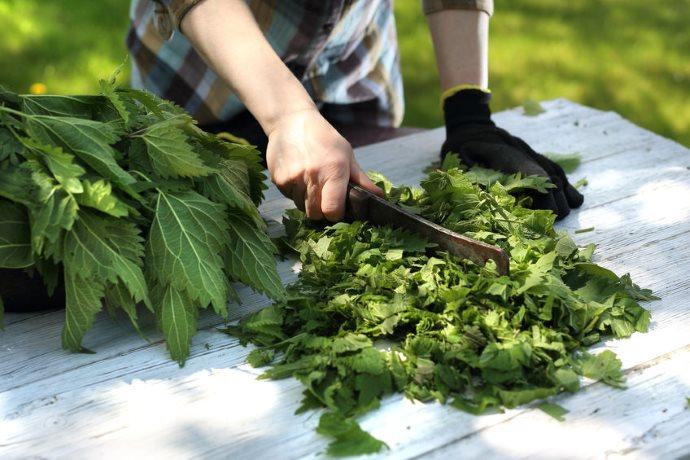
The dried nettle flower tops can be used to prepare an infusion useful for those who suffer from iron deficiency. To prepare the infusion, simply let a teaspoon of dried nettle flowers rest in a glass containing 250 milliliters of boiling water. The infusion must be filtered and left to cool before consumption.
There are also numerous recipes based on nettle, which you can find listed in the following article: Nettle: recipes, how to use it in the kitchen and how to preserve it
About nettle you might also be interested in:
