
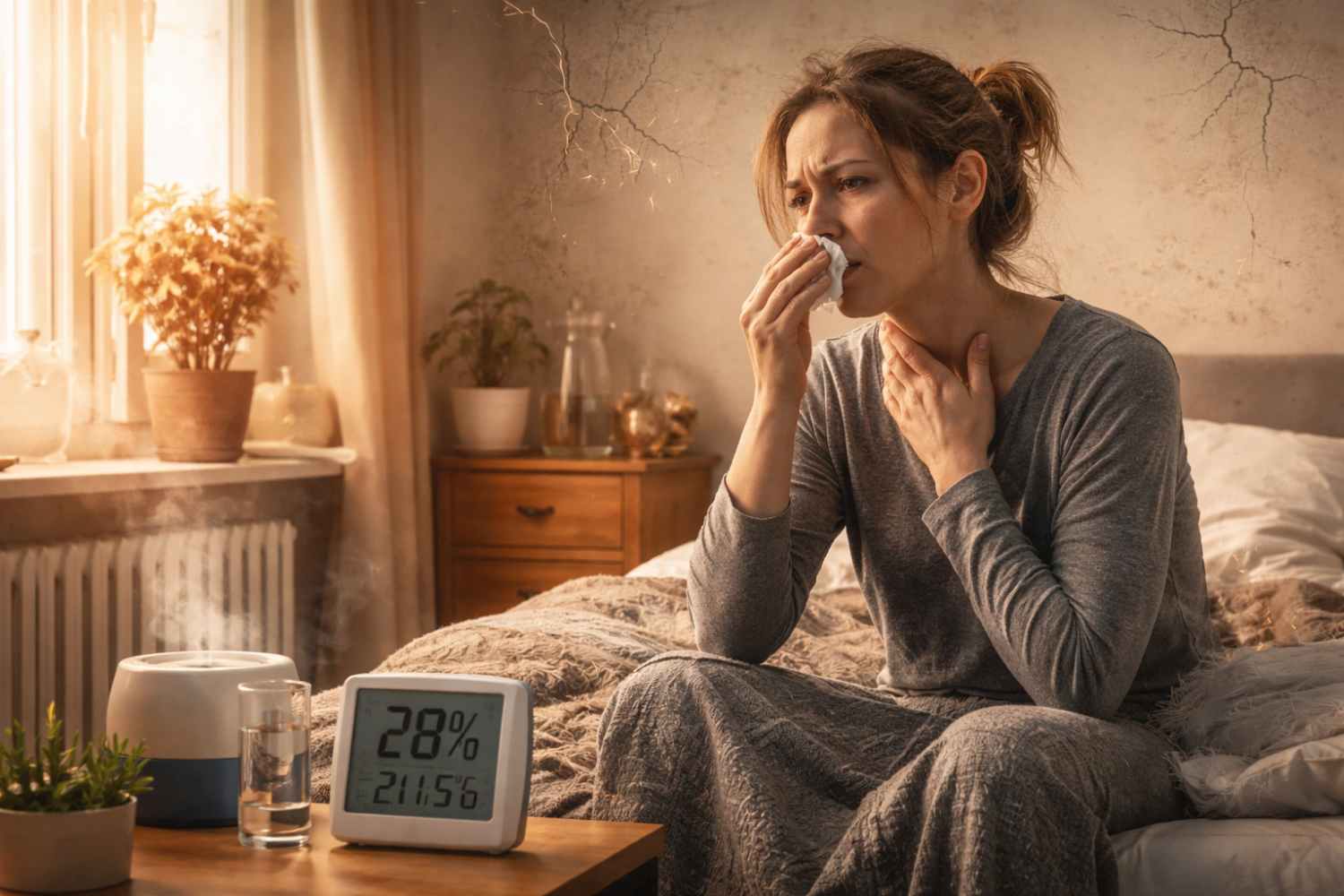
During the night hours the body regenerates, slows down its rhythms and entrusts part of its balance to the quality of the home environment. Precisely while we sleep, the air we breathe plays a central role in general well-being, often more than we imagine. In the event that the internal microclimate presents a humidity level that is too low, at that point the body could send precise signals that deserve great attention, because prolonged dryness can compromise health in a gradual but concrete way.
The alarm bells that appear when you wake up
The night represents the moment in which the ailments linked to dry air emerge with greater clarity. Upon waking, sensations such as sore throat, tight or itchy skin, chapped lips and red eyes often indicate an excessively dry environment. These are common symptoms during the colder months, when the heating remains on for a long time and the windows remain closed for many consecutive hours.
The quality of sleep is also affected by these conditions, including frequent awakenings, mild but persistent breathing difficulties, discomfort in the nasal mucous membranes or throat. In some cases, a dry cough also appears, while in the morning the nose is blocked or has small crusts.
Among the most recurring signs are:
In children and the elderly, the most vulnerable categories, dehydration of the mucous membranes increases the risk of infections and inflammation, because the natural defenses of the respiratory tract lose effectiveness.
Why the domestic microclimate affects health
The comfort of a home does not just depend on the temperature. Relative humidity – i.e. the ratio expressed as a percentage between the quantity of vapor present in the air and that of the atmosphere saturated with water – plays a decisive role and should remain between 40 and 60 percent. Lower values can compromise the balance of the mucous membranes and make them more fragile and less protective against viruses, bacteria and fine dust.
Traditional heating systems, especially radiators, stoves and fireplaces, contribute to rapidly lowering humidity levels. Added to this is insufficient ventilation, due to new generation fixtures – no drafts, it’s true, but this is precisely the point – and a lack of habit of daily air exchange.
Over time, exposure to too dry air could lead to the following:
In these conditions, even the immune system struggles to fully carry out its function, because the body’s natural barriers would be weakened.
How to monitor humidity and identify its causes
The simplest way to keep the home microclimate under control is to use a hygrometer, an instrument that allows you to check the humidity level in real time and intervene before obvious disturbances appear. Digital models, often combined with the thermometer, guarantee immediate and intuitive reading.
The main causes of dry air in the home can include:
Failure to ventilate the bedroom, especially in the cold months, also significantly contributes to nighttime dryness.
Excessive heat and internal air imbalances
Keeping a warm home is not the same as guaranteeing comfort, because excessively high temperatures, combined with low humidity, create an unfavorable environment for those suffering from respiratory disorders. In the presence of asthma or bronchial hypersensitivity, hot, dry air alters the function of the mucous membranes and makes breathing more laborious.
The ideal temperature indoors should not exceed 22 degrees. When the air is too dry, the use of humidifiers helps to re-establish a healthier balance, but be careful to avoid the opposite excess: humidity above 60-70 percent favors mould, mites and microorganisms, with negative effects especially for allergy sufferers. Regular ventilation remains the first form of prevention, supported, if necessary, by dehumidifiers.
Heating, air conditioners and wood stoves
In work environments and in many modern homes, heating comes from air conditioning systems. In these cases, periodic maintenance is essential, with clean filters and regular checks, to avoid the spread of mold and contaminants in the environment.
Even fireplaces and wood or pellet stoves, while evoking an idea of natural heat, produce soot and fine particulate matter, substances that irritate the mucous membranes and represent an additional risk for those with respiratory diseases.
Effects on the home and concrete remedies
Too dry air doesn’t just damage your health. Wooden furniture and floors tend to crack, plaster can peel off and paints can lose consistency. Even ornamental plants show obvious signs of distress, with dry or stained leaves.
To re-establish an adequate level of humidity, some daily practices are useful:
The choice of materials also matters, so make room for breathable fabrics for bed linen, treated furnishings and small water containers near the radiators that help preserve the microclimate.
When to ask for the intervention of a specialist
If the dryness persists and the problems do not improve, the support of a specialized technician will allow the conditions of the internal air to be accurately assessed. A professional inspection allows you to prevent any structural damage to the house and protect the health of the inhabitants.
