
Reggio Calabria is too often reduced to a simple transit dock, a stage of passage for those headed for the ferries to nearby Sicily. The city instead preserves a thousand-year-old soul founded by the Greeks in the 8th century BC, stratified by Roman, Byzantine, Arab and Spanish dominations.
To understand the true magnetism of this Mediterranean pearl, the ideal moment is the evening, when the wind from the Strait caresses the historic architecture and the Sicilian coast almost seems like you can touch it. This optical phenomenon, known as the mirage of the Fata Morgana, transforms the nearby shore of Messina into a reflection suspended on the water, offering a suggestive start to the journey.
@RebeccaManzi/GreenMe
The Falcomatà seafront: the most beautiful km in Italy
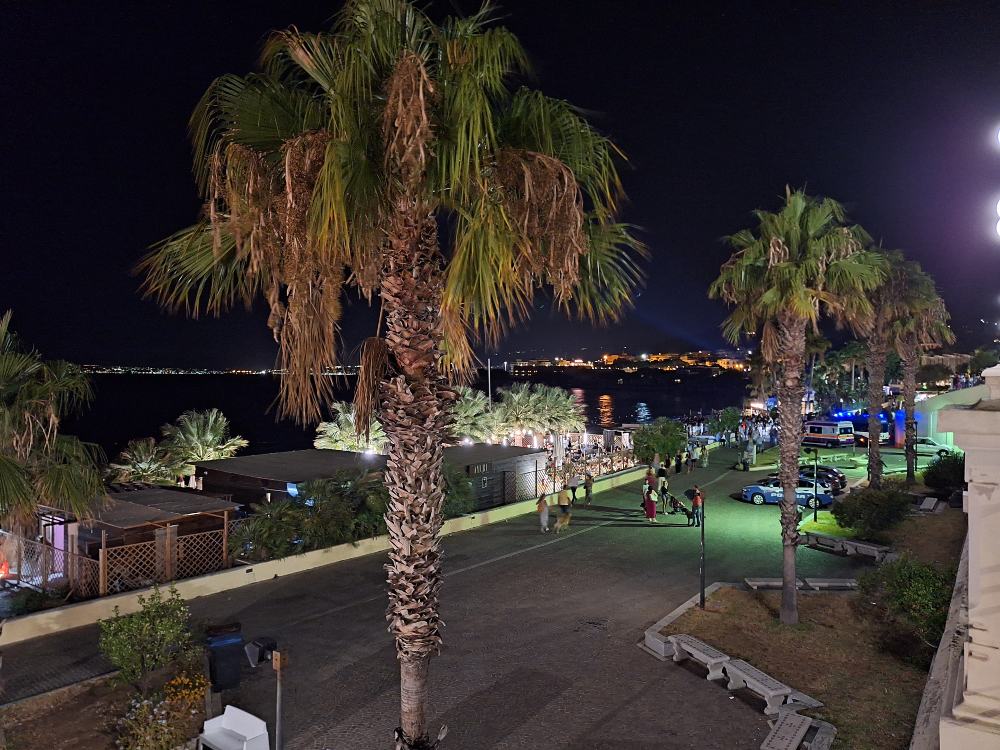
Our evening itinerary can only orbit around the Lungomare Falcomatà, baptized by residents as Via Marina and considered the “most beautiful kilometer in Italy”. This enormous public terrace extends for 1.7 kilometers, connecting Piazza Indipendenza to Piazza Garibaldi. Walking here means walking through a real open-air art gallery, where the sea breeze accompanies the profiles of the Art Nouveau buildings such as Palazzo Zani, Palazzo Spinelli and the majestic Villa Genoese Zerbi, a nineteenth-century structure rebuilt in 1915 which today houses an ice cream parlor within its spaces. The street is divided into various strips, including a rich botanical strip adorned with centenary exotic, tropical and subtropical trees.
@RebeccaManzi/GreenMe
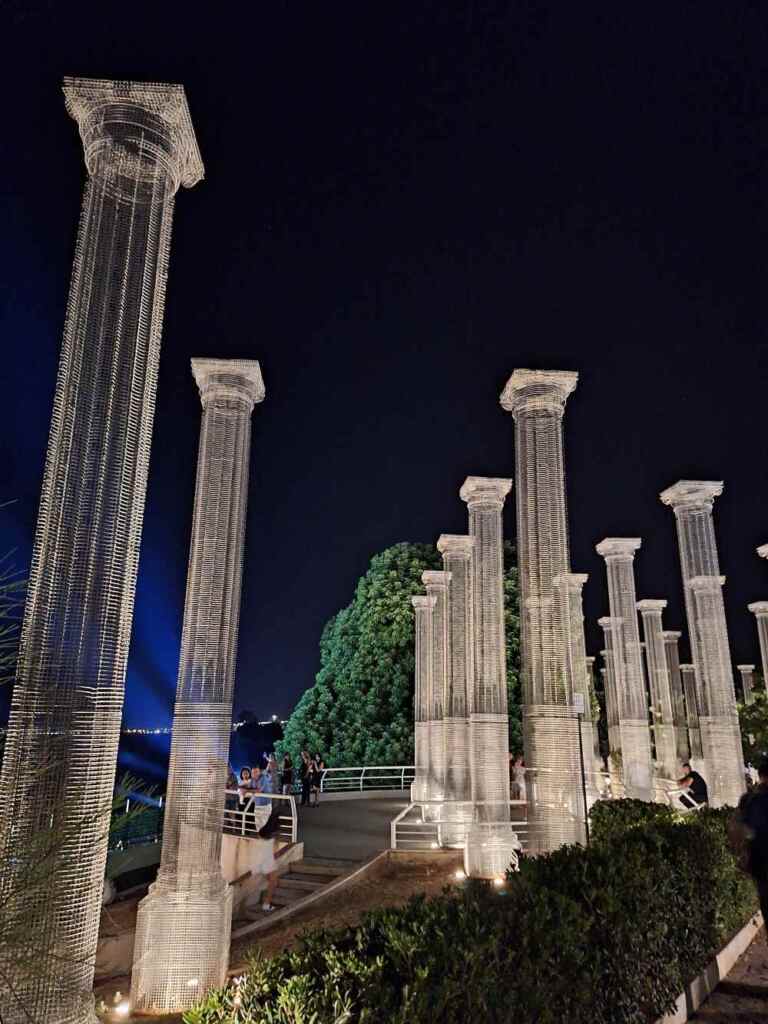
The integration between the ancient and the contemporary is the real strong point of the walk. On the seafront, Opera by Edoardo Tresoldi stands out, a permanent installation from 2020 made up of 46 8 meter high metal mesh columns, which creates a play of harmonies and transparencies with the surrounding landscape. Not far away, attention is captured by the three humanoid sculptures in bronze and aluminum created by the artist Rabarama: Trans-letter, Labyrinthitis And Constellation.
@RebeccaManzi/GreenMe
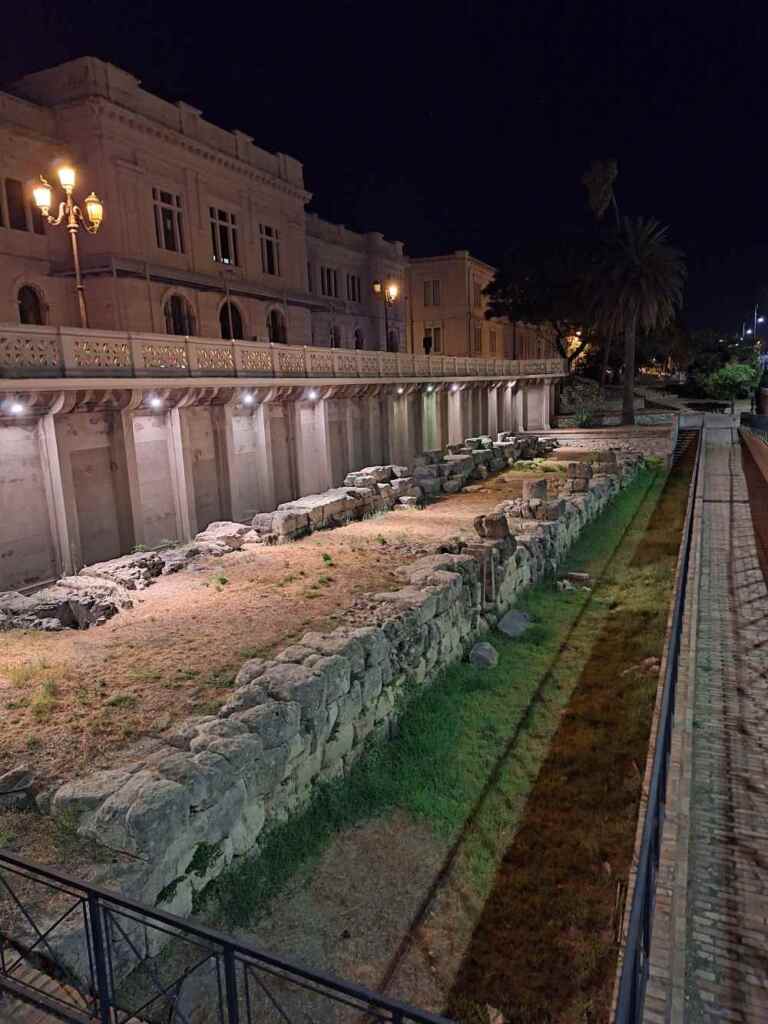
The route is further enriched with the presence of the archaeological remains of the Roman Baths and the ancient Greek city walls, historical testimonies that arise a short distance from the monumental fountains.
@RebeccaManzi/GreenMe
The Strait Arena is the monumental heart of the city
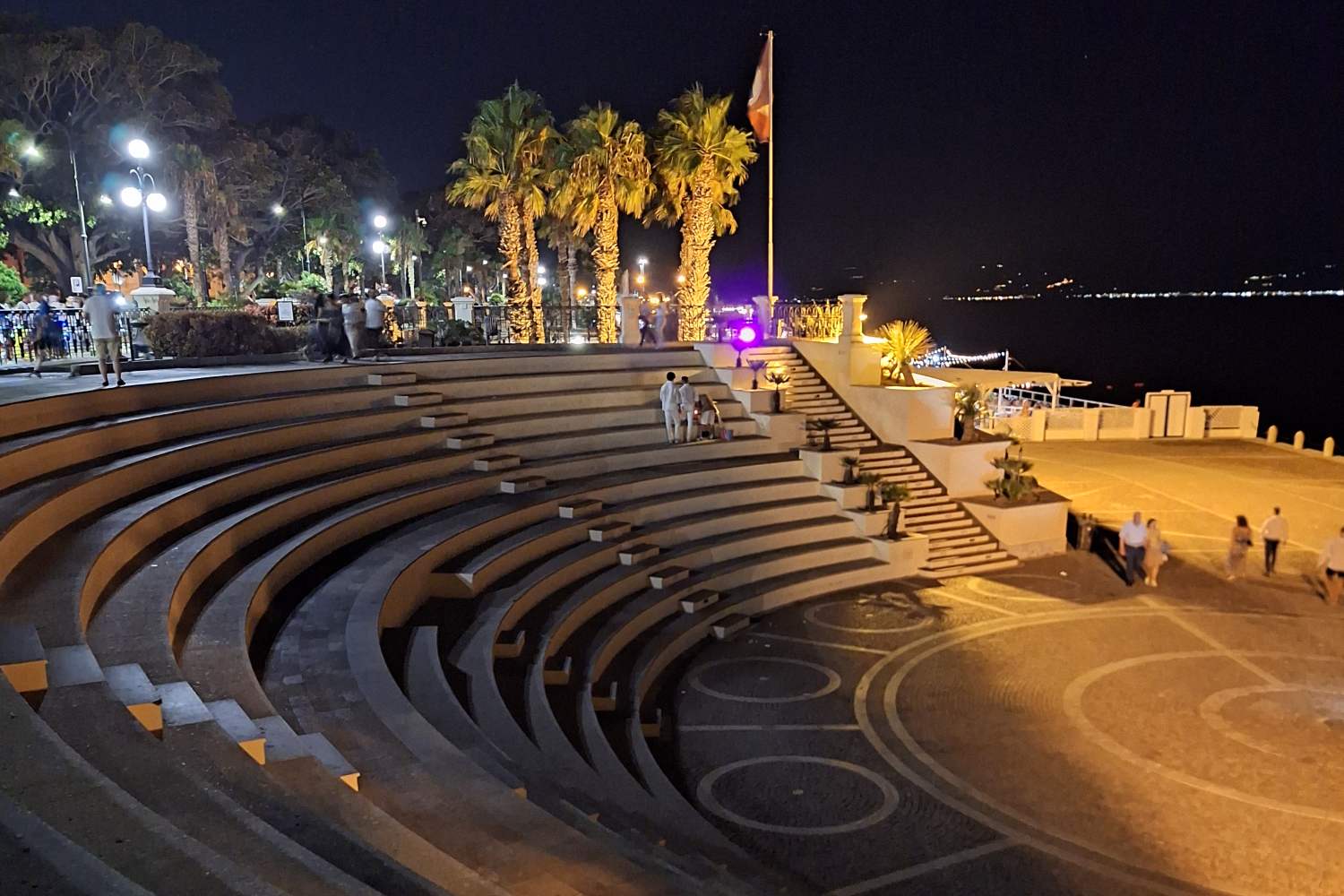
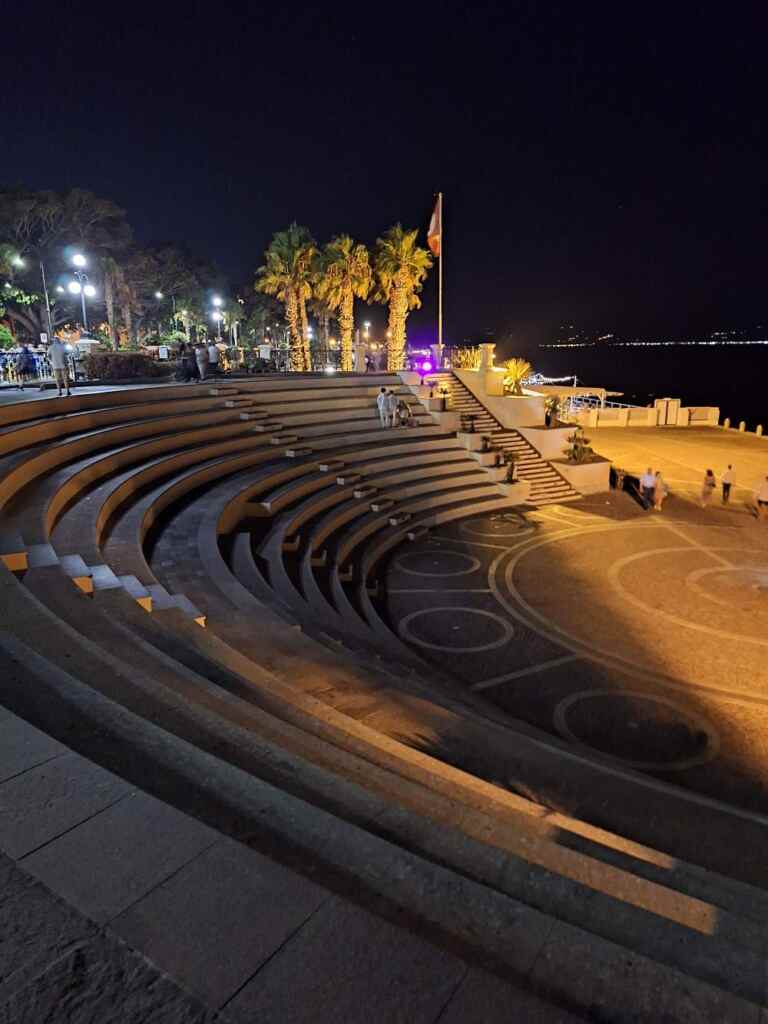
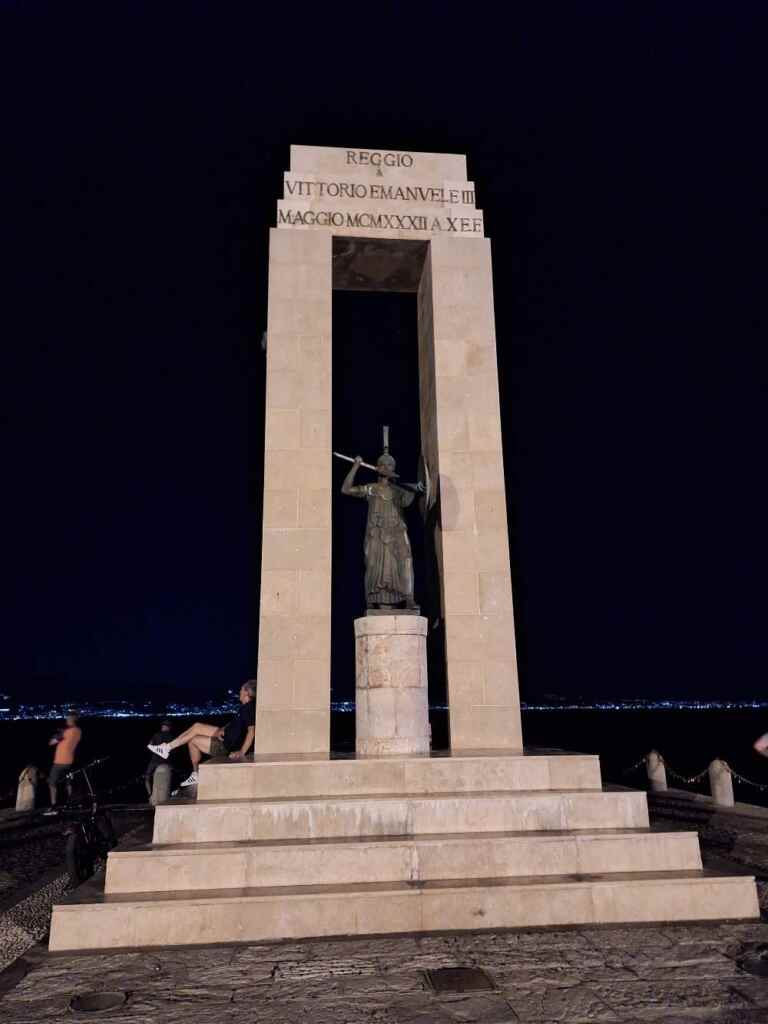
Continuing along the Via Marina, we came across the Arena dello Stretto, a modern amphitheater built on the site of an old pier, designed in imitation of classical Greek theatres. At the center of the structure stands a marble cippus which supports the bronze statue of Athena Promachos, the goddess Athena placed to defend the city of Reggio. In the evening, this space transforms into the hub of city events, hosting concerts and festivals under the starry sky.
@RebeccaManzi/GreenMe
@RebeccaManzi/GreenMe
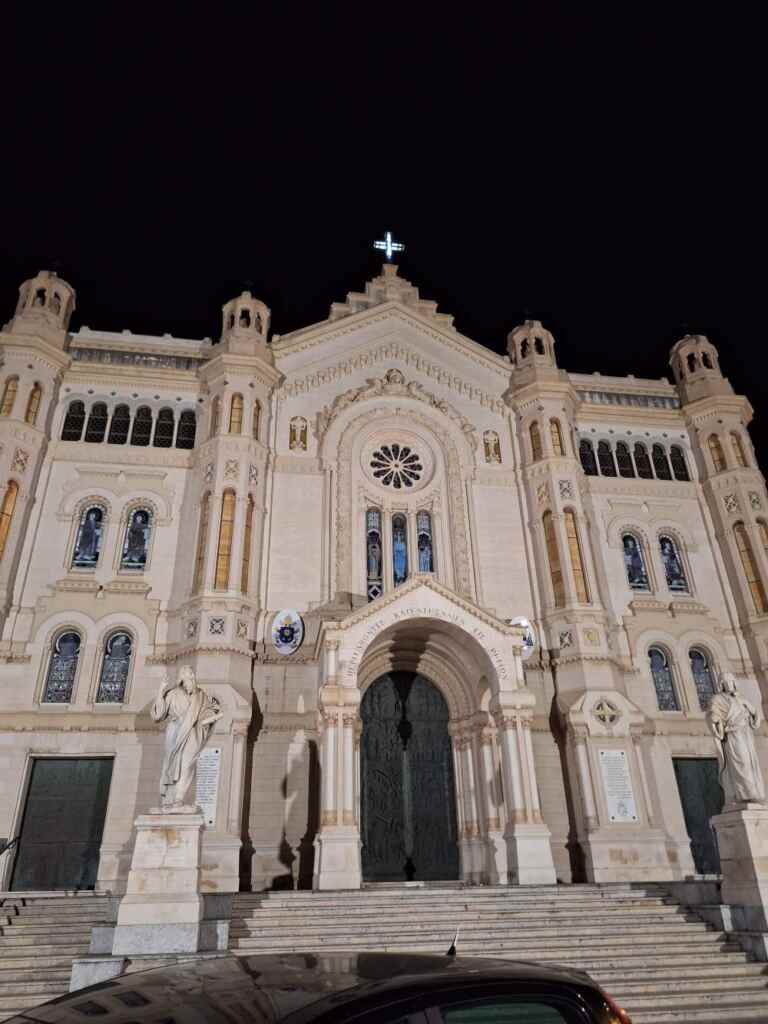
Leaving the coast to enter the centre, we reached the Cathedral of Maria Santissima Assunta in Cielo, the city cathedral, which represents the largest sacred building in the whole of Calabria. The current cathedral, characterized by an eclectic-liberty and neo-Romanesque style, was inaugurated in 1928 after the destruction of the old Norman structure due to the earthquake of 1908. The facade is enriched by the imposing statues of Saint Paul and Saint Stephen of Nicaea, sculpted by Francesco Jerace. Inside, the polychrome windows stand out, the marble pulpit from 1902 supported by a column with a pink stone serpent, and the bronze baptismal font created by Francesco Auria in 1818. The true masterpiece of the cathedral is the Chapel of the Blessed Sacrament, a national monument and the greatest example of Calabrian baroque, embellished with polychrome marble inlays and sculptures of the four evangelists.
@RebeccaManzi/GreenMe
Aragonese fortresses and thousand-year-old mosaics
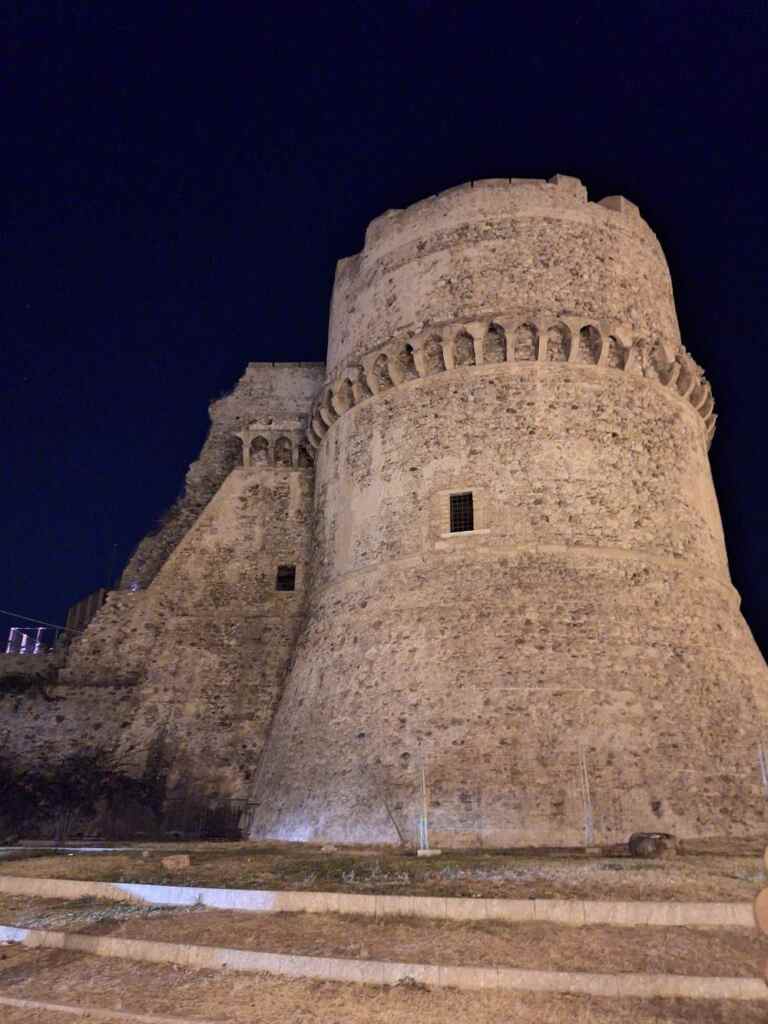
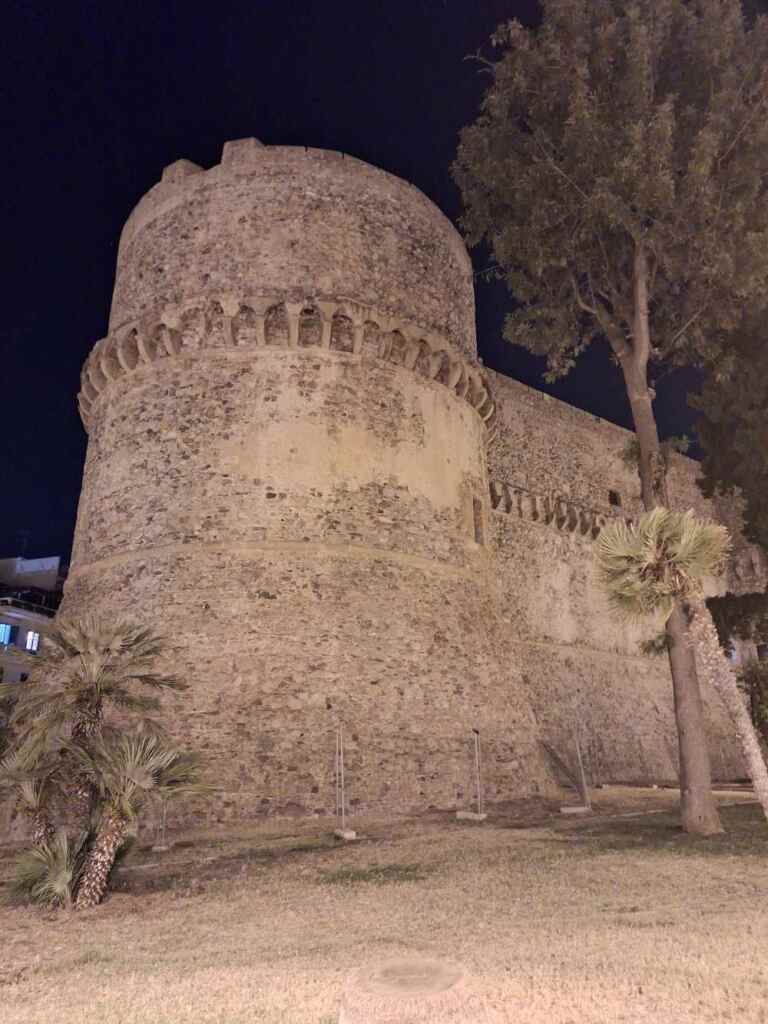
A short distance from the Duomo stands the Aragonese Castle, the ancient defensive bastion of the city whose origins date back to the Byzantine period. The current structure is linked to the radical restoration ordered by King Ferdinand I of Aragon, who added the two imposing cylindrical crenellated towers. From the bastions of the fortress you can enjoy a panoramic night view of the illuminated city.
@RebeccaManzi/GreenMe
@RebeccaManzi/GreenMe
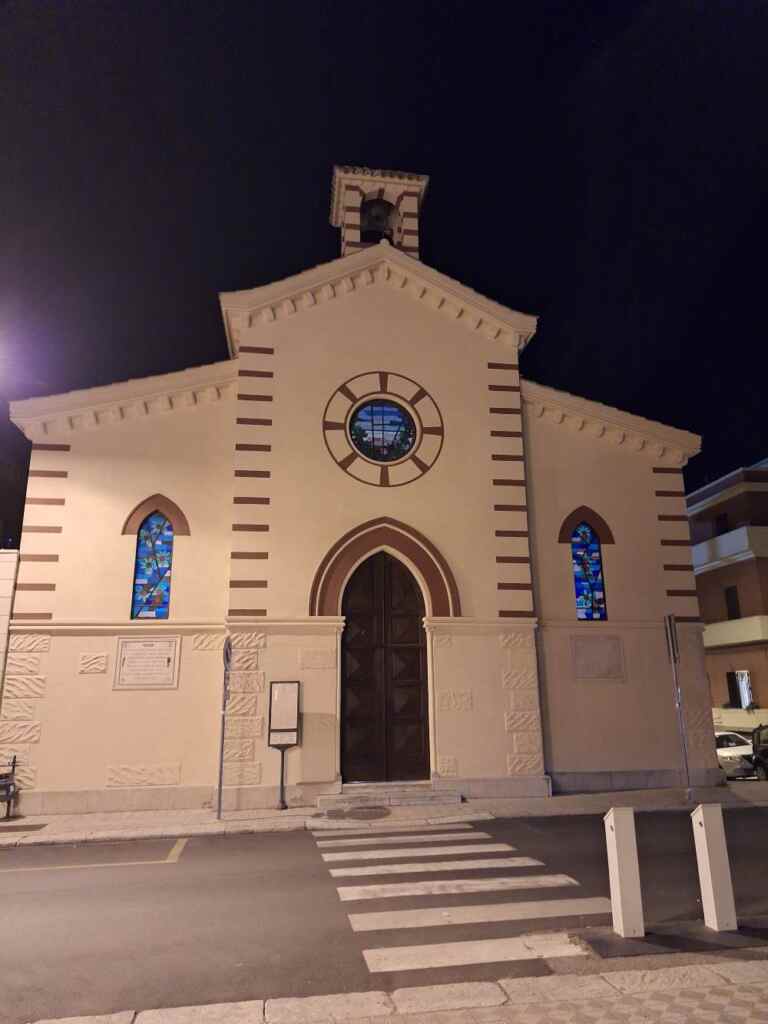
Right in front of the castle is the Church of the Ottimati, an Arab-Norman jewel from 955 AD, rebuilt in 1933. The church, easily recognizable by its characteristic red dome, preserves four columns from the Greco-Roman era at the entrance. The Church of the Ottimati houses an altarpiece from 1597 depicting the SS. Vergine Annunziata and the marble coats of arms of the Norman aristocratic families who founded the congregation, including the Filocamo and the Altavilla. The most important treasure, however, is the precious mosaic floor from the 12th century, composed of 33 different types of marble, where a central circle symbolizes God surrounded by the evangelists and apostles.
@RebeccaManzi/GreenMe
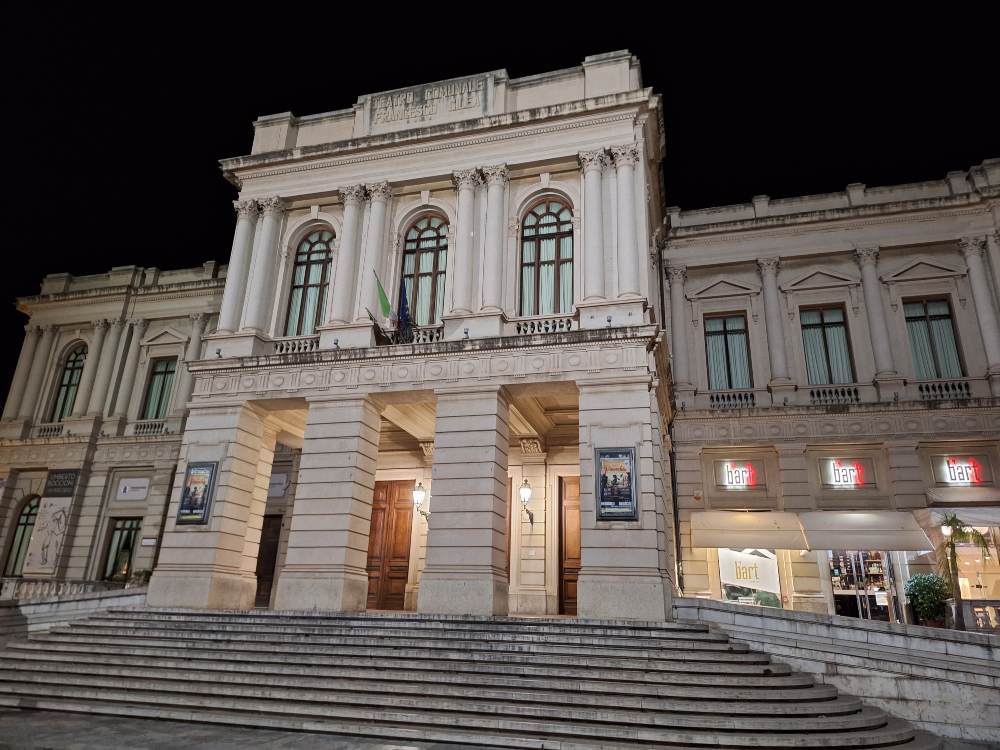
Finally, our itinerary in the historic center touched on the Francesco Cilea Theatre, a 1500-seat neoclassical structure which houses the Civic Art Gallery on the first floor. Precious works of art are preserved here, including the wooden tablets by Antonello da Messina and the paintings by Renato Guttuso and Mattia Preti.
@RebeccaManzi/GreenMe
