
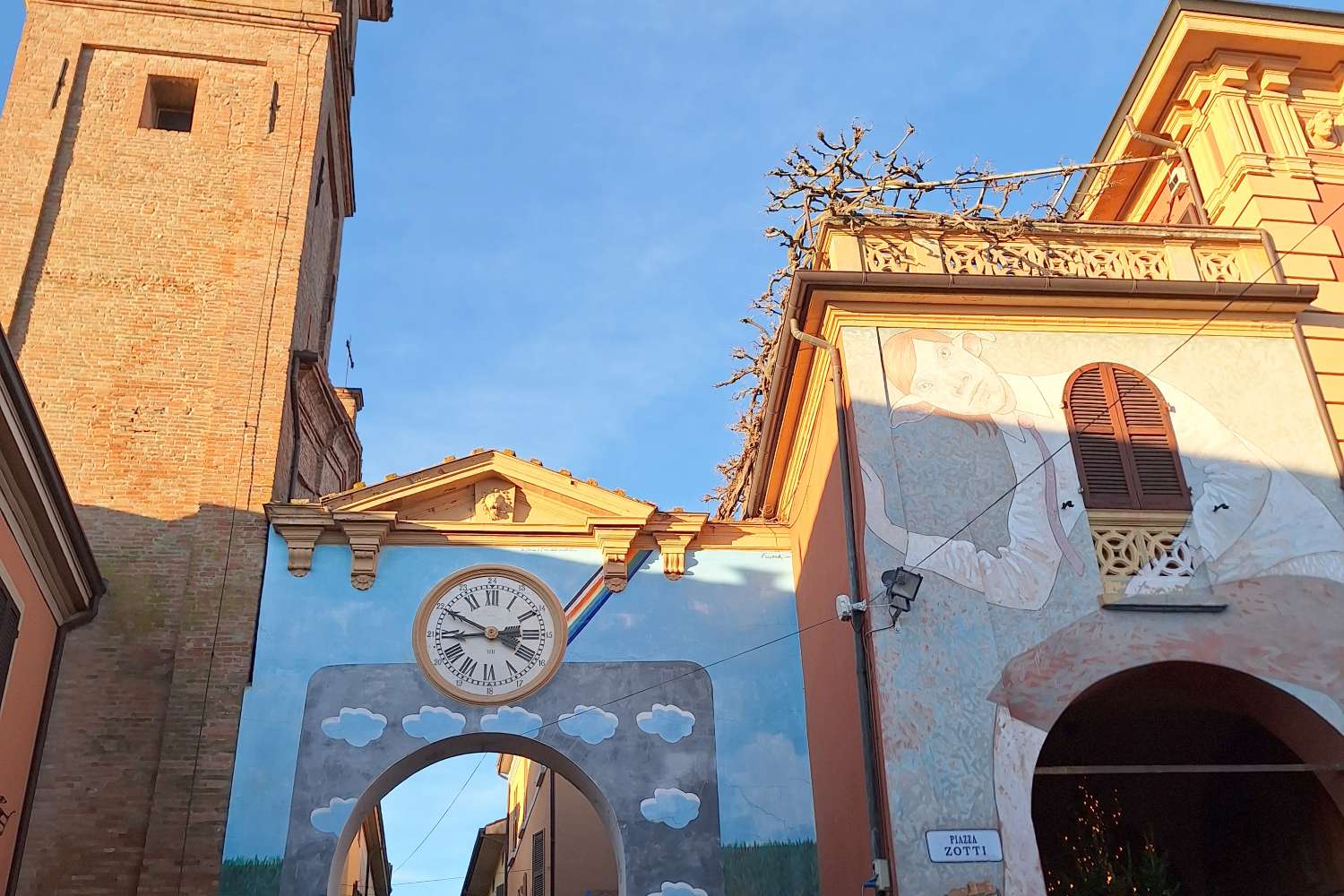
Our visit to Dozza began on a clear morning, with those Emilian hills that seem hand-drawn. As soon as we arrived at the edge of the village we immediately understood that this is not just any town: here the walls are in fact living surfaces. A few kilometers from Imola, but in the province of Bologna, Dozza is known for the presence of over one hundred murals created over time thanks to the Biennale of the Painted Wall, an event that transforms houses into canvases for contemporary artists.
The village of murals: an open-air museum
Having parked the camper, we walked towards the historic center with the narrow streets and ancient stone that prepare the visitor for something unexpected: an open-air museum. Everything takes place between Via XX Settembre and Via De Amicis, the two parallel streets. That’s where we started our walk, letting ourselves be guided by the colors that emerge between doors, windows and arches.
@RebeccaManzi/GreenMe
Piazza Carducci: the starting point of the mural route
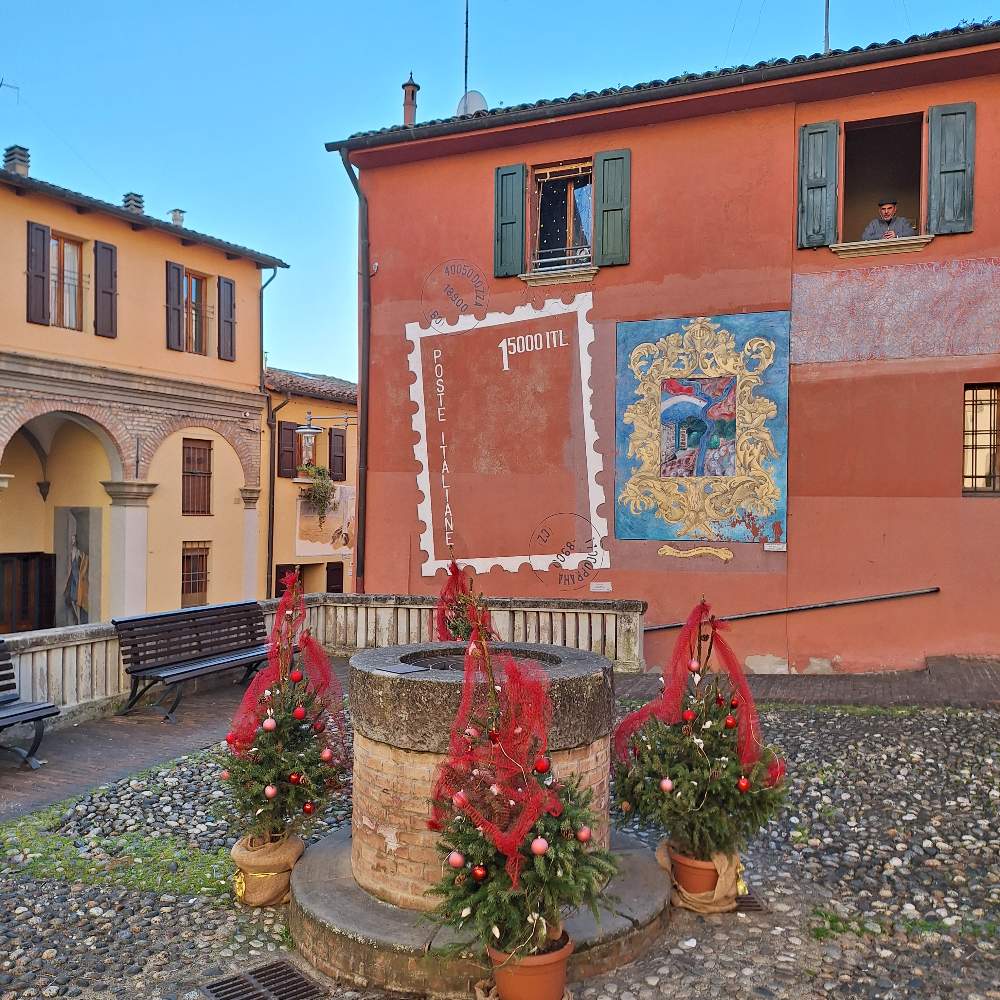
The first impact arrives in Piazza Carducci, where one of the most recognizable murals is the famous “Koncept Dozza” by Michal Strjecek. It is a huge painted stamp that seems to ideally send the entire village into the world. Here the concept of “painted city” becomes immediate: you are not looking at a work, you are inside it.
@RebeccaManzi/GreenMe
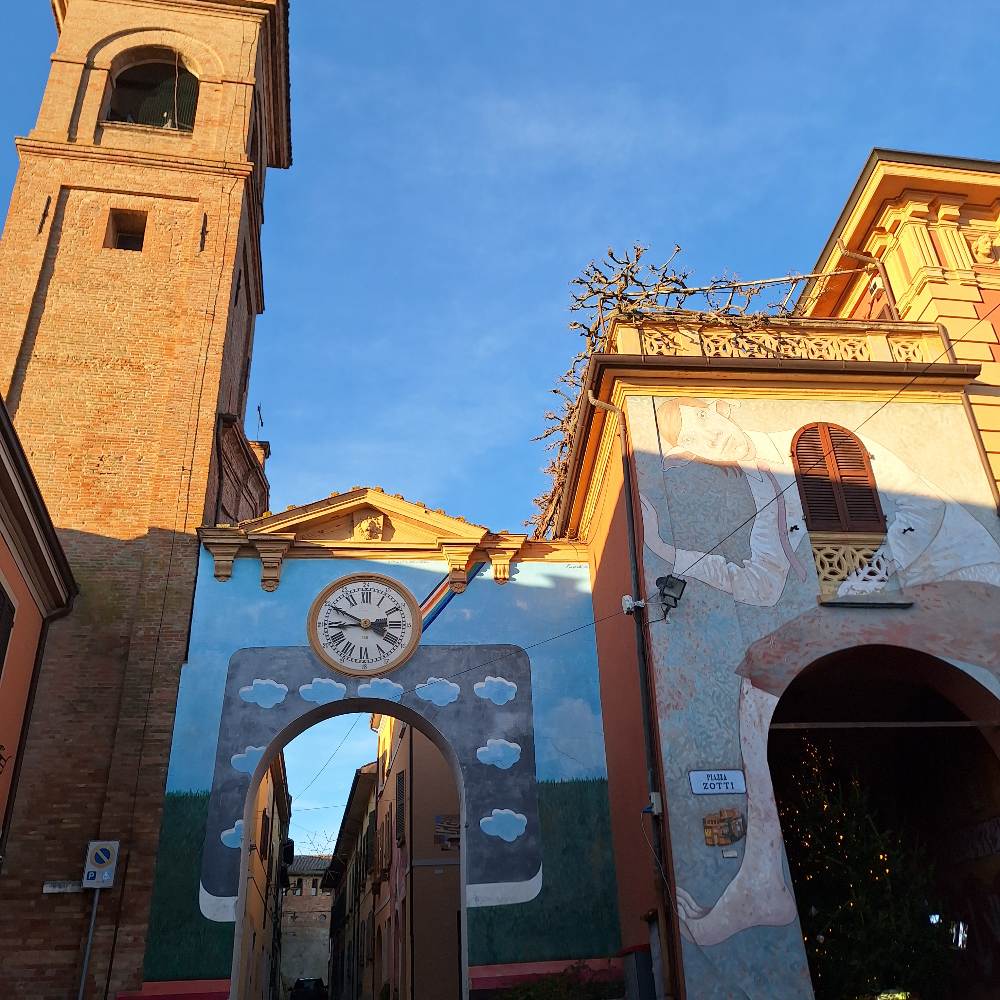
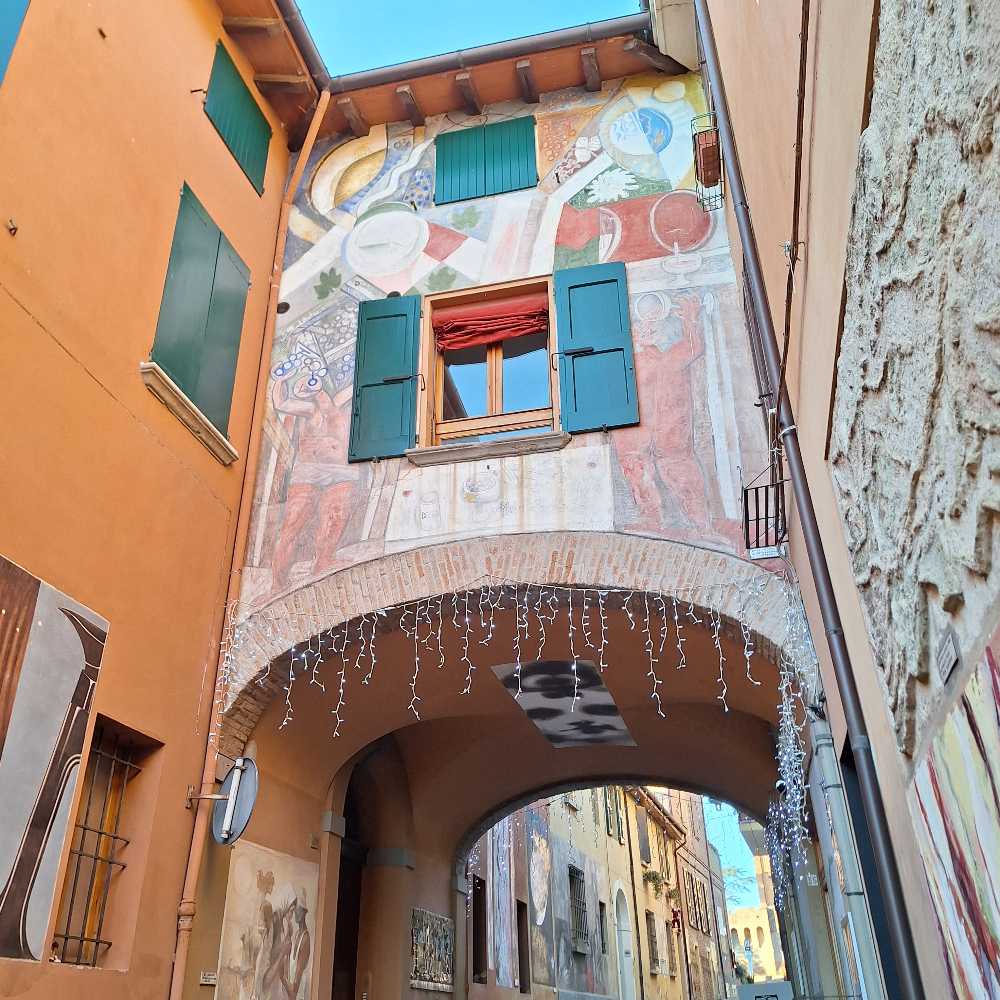
A little further on, on the arch that leads to Via XX Settembre, “Arcobaleno” by Alfonso Frasnedi appears, made of clouds and suspended colours. It is an almost symbolic passage: by crossing it you truly enter the most artistic area of the country. On the other side of the same arch there is a less flashy but very interesting work, “Il Tesoro dell’Ora” by Marcello Jori, which interacts with the stones of the village and seems to emerge directly from the medieval structure.
@RebeccaManzi/GreenMe
Via XX Settembre: the visual heart of the painted village
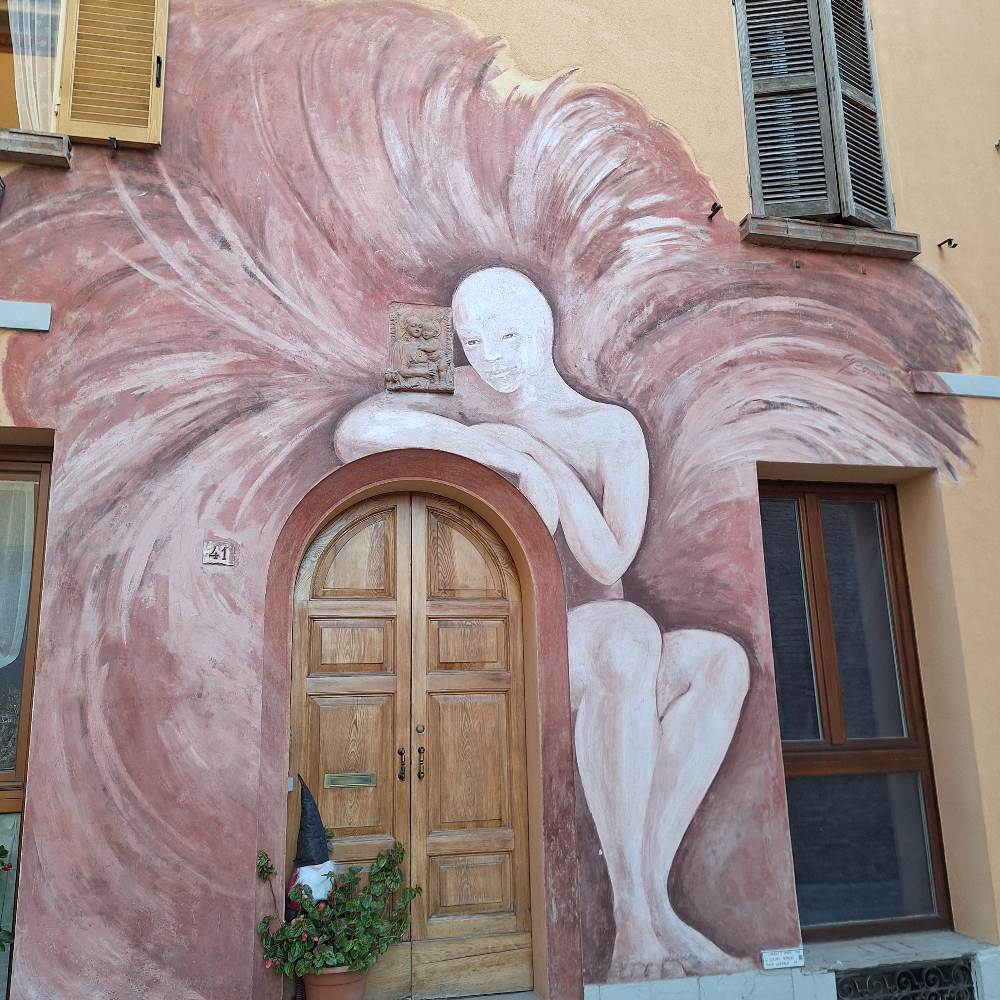
Continuing along Via XX Settembre, the view becomes continuous. Some of the best known and most photographed murals are concentrated here. Among the most iconic is “The Angel of Dozza” by Giuliana Bonazza, a monumental figure in pink tones that envelops a door as if protecting the passage between two worlds. It is one of the most photographed points of the village because the work does not limit itself to decoration: it interacts with the architecture.
@RebeccaManzi/GreenMe
Another interesting detail is how many murals are placed not on entire walls, but between architectural elements: frames, windows, doors. This makes the walk dynamic, because you literally have to “look” for the work.
@RebeccaManzi/GreenMe
Via De Amicis: the most hidden and surprising side
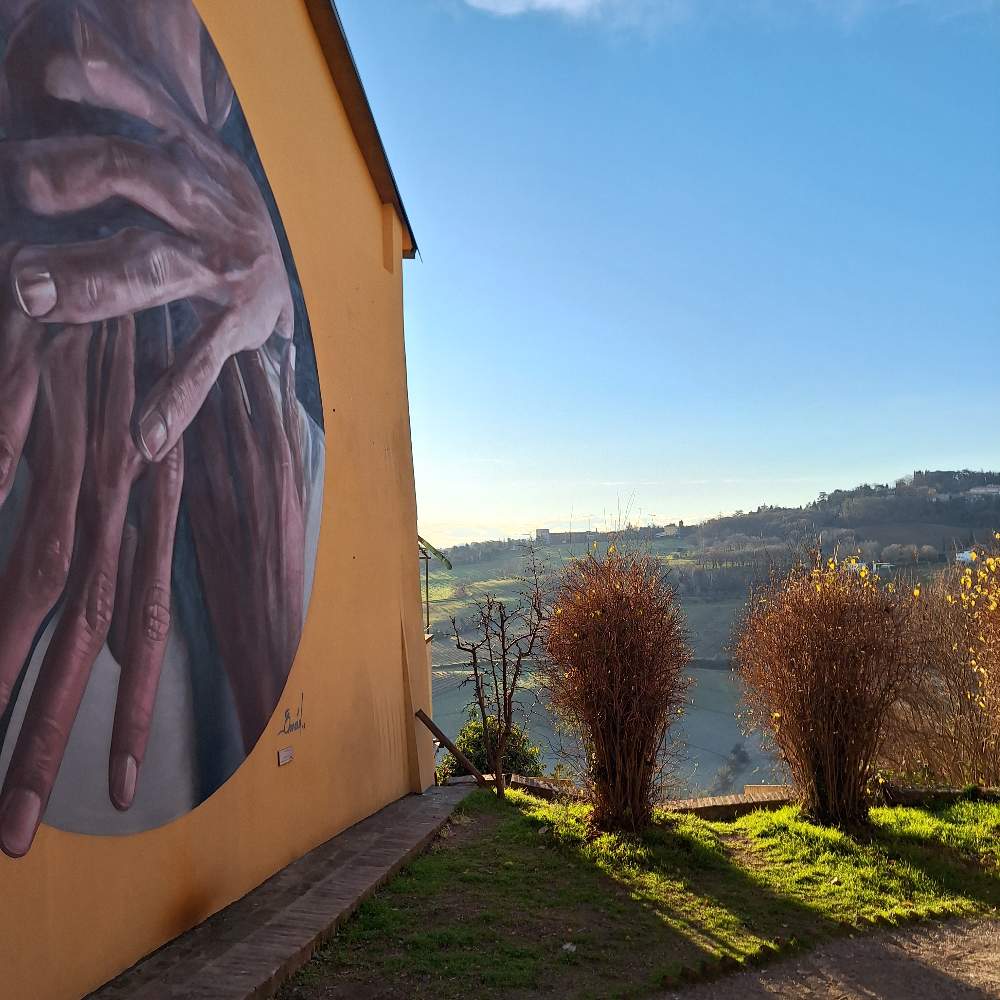
If Via XX Settembre is the most scenic part, Via De Amicis is the most surprising. Here the murals are less immediate and often appear suddenly between courtyards and secondary passages. Among the most interesting works is Emeid’s “Feste Comandate”, where large painted hands seem to emerge from the wall. It is a work that works very well up close, because it changes perception depending on the distance. Also on this street is the “Doni di Cerere” mural by Alberto Rocco, one of the most interactive: it almost invites the visitor to look for hidden details in the composition.
@RebeccaManzi/GreenMe
Vicolo Lorenzo Campeggi with “The country of the Three Kings”
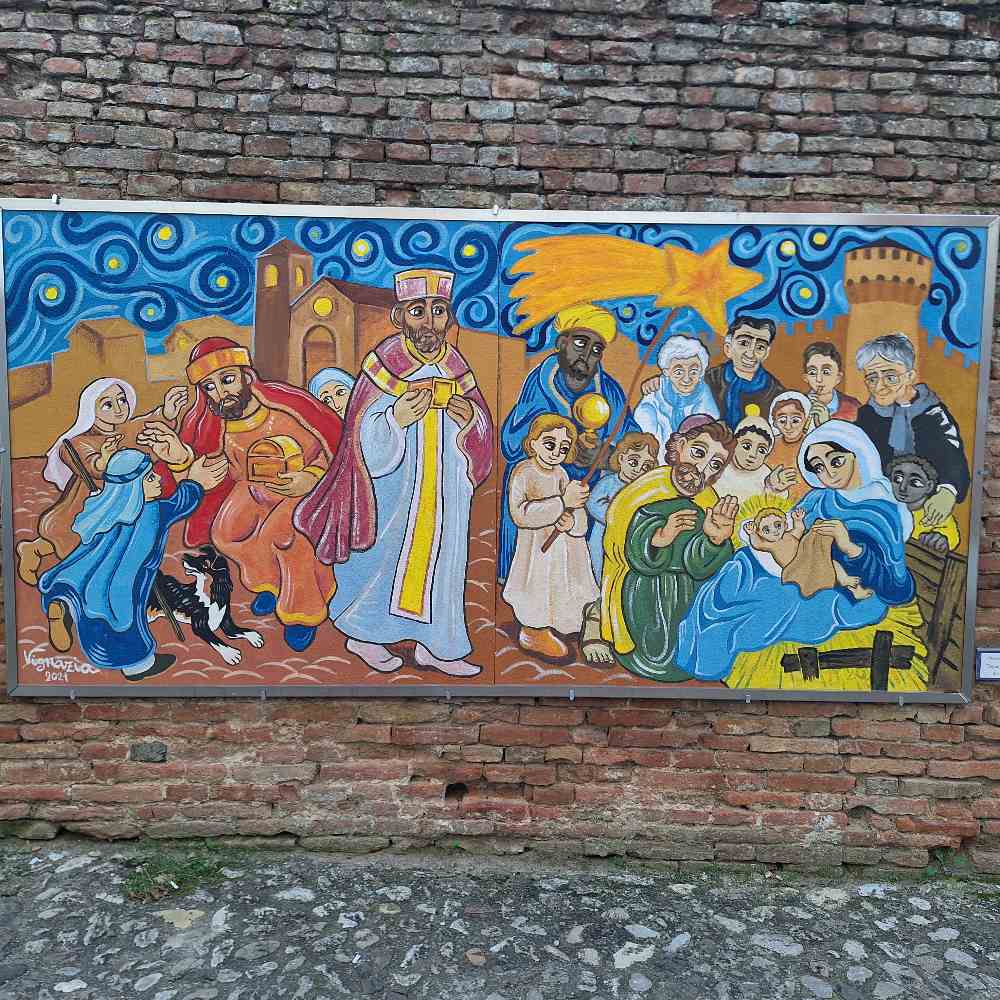
One of the points that risks going unnoticed is Vicolo Lorenzo Campeggi, where one of the most fascinating murals in the village is located: “The country of the Three Wise Men” by Franco Vignazia. It is a work very rich in details and less exposed than others, which is why it is often discovered only by those who enter the side alleys.
@RebeccaManzi/GreenMe
The Rocca Sforzesca and the mystery of the dragon
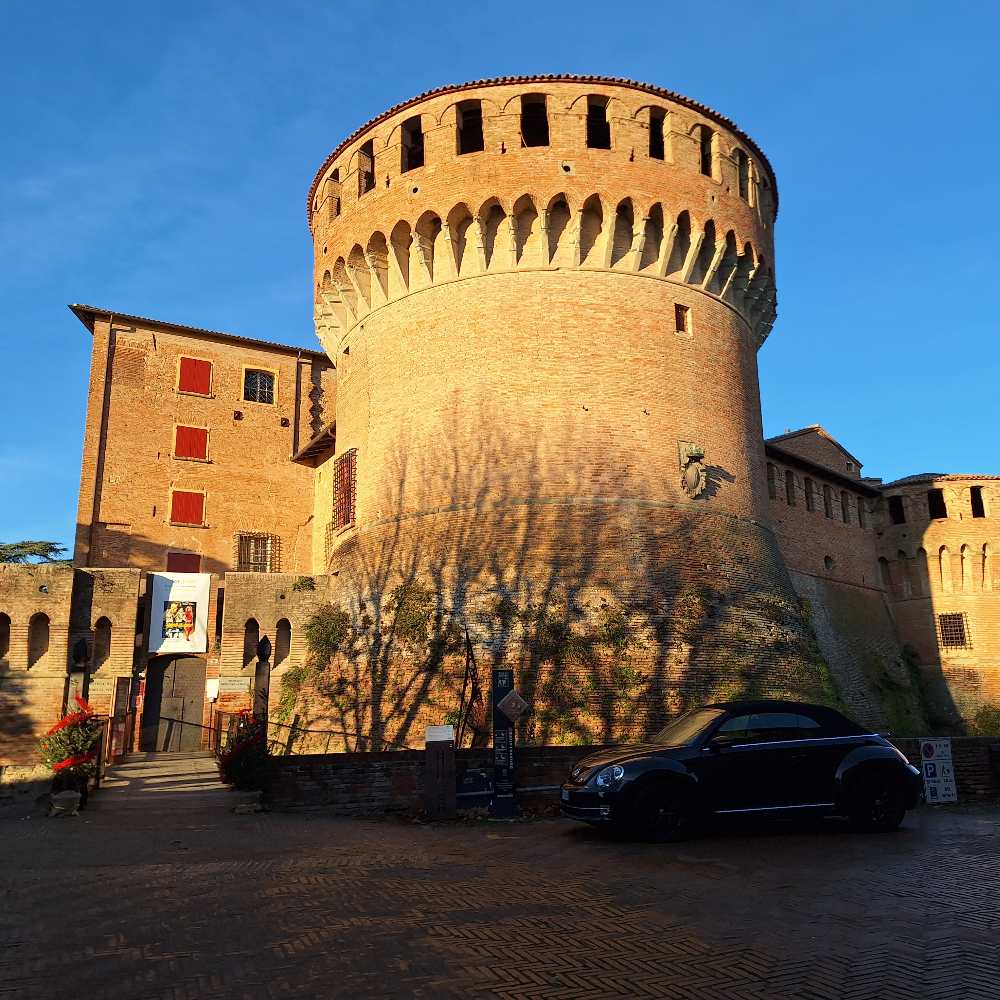
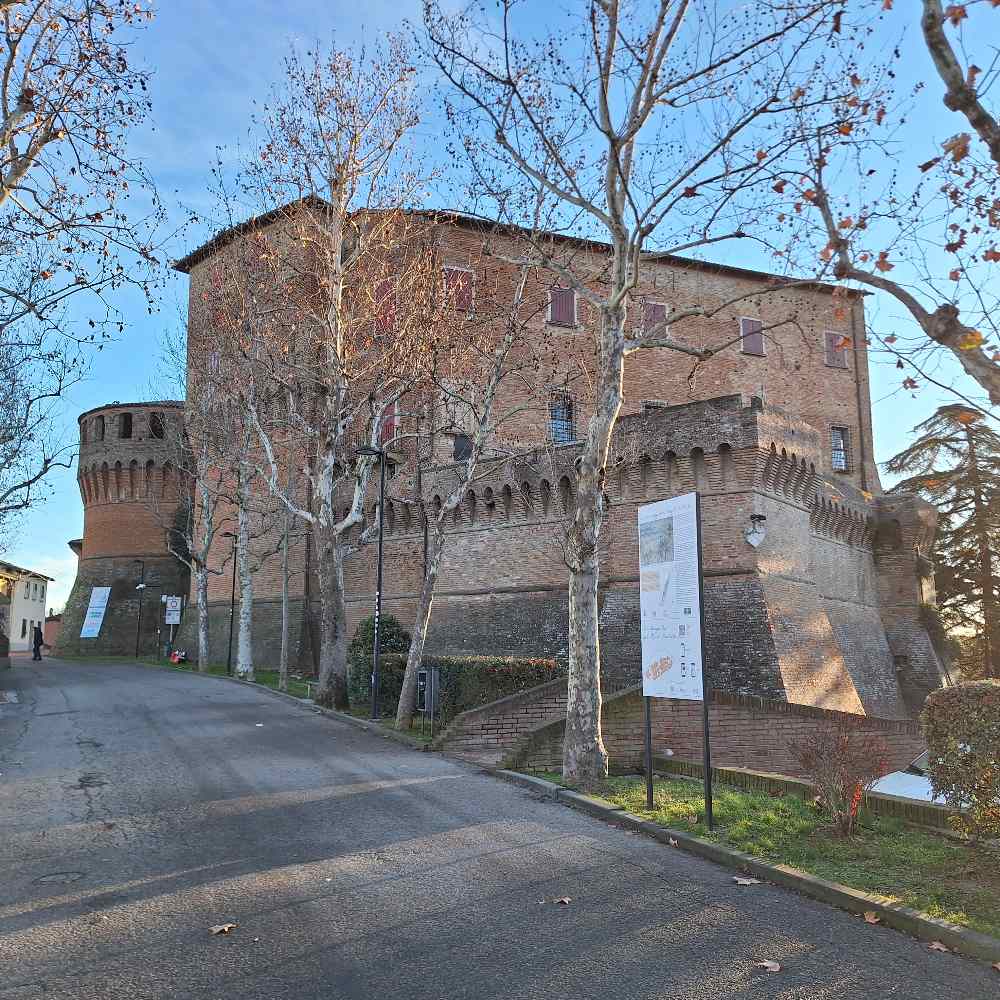
But Dozza is not just murals. The majestic Rocca Sforzesca of Dozza represents the historical heart of the village and on Sunday the town. Entering it means taking a leap in time: frescoed rooms, noble rooms and darker environments tell centuries of history. The fortress also hides a more curious side: the legend of the dragon which, according to local tradition, was linked to the fortress.
@RebeccaManzi/GreenMe
A detail that makes the experience even more evocative, especially for those who love stories suspended between reality and myth. No less interesting is the presence of the Regional Enoteca, housed in the underground rooms. Here the journey also becomes sensorial: the local wines tell another part of the Emilian identity, made up of vineyards and peasant tradition.
@RebeccaManzi/GreenMe
Panoramic walk among hills and vineyards
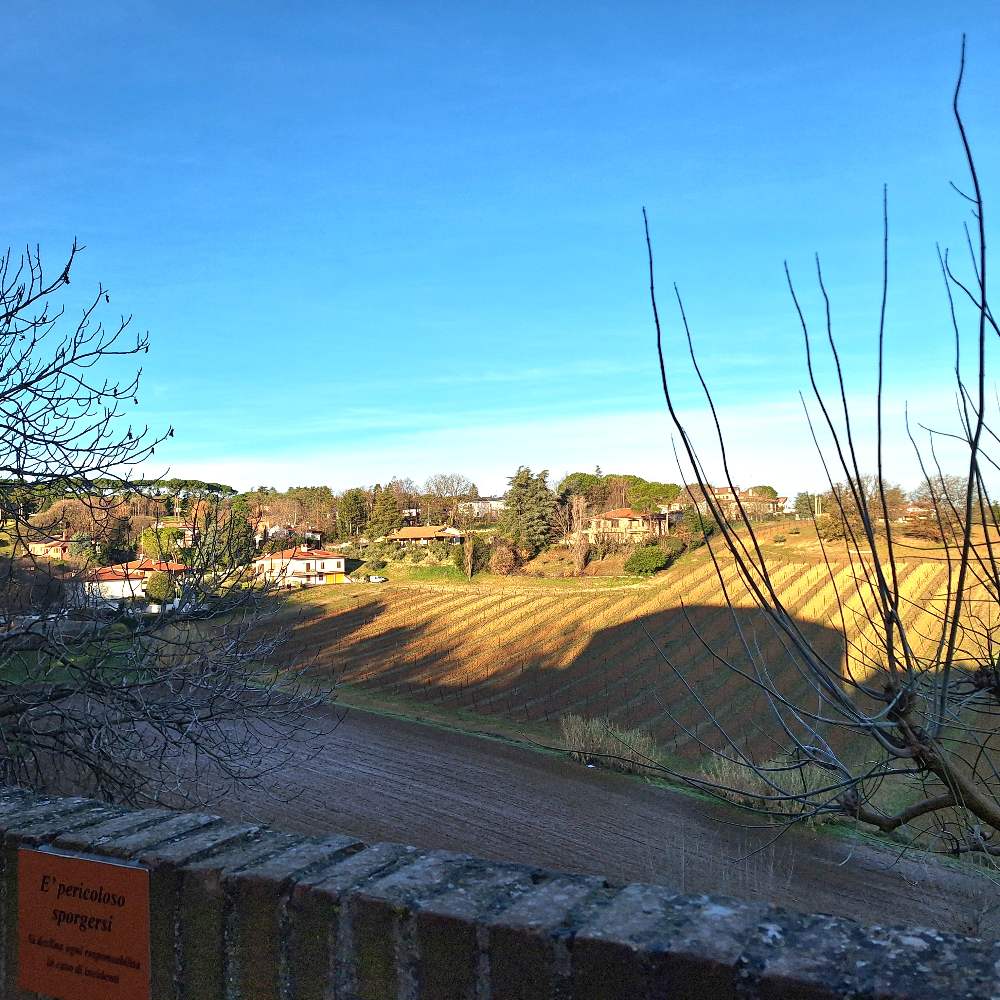
Leaving the historic center, we then followed the so-called “panoramic walk”, a route that embraces the village and opens onto the surrounding hills. From here the view changes completely: Dozza appears like a small nativity scene set among tidy vineyards and cultivated fields. The silence, interrupted only by the wind, allows you to observe the landscape calmly. It is here that you perceive how much the village is linked to the territory and its agricultural nature.
@RebeccaManzi/GreenMe
You might also be interested in:
