
There is a precise moment in which you understand that Ferrara is unlike any other city in Italy: it happens when you get on your bike and let yourself be swallowed up by an almost surreal silence, broken only by the rotating of the chains and the dynamic sound of the bells. When we got here, the impact was immediate. In this corner of Emilia, cars are an exception and bicycles reign supreme on over 150 kilometers of cycle paths. Cycling on the stones of the historic center gives a sense of absolute freedom. The geometry of the city seems designed specifically for slow mobility, fusing in a single breath the medieval soul of the south and the Renaissance avant-garde of the north.
The Estense Castle and the magic of the moat
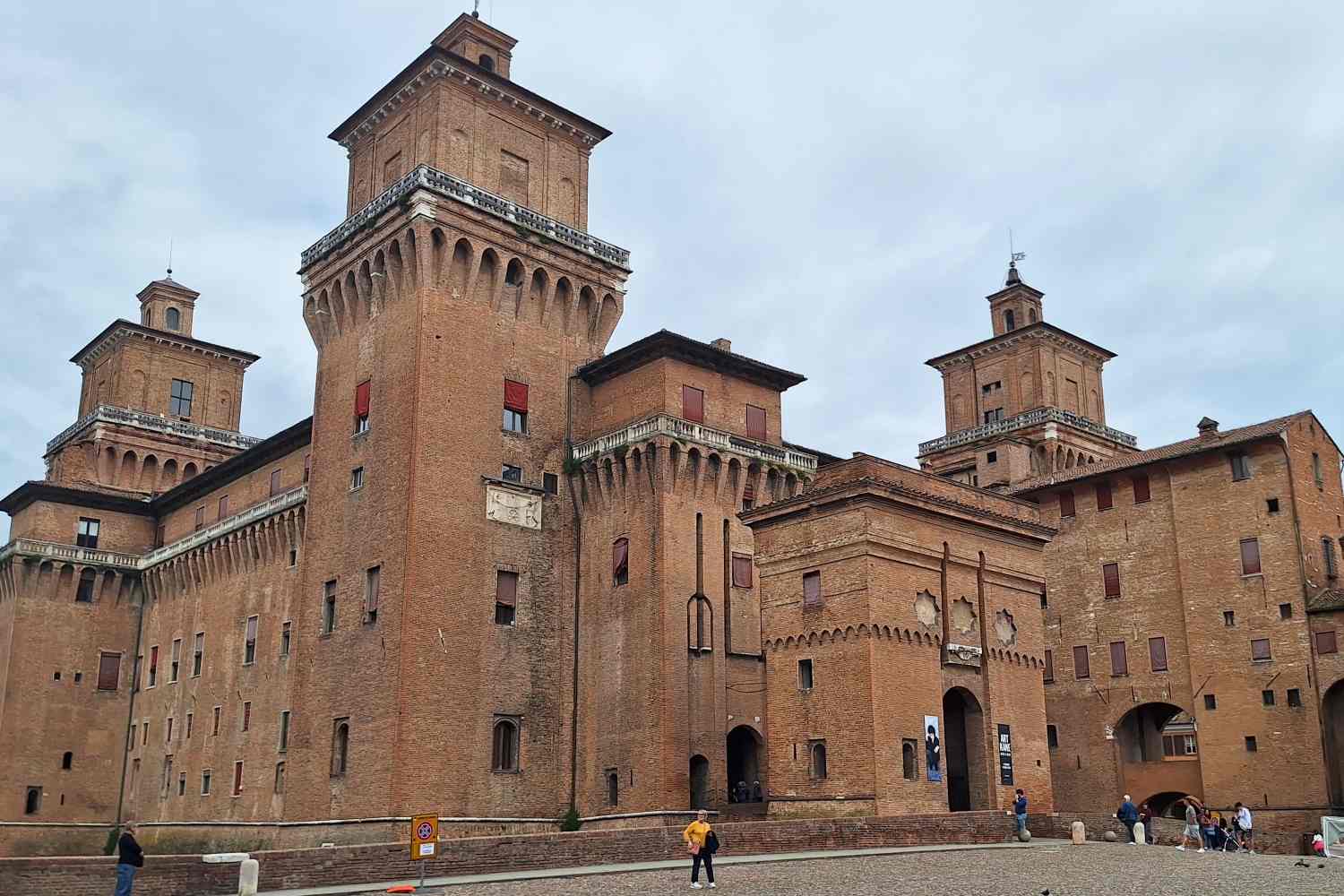
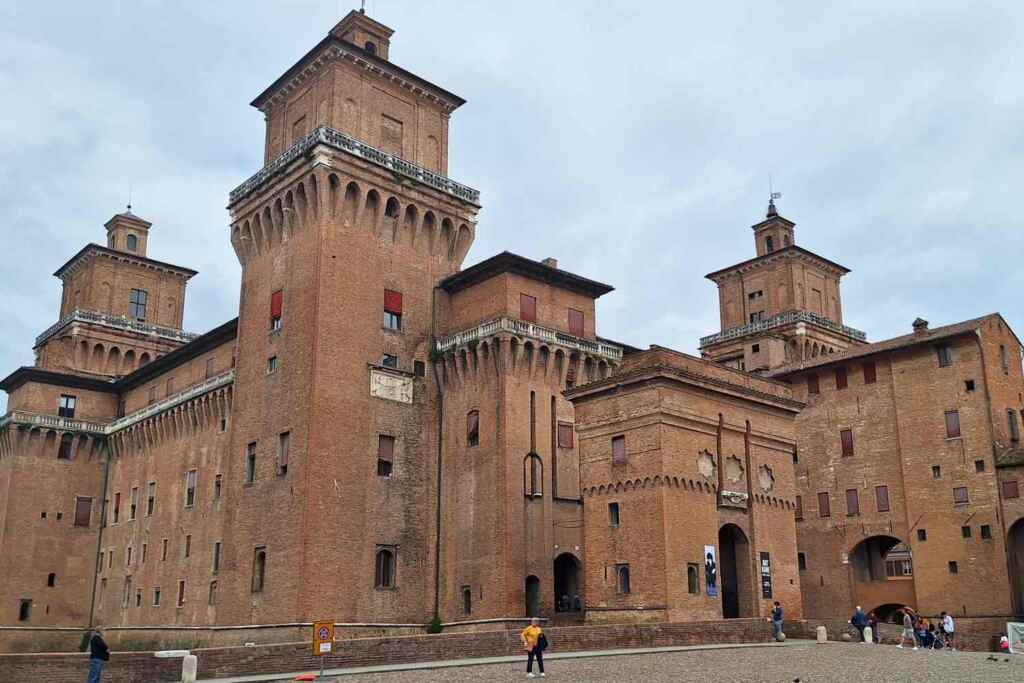
The true beating heart of our itinerary suddenly revealed itself, standing majestically in the city center: the Estense Castle. Finding yourself in front of this mass of red bricks leaves you speechless, but it is its body of water that captures the imagination. This manor still has a flooded moat, a very rare detail in the panorama of Italian fortresses. Looking at the four crenellated towers reflected in the water of the Volano river creates a temporal short circuit.
@RebeccaManzi/GreenMe
Built in 1385 by Niccolò II d’Este to protect himself from popular revolts, the castle later became the residence of legendary figures such as Lucrezia Borgia, Parisina Malatesta and Ugo d’Este. Today, walking along the walkway or descending into the underground prisons before climbing the Torre dei Leoni offers a panoramic view that extends over all the roofs of the city.
@RebeccaManzi/GreenMe
St. George’s Cathedral: the sacred and marble heart of the city
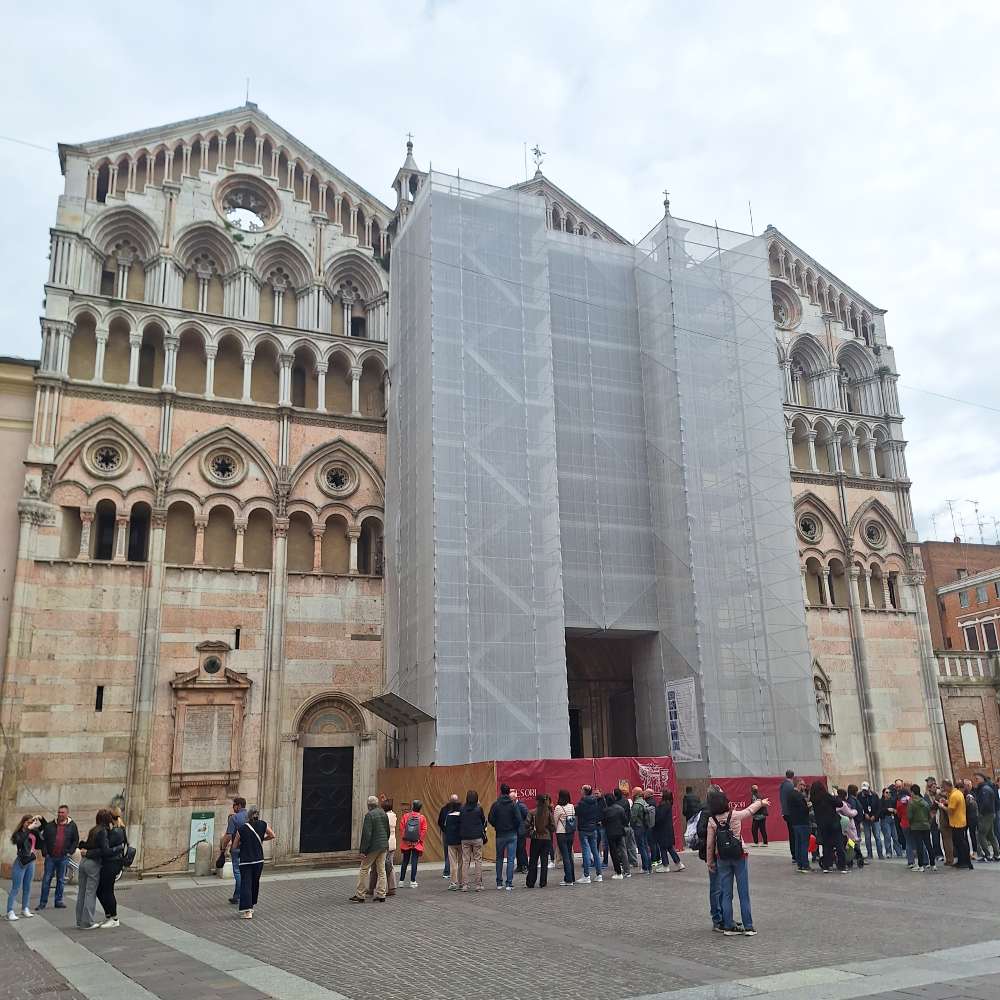
Our pedal journey continued in front of the imposing Romanesque-Gothic façade of the Cathedral of San Giorgio, overlooking Piazza Trento and Trieste, before reaching Palazzo Schifanoia. Built starting in 1135, this wonder is one of the most fascinating sacred buildings in the entire Emilia-Romagna.
@RebeccaManzi/GreenMe
We remain enchanted staring at its extraordinary three-level façade: the lower part, with the central portal dedicated to Last Judgmentshows us all the strength of the Romanesque, while the upper part raises splendid Gothic loggias towards the sky. It is a magnificent play of contrasts, made even more unique by the white and pink marble alternating with green marble inserts. A chromatic combination that reminded us of the great Tuscan cathedrals, but expressed with an unmistakable and warm Emilian flavour!
@RebeccaManzi/GreenMe
Between the Municipal Palace and the Victory Tower: the enchantment of Piazza del Municipio
Moving a few steps, we entered an environment that immediately won us over with its intimate and monumental atmosphere: the Town Hall Square. It is truly suggestive to think that this space, now lively and welcoming, was once the internal courtyard of the majestic Palazzo Ducale, the ancient and elegant residence of the Dukes of Este which still retains all its Renaissance charm. We stopped in the center of the square to take some photos and admire the background, dominated by the soaring Torre della Vittoria. This structure stands imposingly on the perimeter of the area and almost seems to act as a sentinel for the entire complex, giving us a truly unforgettable perspective view.
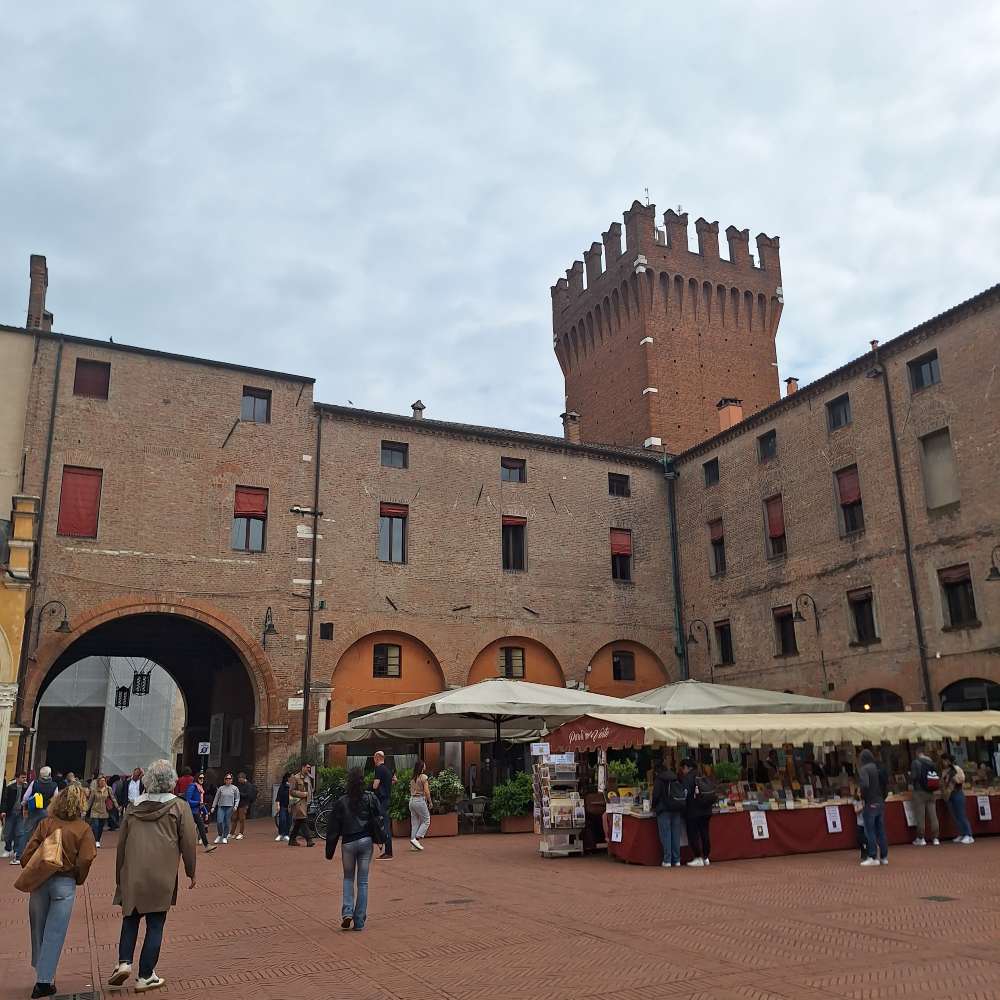
@RebeccaManzi/GreenMe
The incredible vision of the Herculean Addition
Leaving the castle moat behind us, we took the Corso Ercole I d’Este by bike. It is here that the Addizione Erculea takes shape, the visionary urban project commissioned in 1492 by Duke Ercole I d’Este and designed by the architect Biagio Rossetti. Considered the first modern urban planning in Europe, this grid of wide, straight avenues breaks the darkness of the medieval alleys to open the city to light. Cycling on this straight, the late afternoon light makes the facets of Palazzo dei Diamanti shine, covered with 8,500 blocks of marble sculpted with diamond tips.
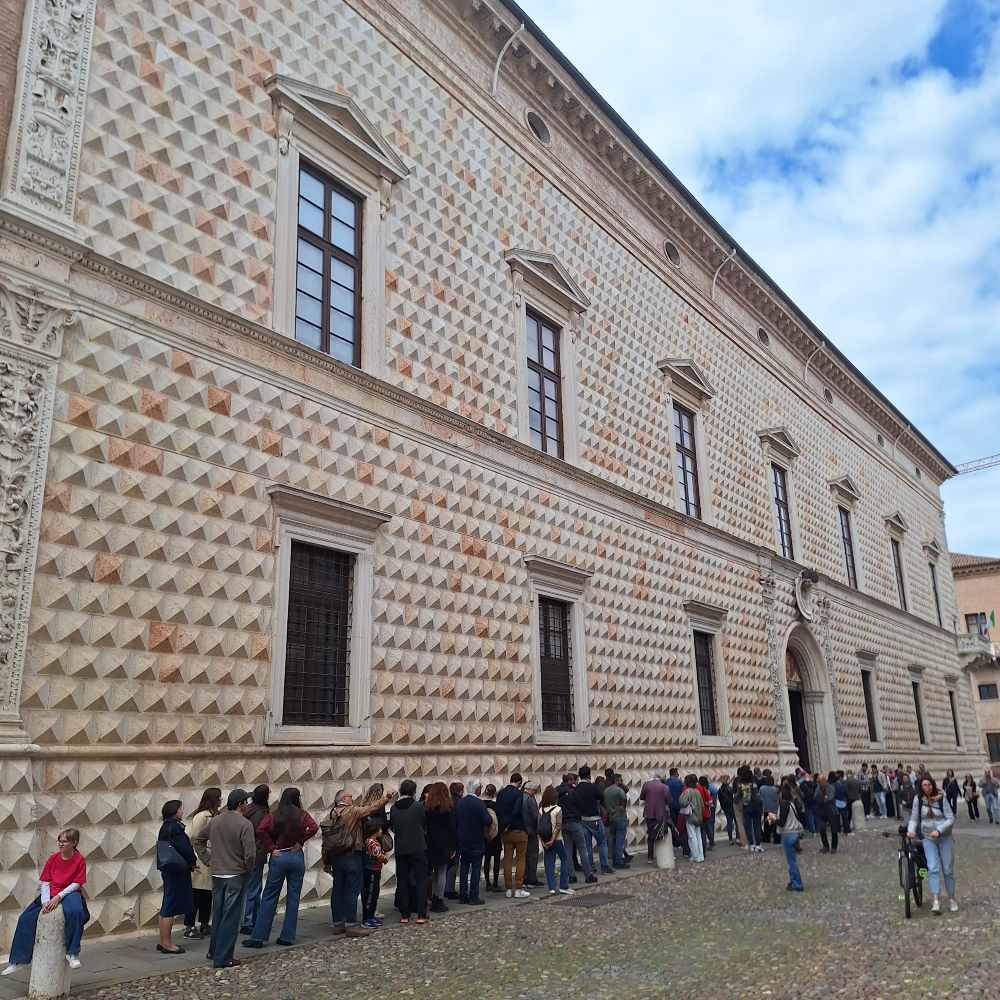
@RebeccaManzi/GreenMe
The shadowy charm of Via delle Volte
If the Addizione Erculea represents the light of the Renaissance, the medieval quarter embodies the most intimate memory of Ferrara. We rode the bikes at walking pace along Via delle Volte, a long stone corridor punctuated by suspended arches and overhead passages that once connected the merchants’ homes to the riverside warehouses.
Here the atmosphere changes completely: the exposed bricks contain stories of trade, but also of intrigue and nightlife, even evoked in the novels of Riccardo Bacchelli. Not far away, the itinerary took us to the Jewish Ghetto, where the events of the local community are intertwined with the memory of the writer Giorgio Bassani and the pages of The Garden of the Finzi-Continis.
The city lounge: Piazza Trento e Trieste and the Clock Tower
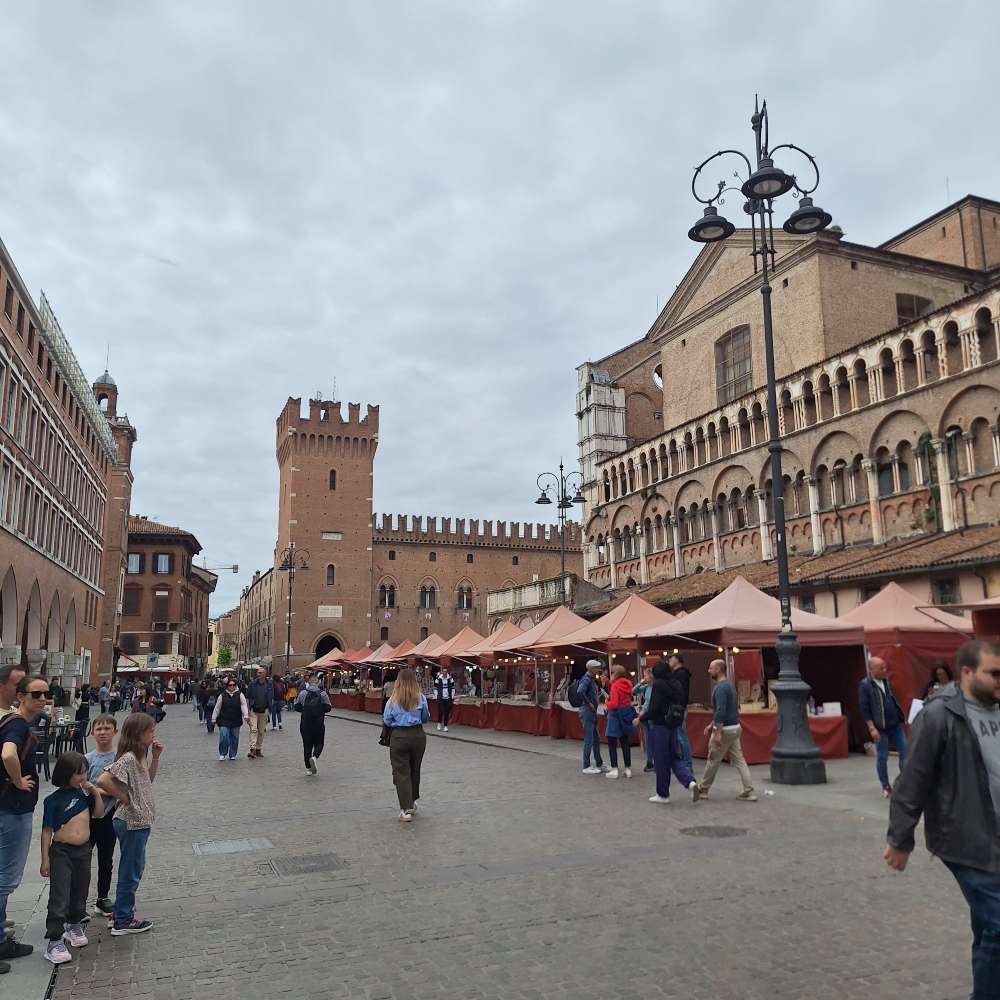
We then continued towards the real parlor of the city: Piazza Trento and Trieste. Located right at the beginning of Corso Martiri della Libertà, this large square gave us a spectacular panoramic view of Ferrara.
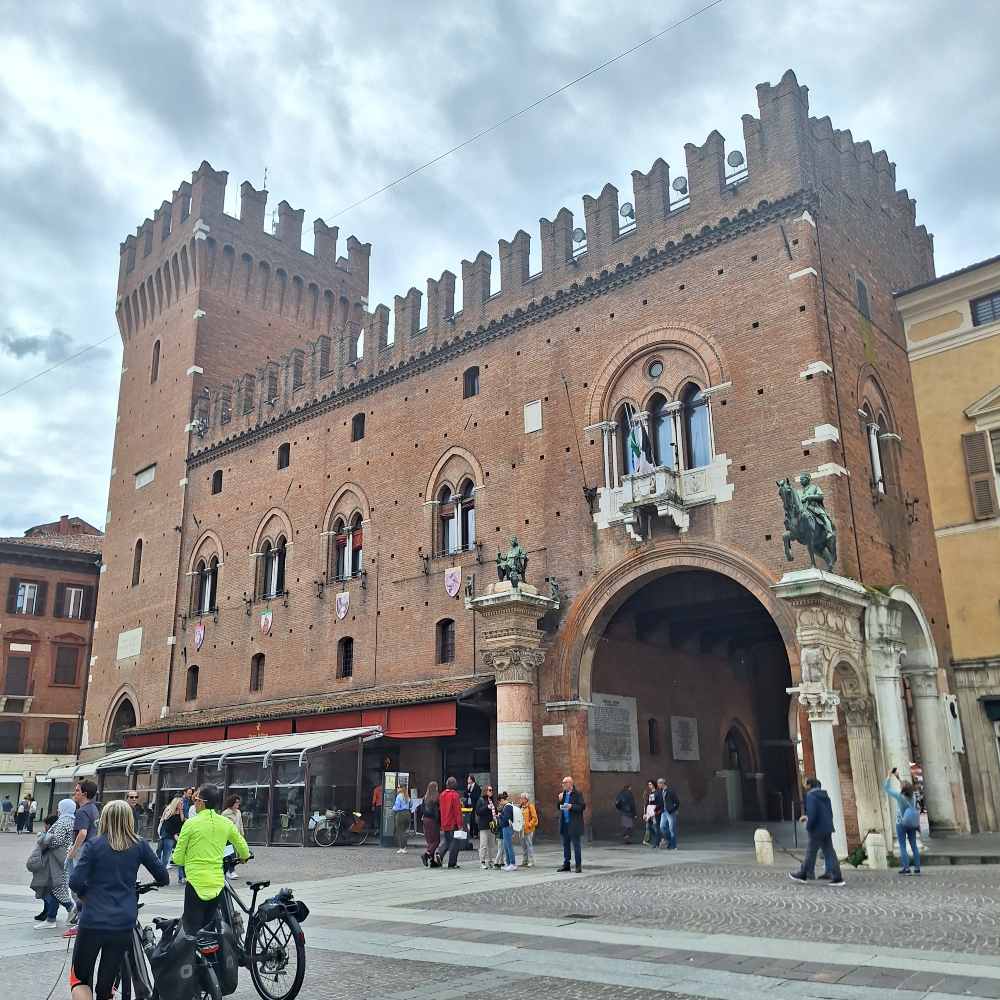
@RebeccaManzi/GreenMe
On the right stands the imposing red brick structure of the Municipal Palace, but what makes the view perfect is the characteristic Clock Tower, which stands out in the background and elegantly marks the rhythm of daily life in Ferrara. Sitting here for an aperitif, watching the history and beauty pass by, was the perfect way to end our visit!
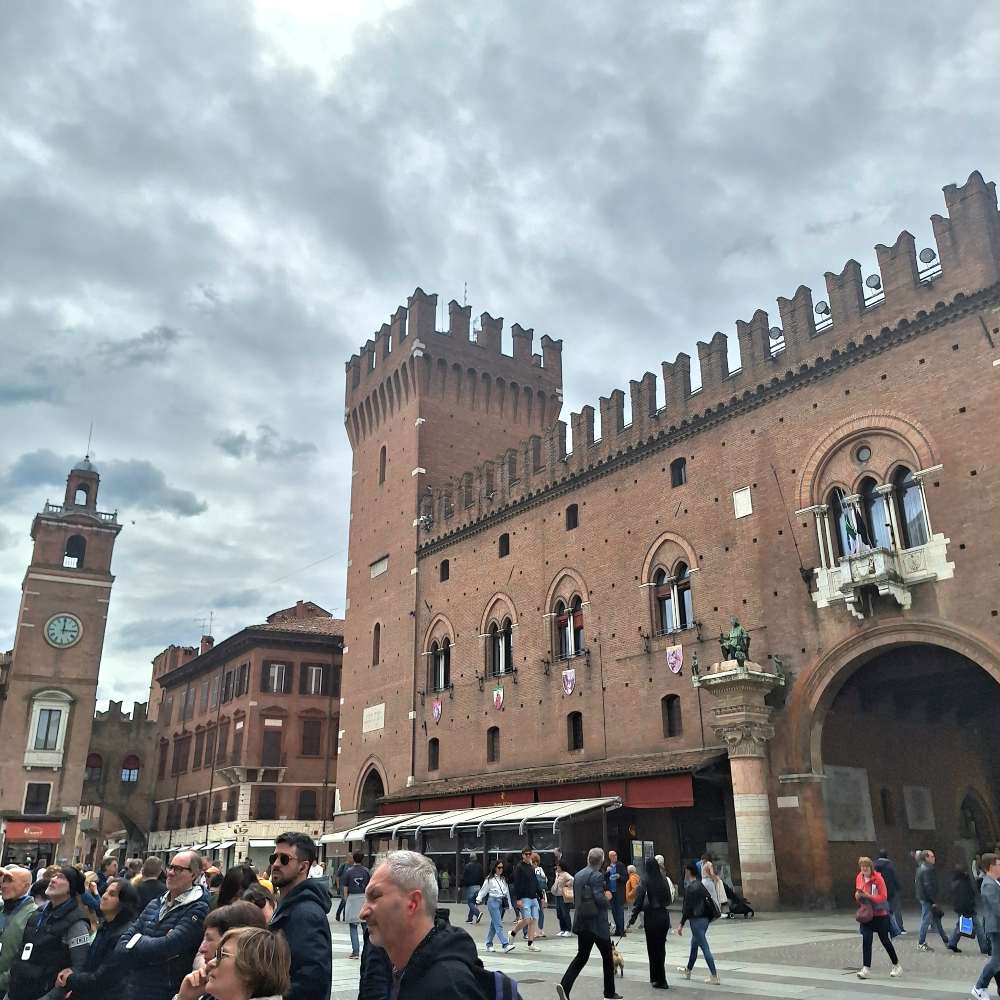
@RebeccaManzi/GreenMe
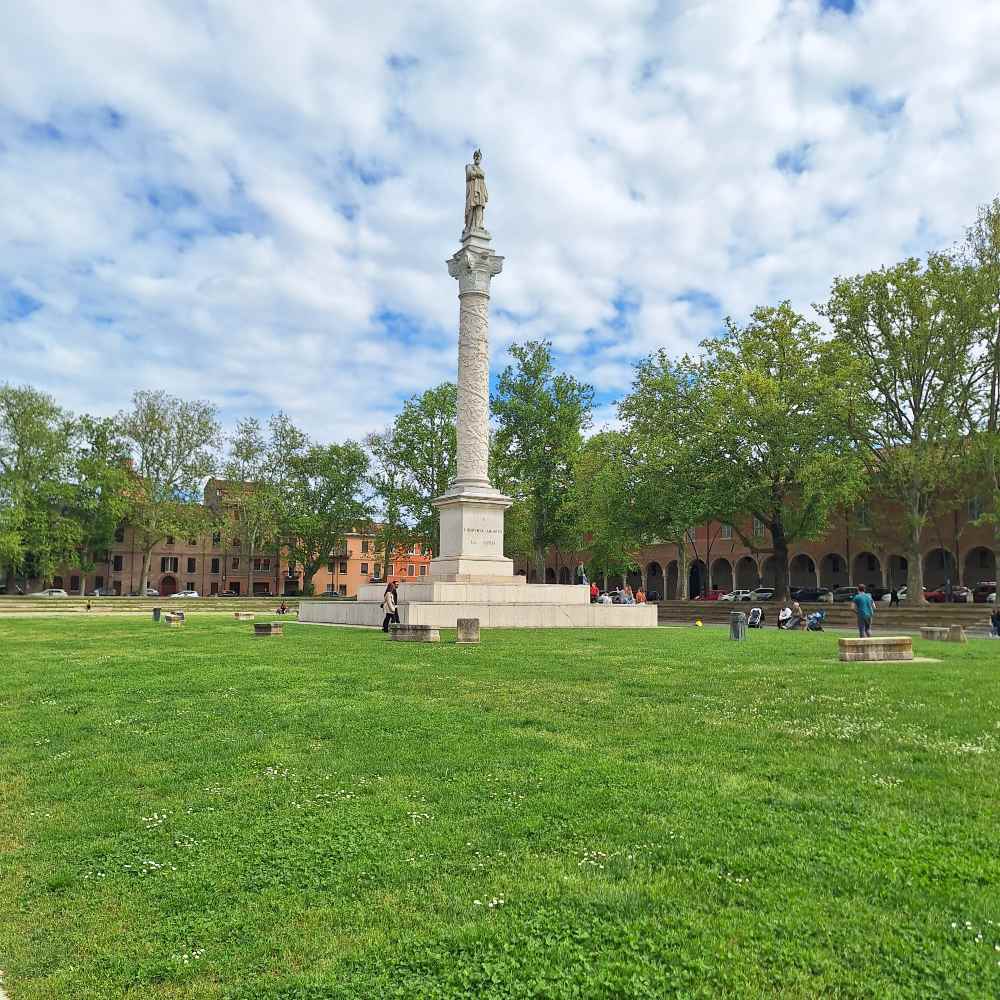
Finally we concluded our day by pushing towards the eastern part of the Erculean Addition, we come across Piazza Ariostea, one of the most unique urban spaces in Italy. Its rectangular shape with a large lowered central space recalls that of an ancient Roman circus. In the center the scene is dominated by a majestic column surmounted by the statue of Ludovico Ariosto, the great poet courted by the Este family who wrote hisOrlando Furioso.
@RebeccaManzi/GreenMe
Between one artistic stage and another, Ferrara also conquers at the table: a stop is a must to taste the pumpkin cappellacci with butter and sage or the twisted bread with its unmistakable shape. This is how you live Ferrara: a day in the saddle, the wind in your hair and centuries of history to cross with every pedal stroke.
