
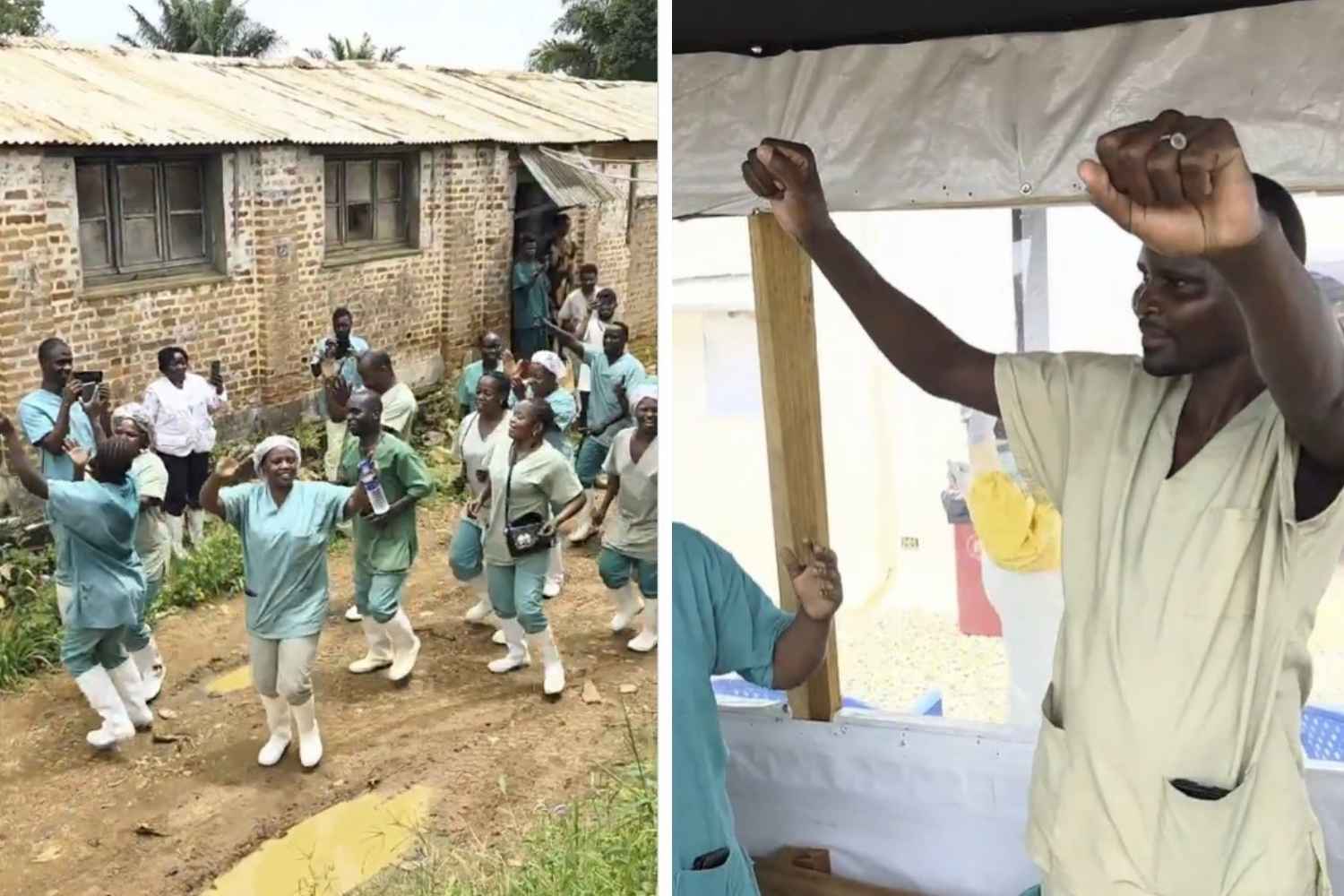
An explosion of joy, applause, dancing and smiles: in Mongbwalu, in the Democratic Republic of Congo, they are celebrating news that rekindles hope. The latest Ebola patient admitted to the Doctors Without Borders (MSF) hospital has recovered and has finally been able to leave the facility. A moment of great emotion for healthcare personnel, who have been fighting on the front line against the virus for months. And now, breathing a sigh of relief, he launches into a liberating dance, as shown by the images spread on social media.
In Mongbwalu, in Ituri, some joyful moments as the last confirmed Ebola patient arrived at the MSF treatment centre, he heard. The epidemic has never ended: more than 10,000 cases have been registered. The MSF teams remain mobilised. #Ebola #RDC #MSF pic.twitter.com/RrOmXUYGDx
— MSF DRC (@MSFcongo) October 28, 2026
But while this milestone is being celebrated in Mongbwalu, in the rest of the country the emergency is not yet over: the epidemic continues to represent a serious threat to thousands of people while humanitarian organizations continue to work to assist the sick and contain new outbreaks.
Over 10 thousand cases and almost 5 thousand deaths in Congo
The Ebola epidemic in the Democratic Republic of Congo has reached dramatic proportions. According to data updated to October 26, 2026, 10,141 confirmed cases and 4,928 deaths have been recorded, with a mortality rate of approximately 48%: almost one in two people among those who tested positive lost their lives. This is the seventeenth Ebola epidemic declared in the country, which began in May 2026 and spread rapidly, especially in the eastern provinces. Also worrying is the speed with which the virus spread: it took around 40 days to overcome the first thousand confirmed infections.
Numbers that tell of a health emergency still far from over, despite the recoveries and the efforts of the humanitarian organizations involved in the area. Since then the situation has deteriorated rapidly. The infection, initially concentrated in the eastern part of Congo, has spread to other provinces, reaching communities where access to health services was already extremely difficult.
An epidemic worsened by conflicts and poverty
Ebola is spreading in territories that have faced a serious humanitarian crisis for years. In the east of the Democratic Republic of Congo, armed conflicts, violence and forced population displacement make reaching communities and ensuring continuity of healthcare extremely complex. Many facilities have limited resources and insecurity hinders the transport of patients, laboratory activities and the work of health workers.
Added to these difficulties are misinformation and mistrust towards authorities and treatment facilities. A person who fears being isolated or does not trust the hospital may delay seeking care, increasing the risk of transmitting the infection to family members. According to the WHO report of October 23, of the 482 deaths recorded since the previous update, 307 occurred in communities, outside of treatment centers. This is a fact that shows how difficult it still is to intercept sick people in a timely manner. And while resources are concentrated on Ebola, other health emergencies also risk worsening, from difficulties in maternal care to routine vaccinations, to infectious diseases already present in the country. The epidemic no longer concerns only the Democratic Republic of Congo. Cases were also reported in other African countries during 2026.
In Kenya, after the identification of an imported case in October, further infections were recorded among family members and healthcare workers who had come into contact with the patient. However, authorities have not detected widespread community spread. An imported case was also identified in Nigeria, while in Uganda the local epidemic was declared over in August. For Europe, the risk remains very low. The European Center for Disease Prevention and Control (ECDC) considers the probability of importation and subsequent transmission of the virus in the population of the European Union to be very low.
