
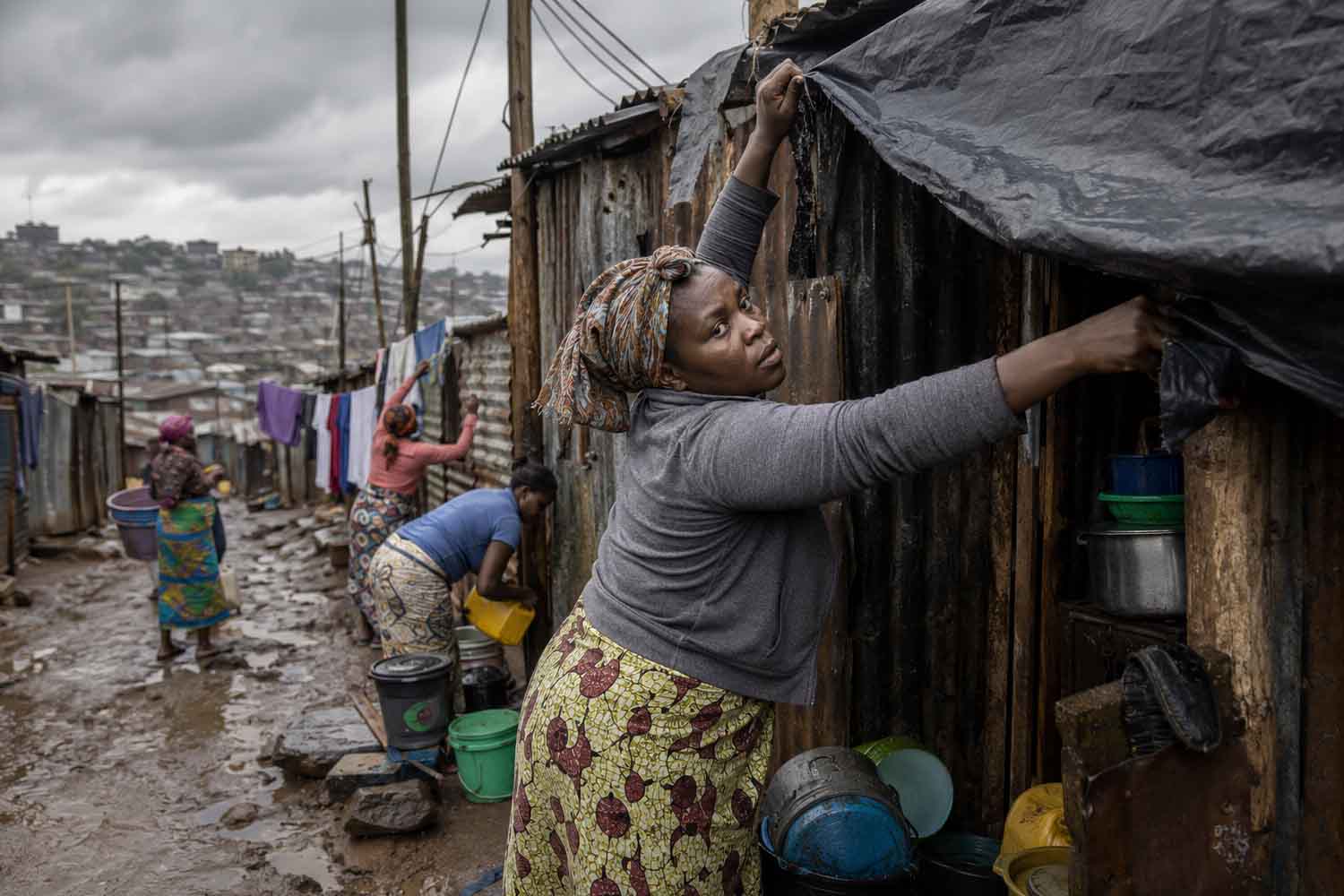
In Kenya, in the Kibera area, when the rain gets heavy, the mattresses end up on the chairs. Documents go up on the highest shelves, food is moved, children are entrusted to someone who lives in a safer area. Plastic bags and sheets appear on the roofs. In the alleys the drains are cleared, the walls are checked, and a dry place to spend the night is looked for. Something very similar happens in Mathare.
In these two large informal settlements in Nairobi, neighborhoods that have grown up on the margins of urban planning and with essential services that are often insufficient, climate adaptation has the face of women: they are the ones who organize a significant part of the domestic response to floods and heat waves, who put aside water and food, who look for money for repairs, who host those who have lost their homes, who keep children, the elderly, work and health together while the water comes in through the doors.
A study published on reconstructs this daily work PLOS Climate based on in-depth interviews with 144 women aged 20 to 65, with an average age of 36. The conversations, which lasted between an hour and a half and two hours, were collected between December 2022 and February 2023 from community health workers living in the same neighborhoods.
Research uses the term “subjective resilience” to indicate how people evaluate their ability to cope with one shock, recover from it, and prepare for the next one. An academic formula which, in the houses of Kibera and Mathare, takes the form of a patched roof, a few coins saved and an open door to a neighbor left without shelter.
The climate enters the house and takes the income
Kibera and Mathare are located in low-lying areas, close to the main waterways of the Kenyan capital. The density of buildings, blocked drains, irregular waste collection, fragile sewers and homes made of flimsy materials amplify every violent rain. During floods, dirty water, waste and sewage can reach homes and small businesses. In hot periods, the absence of vegetation and the accumulation of sheet metal and concrete make temperatures harsher than in surrounding areas.
For many families, climate damage comes with loss of income. A closed stall, wet goods, a day without work, a medical visit to pay or a wall to be rebuilt can wipe out already slim savings in just a few hours. Most of the participants live from informal trade, odd jobs, cleaning, selling vegetables or clothes. Only a minimal share has formal employment.
Responses begin before the emergency. The women say they reduce expenses, set aside money, buy food and water in advance, repair roofs, reinforce walls, prepare bags of earth and locate temporary accommodation. Those who sell in the markets change their stocks according to the seasons and the weather: products suitable for hot days, goods easier to protect during the rains, reduced quantities when the risk of losing everything increases.
Health also requires preparation. The interviewees try to conserve clean water, protect food, maintain hygiene in homes and reach a health center when infections, respiratory problems or consequences related to contaminated water appear. Faith and religious practices often offer a form of emotional relief, especially during times when material resources are running thin.
The neighbors act as a barrier
The most solid part of the answer emerges from relationships. After a flood, relatives and neighbors lend money, bring food, help repair homes, take in children and families, share water, clothing and beds. Local groups organize collective cleanups, fix toilets and water points, raise funds for medical expenses and support those who have lost their jobs.
Many women participate in mutual funds and savings groups. Each member pays a small sum, then the money is used in turn or allocated to those facing an emergency. It is a form of microfinance rooted in daily life, useful for buying materials, rebuilding a wall, reopening a business or paying for urgent care.
This network also includes harambee, a Kenyan tradition of collective collection of money and resources to support a person, a family or a common project. Participants describe collections for health costs, the construction of shared toilets, small sack gardens and community-run water points.
The neighborhood thus becomes a kind of human infrastructure. Where a reception center is missing, a room offered by a family arrives. Where psychological assistance is difficult to reach, conversations, visits, prayers and presence arrive. Where the drainage gets blocked, brooms, shovels and hands arrive. This ability allows you to react quickly and protects many people. At the same time it shows how many public functions have ended up on the shoulders of those who already have very little.
A World Bank report on community-led adaptation describes the same mechanism in many informal settlements: inhabitants know the risks from street to street and are able to design effective interventions when they are given resources, decision-making power and a stable relationship with administrations.
Resilience can become an alibi
The word resilience sounds good. In these neighborhoods it also carries an uncomfortable burden. A tarpaulin on the roof, a collection and a collective clean-up help overcome the immediate crisis. Their continued presence signals insufficient sewerage, fragile houses, drainage systems left without maintenance and waste collection systems unable to protect the population.
The study also describes strategies that solve a problem inside the home and exacerbate one outside. Some women reported throwing waste, used menstrual products and organic waste into rivers or drains, driven by the lack of adequate services. The material disappears from the domestic space and returns with the rains, mixed with flood waters and sewage.
The IPCC calls this process “maladaptation”: a response capable of offering relief in the short term and increasing overall risk over time. Individual behavior arises within a system that offers few alternatives. Shifting environmental responsibility onto residents, leaving services and infrastructure unchanged, adds blame to vulnerability.
The women interviewed cited help coming from administrations, associations, health facilities, religious organizations and emergency programs. They talk about temporary shelters, distribution of water and food, care, information campaigns and job opportunities. These supports appear less frequently than family and neighborhood networks. Some participants were even unaware of the existence of available services.
The distance between aid and people also passes through here: scattered information, difficult access, episodic interventions and frayed institutional trust. Community health workers could become a much stronger bridge. They get to know families, visit homes, identify vulnerable people and are already spreading health advice. Equipping them with tools, training and resources would allow them to circulate weather warnings, preventive instructions and information on active supports.
The money must arrive before the water
The proposals put forward by the research have a concrete nature. We need direct funds for local groups, economic contributions to the most exposed families when forecasts announce an extreme event, tools and protection for cleaning, supplies for displaced people, support for community coffers and interventions on homes carried out together with residents.
On-site redevelopment, often referred to by the English expression in-situ upgradingallows us to improve homes, drainage, sanitation, water and energy, avoiding demolitions and mass transfers. The value of this approach lies in local knowledge: those who live in the neighborhood know where the water rises first, which passages are blocked, which families need assistance and which jobs actually survive the rainy season.
The global picture also makes this step urgent. According to UN-Habitat, more than 1.1 billion people live in informal settlements and slums today. Cities will continue to grow precisely in the places where heat, floods and poor services meet most violently. Urban adaptation will increasingly depend on the ability to bring investments and decisions into these neighborhoods, with residents involved from the start.
The study maintains clear limitations. It is a qualitative and transversal research, conducted only in Kibera and Mathare. The experiences of the 144 participants offer a profound snapshot of those contexts and maintain a limited possibility of automatic extension to other cities. The closeness between interviewers and residents may also have pushed some women to tell their stories in a way perceived as more acceptable by the community. It remains a difficult image to archive. A plastic bag may save the mattress for a night, but a worthy city builds the roof before the next rain.
