
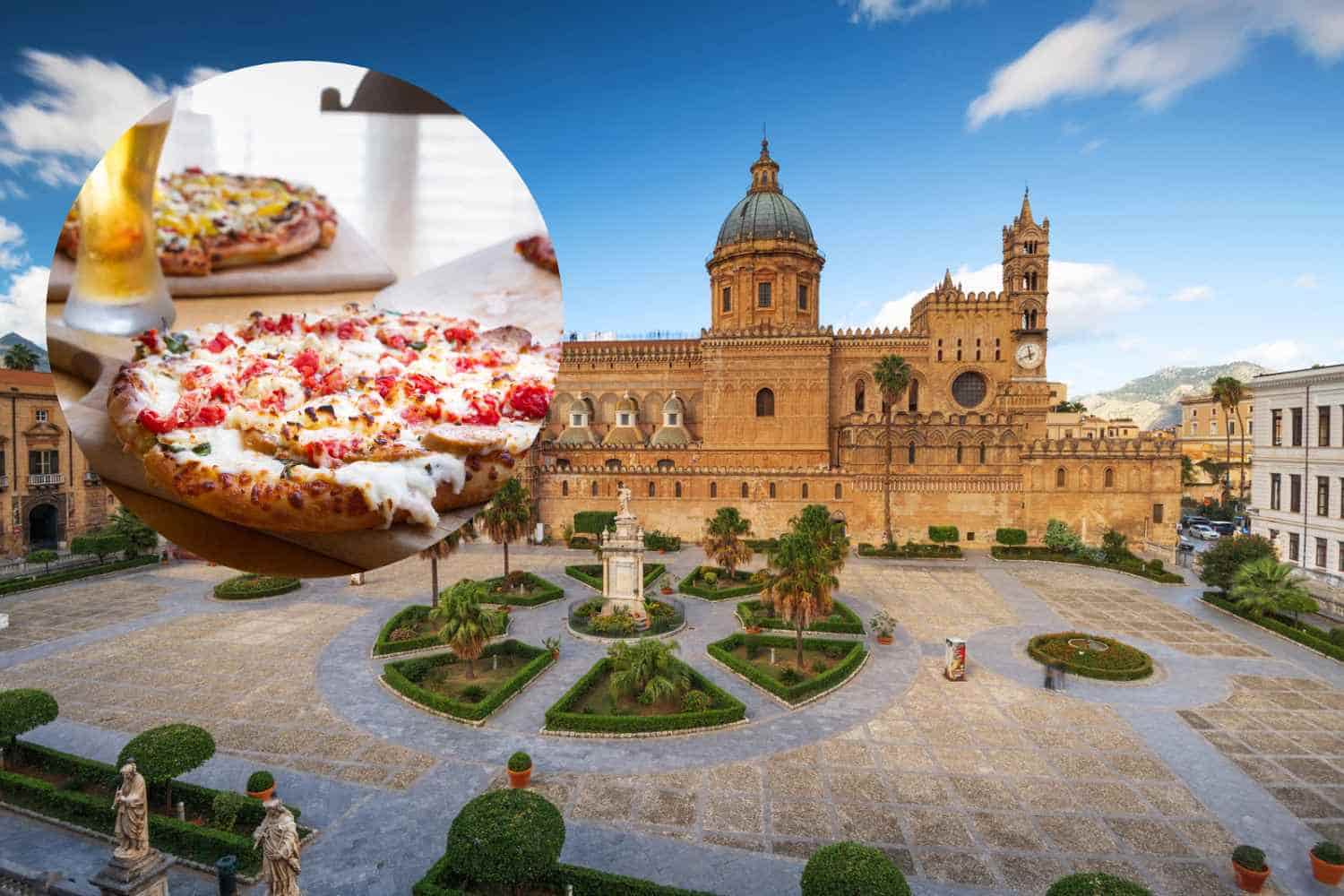
In Palermo a pizza with a drink can cost 9 euros or up to 28 euros, depending on the pizzeria chosen. A difference of 19 euros for a comparable consumption, the largest among the 30 Italian cities examined by Altroconsumo. And there is another piece of data that specifically concerns the Sicilian capital: from 2021 to 2026 the average price of pizza with a drink increased by 60%, the highest increase recorded in the survey.
The numbers come from the analysis published by Altroconsumo, which processed data from the Price and Tariff Observatory of the Ministry of Business and Made in Italy, comparing the costs of consumption in pizzerias in various Italian cities.
On average, in the cities analysed, a pizza with a drink costs around 12 euros, 4.4% more than in 2025 and around 26% more than five years earlier.
Palermo largely exceeds these increases. The city is now among the most expensive in the sample, with an average price above 14.50 euros.
In Palermo the greatest price difference between pizzerias
The most particular data concerns the distance between the minimum and maximum prices recorded in the same city. In Palermo it goes from 9 to 28 euros, more than three times as much.
For a family of four, considering the two ends of the survey, the expense for pizza and drinks can range from 36 to 112 euros. This is a simulation based on the prices recorded, which does not take into account any additional orders.
Other cities also have significant differences, in Milan a pizza with a drink can cost from 8 to 22.50 euros, while in Florence it goes from 8.50 to 20 euros.
In Reggio Calabria, however, the distance between the minimum and maximum price is just 2 euros, the smallest gap in the sample. In Bari, Perugia and Terni the difference reaches 2.50 euros.
These variations may depend on the type of venue, the service and the commercial positioning of the pizzerias. The comparison concerns a consumption consisting of the best-selling pizza and the most requested drink, with cover charge and service when provided. It should therefore not be interpreted as the price of a single identical daisy in all locations.
The Italian cities where pizza and drinks cost more
Palermo holds the record for price increases and the greatest price difference between venues, while Bolzano leads the ranking of average prices.
In the South Tyrolean capital, a pizza with a drink costs on average 15 euros, the highest value among the 30 cities examined. Palermo and Sassari follow, both with an average slightly higher than 14.50 euros. Trento and Florence are also among the centers with the highest prices.
Rome, on the other hand, records an average of 11.45 euros, lower than that of the top-ranked cities. Overall, most of the locations analyzed are in the range between 10 and 12 euros.
Only Reggio Calabria and Livorno maintain an average cost of less than 10 euros.
The ranking shows that the price of pizza does not necessarily follow the general price of life in big cities. Palermo and Sassari, for example, are more expensive than Milan for this specific consumption, while Rome remains below the national average recorded.
The city by city ranking
In five years the largest increases in Palermo and Naples
The comparison with 2021 allows us to measure how much the expense for an evening at a pizzeria has grown. In the 30 cities considered by Altroconsumo, the average increase was around 26%.
Palermo recorded an increase of 60%, followed by Naples with 51%. Prices also grew significantly in Sassari, Bolzano and Udine, with increases of between 38% and 43%.
Looking only at the last year, the most significant increases were recorded in Udine, with an increase of close to 13%, and in Bari and Pescara, where growth exceeded 10%.
Naples recorded a +7.8%, while in Venice average prices decreased by 3.2% and in Parma by 9.3%. Ancona and Perugia remained essentially stable compared to 2025.
This data also shows how different price dynamics can be from one city to another. Some locations have seen continuous increases over the last five years, others have seen slowdowns or reductions in the last period.
Because going to a pizzeria always costs more
The final price of a pizza depends on various expense items: flour, tomatoes, mozzarella and other ingredients represent only a part of the costs incurred by restaurateurs, to which must be added personnel, rent, energy and management of the premises.
In recent years the restaurant sector has faced increases in energy and raw material costs, which may have contributed to the price increases. The differences between cities, however, are also affected by the characteristics of the local market and the commercial choices of merchants.
The Altroconsumo survey documents the changes in prices, but does not allow us to attribute a precise share of the increases to each of these factors.
The differences become more relevant when considering a night out for multiple people. With an average price of 12 euros for pizza and drink, a family of four spends around 48 euros, not counting any appetizers, desserts or other drinks.
Compared to 2021, when the same consumption cost on average about a quarter less, spending has grown significantly.
