
When water is missing, it immediately ceases to be an abstract theme. It becomes the public lawn that turns yellow, the nursery that has to choose what to save, the campsite that deals with restrictions, the farm that looks at the sky and waits for a rain that arrives too late or too strong. In Italy we know this well: in 2024, according to Istat, 8.87 billion cubic meters of water for drinking use were withdrawn, the lowest level in the last 25 years. Meanwhile, around the world, 2.1 billion people still live without access to safely managed drinking water.
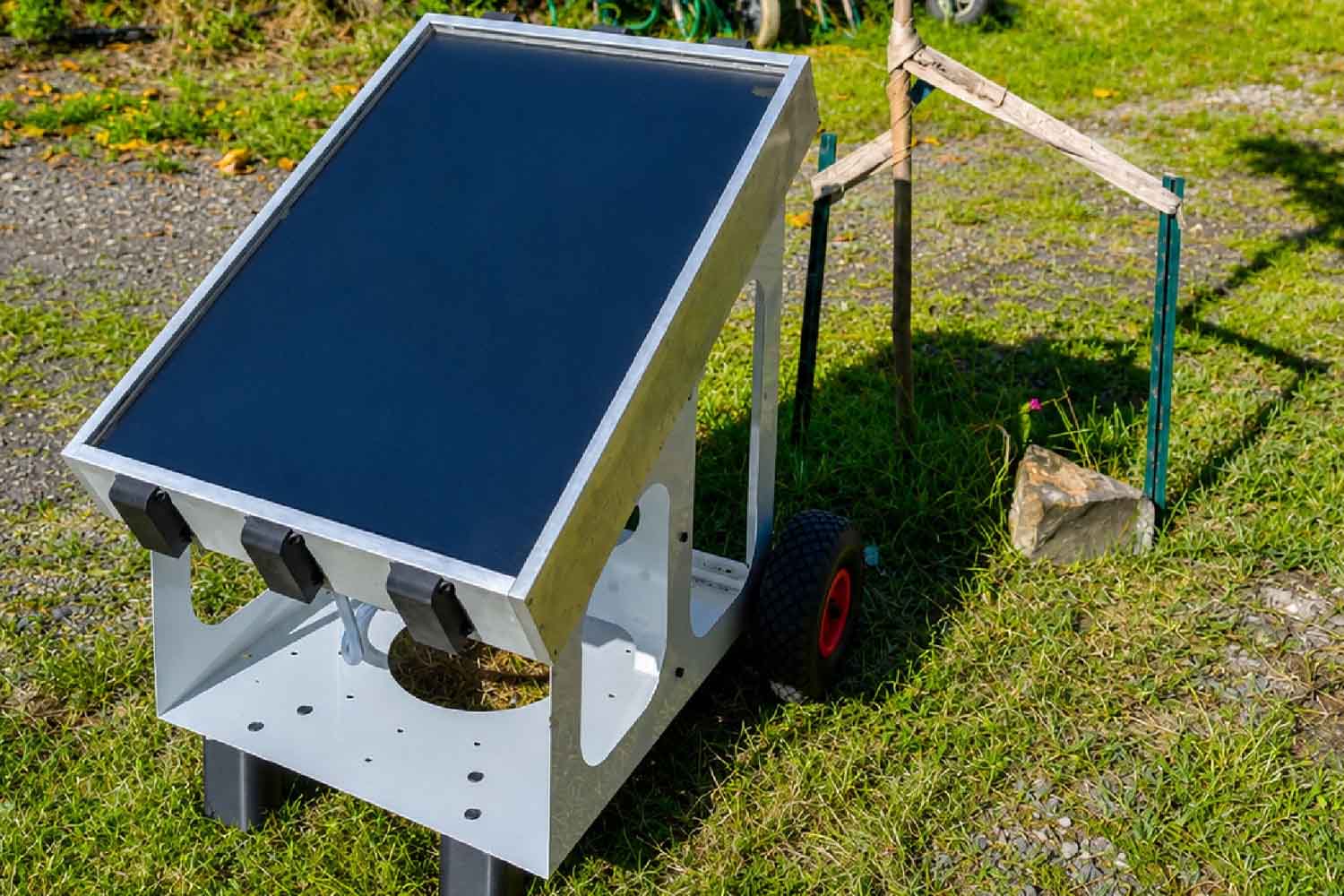
Water ECOsystem fits into this scenario, a young French company born in Perpignan, in the south of France, with an idea that is very simple to explain and much more complicated to make truly effective: producing water from the air using the sun’s energy. The device he is working on is an atmospheric water generator, designed to capture moisture in the air, condense it and turn it into usable water on site, especially for irrigation. The company talks about an autonomous, modular solution, suitable for communities, businesses, agriculture, landscapers, isolated areas and contexts subject to water restrictions.
How it works
The physical principle underlying the project has little magic. The air contains water vapor. The system intercepts it during the most favorable hours, particularly during the night, when the lower temperatures help the absorption of humidity. Then the sun intervenes: the heat allows the collected vaporization to be condensed and to obtain liquid water directly where it is needed. According to the data indicated by the company, each module can deliver on average approximately 1 liter of water per day per square meter, under suitable conditions.
Translated into daily use, today we are talking about around 350 liters per year per module. A quantity that certainly does not change the fate of an area in water crisis on its own, but it can make sense in very specific contexts: keeping some plants alive, supporting small green areas, reducing part of the withdrawal from the network, helping activities that suffer irrigation limitations in the hot months. This is where the project becomes more credible: less “drinking water for everyone tomorrow morning”, more a local tool to be combined with other solutions.
First the nurseries, then the rest
Water ECOsystem looks above all at the professional market. The company’s plans include landscapers, nurseries, agriculture, campsites, restaurants, tourist facilities, municipalities and green space managers. In practice, all those subjects who need water with a certain continuity and who, during the driest summers, find themselves with plants to save, ordinances to respect and costs to contain. The company website also mentions uses for housing and tourism from 2027, agriculture and viticulture from 2028, as well as applications for communities and interventions in isolated or crisis-hit areas.
The part about drinking water must be handled with more caution: the company itself recognizes that water intended for human consumption is subject to many rules and requires specific research and certification. For now, the area closest to commercialization seems to be that of irrigation and greenery management.
The Mediterranean in the sights
The startup, founded by Yann Bacher and David Mardivirin, now aims to move from the demonstration phase to larger production. Among the declared objectives are the deployment of approximately 100 first units to be monitored and a future production line capable of reaching up to 10,000 units per year. The company also talks about a possible international expansion from 2028, starting from the Mediterranean countries most exposed to water stress: Spain, Italy, Greece, North Africa and the Middle East.
Between fragile networks, longer summers, concentrated rainfall and territories that alternate between drought and floods, any technology capable of reducing even a portion of withdrawals deserves attention, even if an atmospheric water generator does not replace efficient aqueducts, well-managed reservoirs, rainwater recovery, reuse of purified wastewater, less thirsty agriculture and network maintenance. It can become a building block if costs drop, performance increases and certifications hold.
