
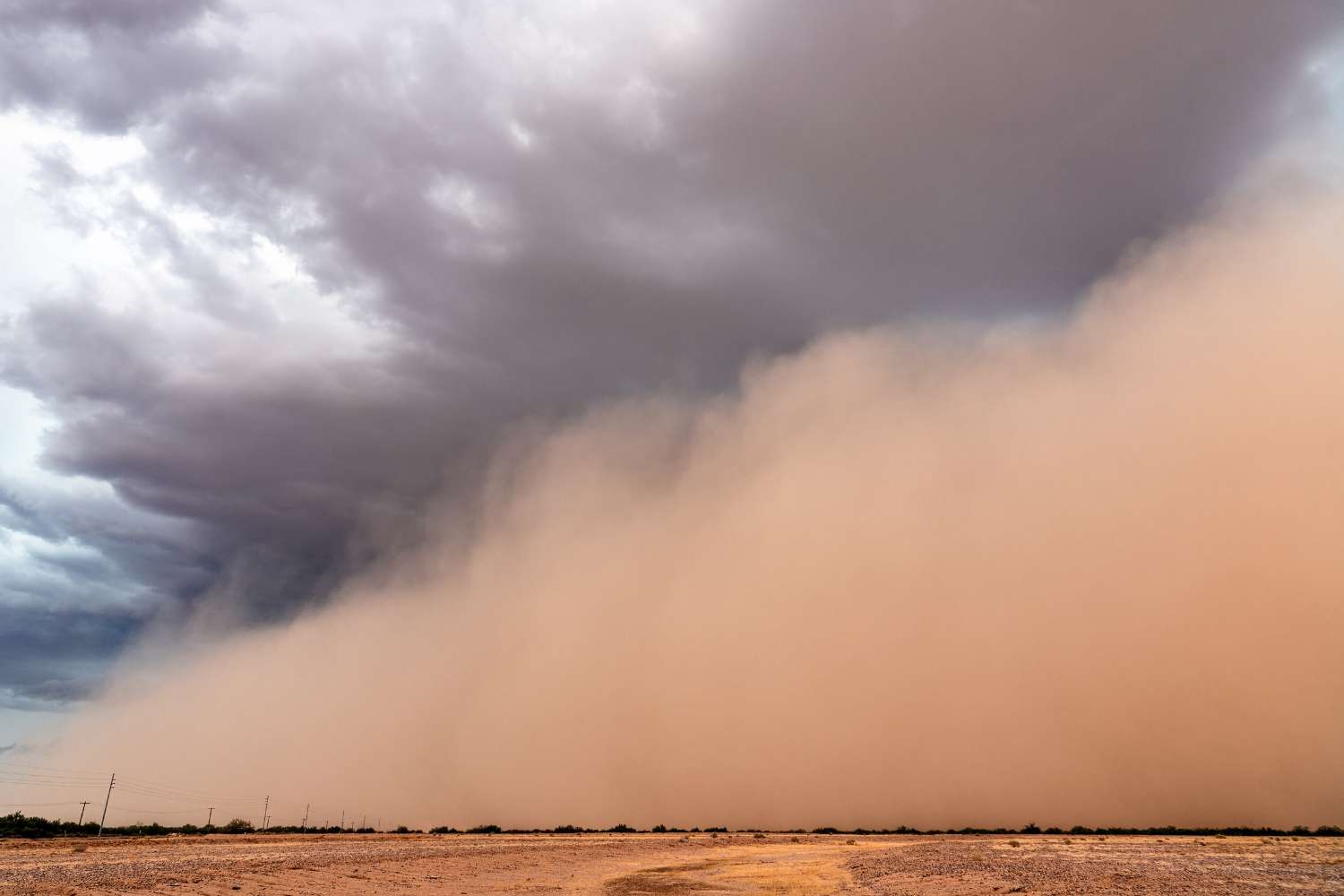
Italy is preparing to face an atmospheric event of considerable impact: a vast cloud of dust from the Sahara desert is arriving, ready to paint our skies with unusual shades and raise questions about air quality. With a peak expected on Monday 13 April 2026, the Saharan sand wave will affect much of the country, driven by intense Sirocco winds.
The invasion of Saharan dust: what to expect
As explained by Daniele Ingemi, meteorologist at Meteored Italia, this phenomenon is the result of intense winds, exceeding 50-60 km/h, capable of raising large quantities of sand and dust over vast desert areas. These particles, transported by convective motions towards the middle troposphere and favored by the reliefs of the Atlas, can travel thousands of kilometers across the Mediterranean.
Already from Sunday 12 April, the first clouds of Saharan dust will touch Sardinia, Sicily and Calabria. But it will be from Monday 13th that the phenomenon will extend to the rest of the country, reaching the northern Apennines and the Po Valley, giving sometimes “desert” scenarios and cloudy skies, especially in the Centre-South. The forecasts indicate that the rains, starting from Monday 13th in the North and Tuesday 14th in the Centre-South and Islands, will accompany this African disturbance, favoring the deposition of particles on the ground.
Impact on air quality and health risks
For lovers of the environment and sustainability, the crucial issue concerns air quality. The high concentration of suspended particles, in particular the dreaded PM2.5, will significantly worsen the air we breathe. This will result in milky skies, at times almost invisible, and a haze which can reduce visibility, which is also critical for aviation.
From a health point of view, the finest particles can irritate the respiratory tract, dry out the mucous membranes and aggravate pre-existing problems, representing a significant risk for those suffering from lung diseases. It is advisable, for the most sensitive subjects, to pay attention and, if necessary, limit outdoor exposure during the hours of maximum concentration.
Wet and dry deposition: when the sand touches the ground
Desert dust not only remains in the air, but ends up settling on the ground in two main ways. There wet deposition it occurs when raindrops capture particles, bringing them to the ground and forming the classic “yellow or brown spots” on cars and surfaces. There dry depositionhowever, occurs when grains accumulate by sedimentation on windowsills, balconies and other exposed surfaces, especially after intense wind advections.
An unsuspected source of life: the benefits for ecosystems
Despite the inconveniences and concerns, it is important to underline that desert dust does not only bring negative aspects. Various studies, such as those by NASA, highlight a surprising and beneficial side of this natural phenomenon.
Saharan dust is rich in nutrients essential for terrestrial and marine ecosystems. The iron they contain, for example, promotes the photosynthesis of phytoplankton and marine bacteria, acting as a real natural fertilizer for the oceans. This nutrient boost is critical to the base of the marine food chain.
An even more extraordinary example is its impact on the Amazon rainforest. The dust clouds cross the Atlantic to the Caribbean and the Amazon, enriching it with phosphorus and contributing to its extraordinary fertility. A natural cycle of immense scope, which demonstrates how even apparently “inconvenient” events can play a vital role in planetary balance.
As we prepare to face cloudy skies and potential disruption, it is critical to understand the complexity of phenomena like Sahara dust. An event that, while requiring attention to health and the urban environment, simultaneously reveals the profound and surprising interconnection of our planet’s natural systems.
