
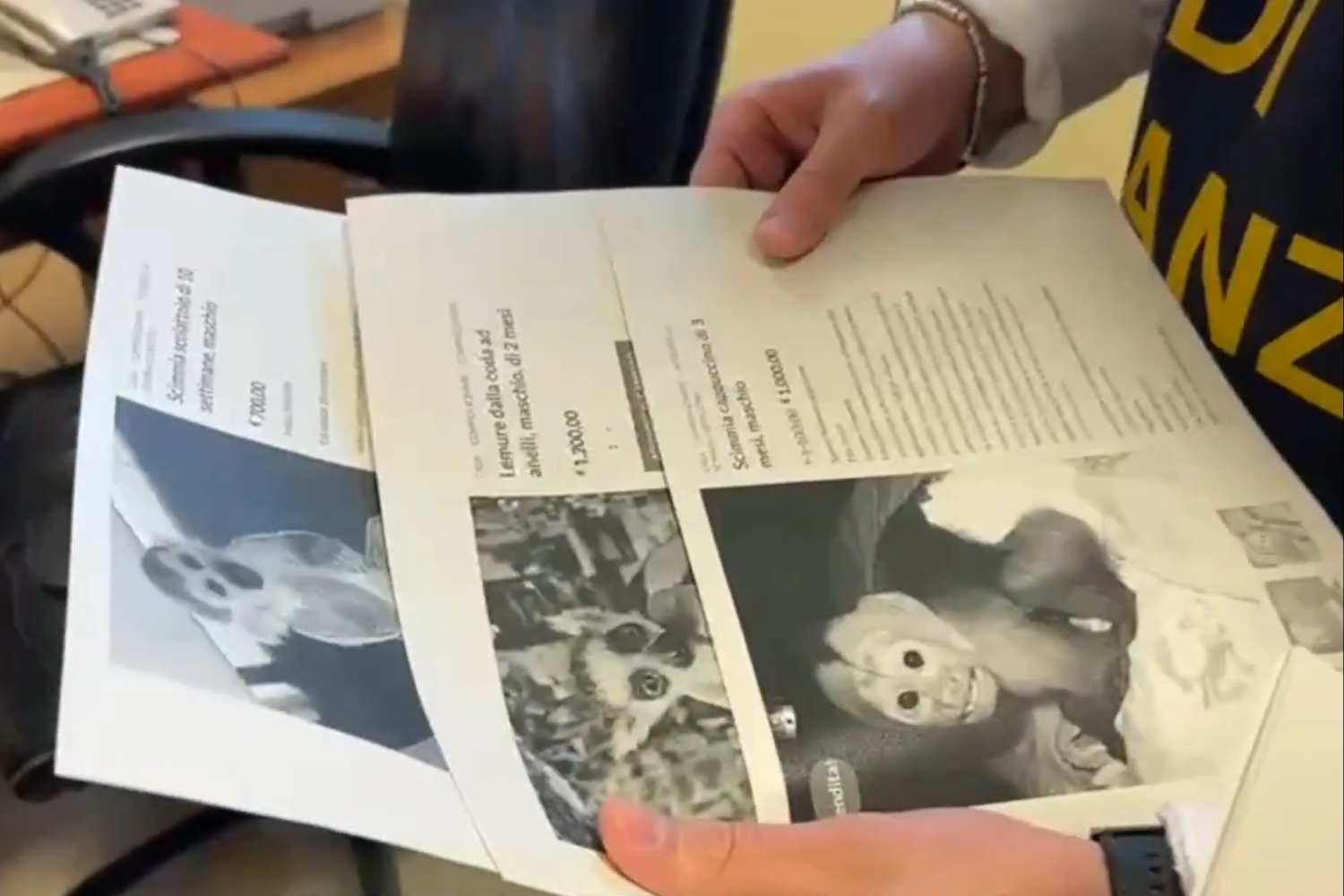
Attractive photos, seemingly affordable prices and promises of fast delivery. However, behind the online ads offering lemurs, capuchin monkeys, raccoons, foxes and exotic reptiles there was a much darker system. The Guardia di Finanza of Bologna, through the operation called “Fake Monkey”, has brought to light an alleged illegal trafficking of protected species accompanied by extensive online scam activity.
At the center of the investigations is a 34-year-old Cameroonian citizen residing in the province of Pavia, reported for illicit trade in animals protected by the CITES Convention and for aggravated fraud. In the meantime, the judiciary is evaluating the request to block the portal involved in the investigation.
Lemurs, raccoons and primates: rare animals transformed into products to buy
According to investigators, the website that came under attack advertised exotic animals as if they were normal e-commerce items. The ads included a ring-tailed lemur a few months old sold for 1,200 euros, small raccoons, capuchin capuchins, squirrel monkeys, tropical parrots and reptiles.
However, many of the proposed species are among those protected by the CITES Convention, the international agreement created to limit trade in animals and plants threatened with extinction. To hold or trade these specimens, strict authorizations, veterinary certifications and documents certifying their legal origin are required. According to what emerged, none of this was actually available.
#GdiF #Bologna: a fraudulent system has been identified on the web, aimed at the illegal sale of protected exotic animals and the creation of online scams. A person was reported and the portal was darkened.#Wewithyou#informedcitizen#informtoknow pic.twitter.com/zcDREnbjd7
— Financial Police (@GDF) May 25, 2026
The animals didn’t exist: how the scam worked
The most disturbing aspect of the investigation concerns the nature of the advertisements. In fact, the Fiamme Gialle believe that many of the animals advertised did not exist at all. Even the alleged farms indicated on the site were found to be non-existent. The mechanism was this: interested users were convinced to pay a deposit to block the purchase of the desired animal.
After payment, however, all contact suddenly stopped. No delivery, no response, no refund. Investigators estimate that the alleged perpetrator moved around 50 thousand euros, also transferring part of the money to foreign bank accounts thanks to the collaboration of some compatriots.
The hidden side of the exotic pet trade
The operation puts the spotlight back on an increasingly widespread phenomenon: the online wildlife market. Behind tender images and irresistible-looking puppies often hide mistreatment, illegal captures and conditions incompatible with animal welfare.
Lemurs, for example, are considered among the most threatened animals in the world according to the IUCN Red List. Keeping them in an apartment almost always means subjecting them to isolation, stress and serious behavioral problems. In addition to the ethical aspect, there is also an environmental and health risk. Furthermore, illegal wildlife trafficking contributes to the loss of biodiversity, promotes the spread of diseases and increases the danger of introducing invasive species.
You might also be interested in:
