
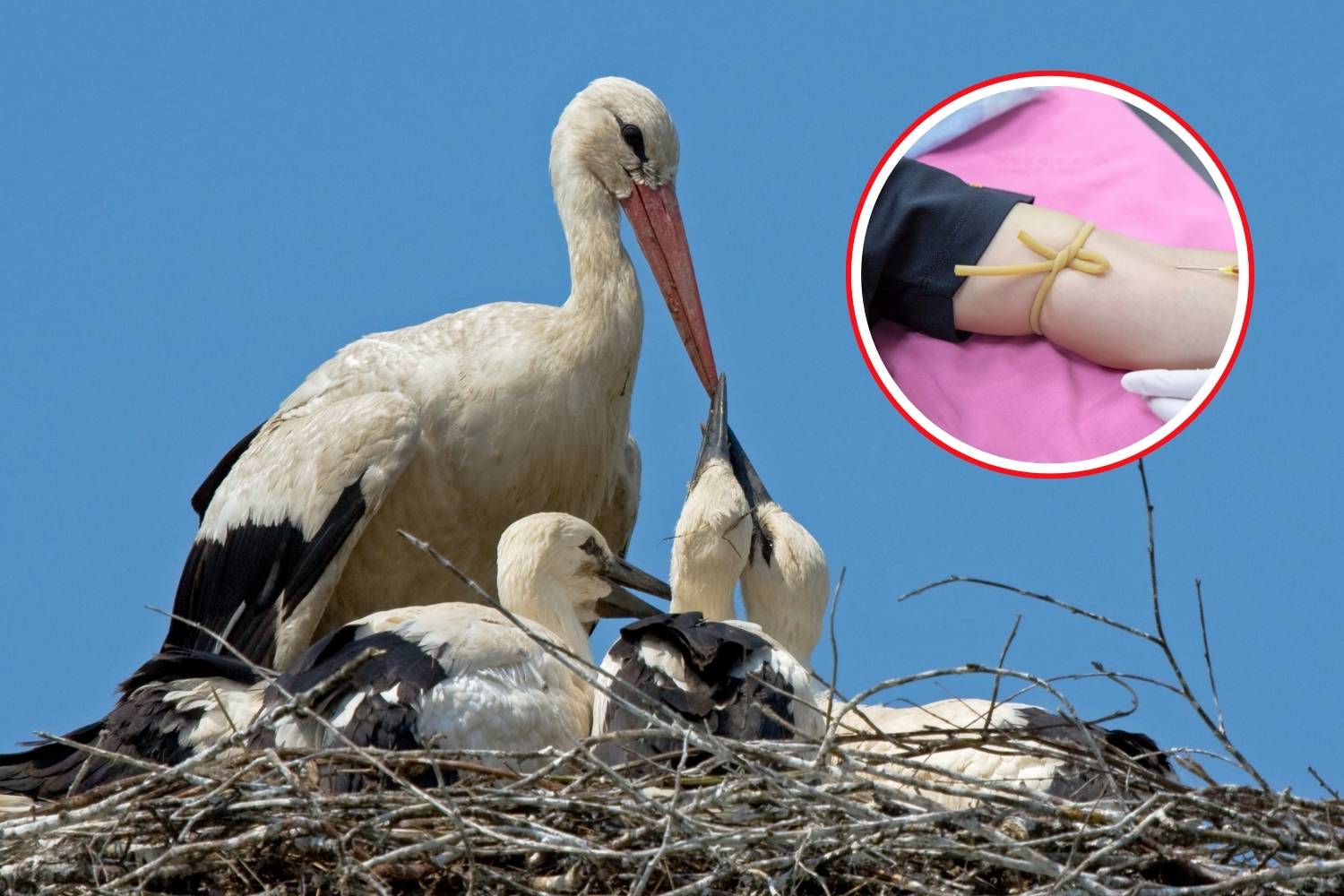
A devastating ecological drama is affecting the population of birds that choose Sicily to reproduce. In the Geloi Wetland natural oasis, located in the Gela area not far from Lake Biviere, young storks are facing a horrible death right inside their nests.
The ornithologist Angelo Scuderi, involved together with volunteers in the management of the area reclaimed by a private foundation, raised the alarm after having monitored and examined at least 12 specimens found lifeless last year.
The autopsy analysis of the babies’ stomachs revealed a stunning scenario: the gastric cavity of the birds was totally obstructed by rubber bands, plastic residues and above all tourniquets. The adults, deceived by the shape and consistency of these wastes, mistake the tubes for tasty earthworms and feed them to their chicks, causing lethal intestinal blockages and atrocious suffering.
Illegal landfills and the danger of specialized hospital waste
The investigations conducted by the oasis experts highlight a much deeper territorial plague that goes beyond the boundaries of the reserve. Despite the reclamation of the protected area and the creation of artificial platforms designed to prevent storks from nesting on high voltage pylons and risking electrocution, the animals cover considerable distances in search of nourishment for their offspring.
The Gela Plain is dotted with numerous illegal landfills created in isolated rural areas, full of waste of all kinds. The massive presence of materials such as tourniquets, which belong to the category of special hospital waste and require rigorous disposal protocols, suggests the hypothesis of illicit spills repeated over time.
A submerged phenomenon that threatens the biodiversity of the island
The real scale of the massacre could be even greater than the cases confirmed in the field. On the electrical pylons scattered in the countryside around Gela, ornithologists continue to record frequent reproductive failures, without however being able to reach the tops of the structures to recover the bodies of the chicks and carry out the necessary checks.
The matter requires an urgent and in-depth assessment by the competent authorities and law enforcement agencies to identify those responsible for the abandonment of infectious and toxic medical material. Without an effective fight against illegal waste dumping in rural areas, environmental protection works risk being undermined by the constant poisoning of the food chain and local fauna.
