
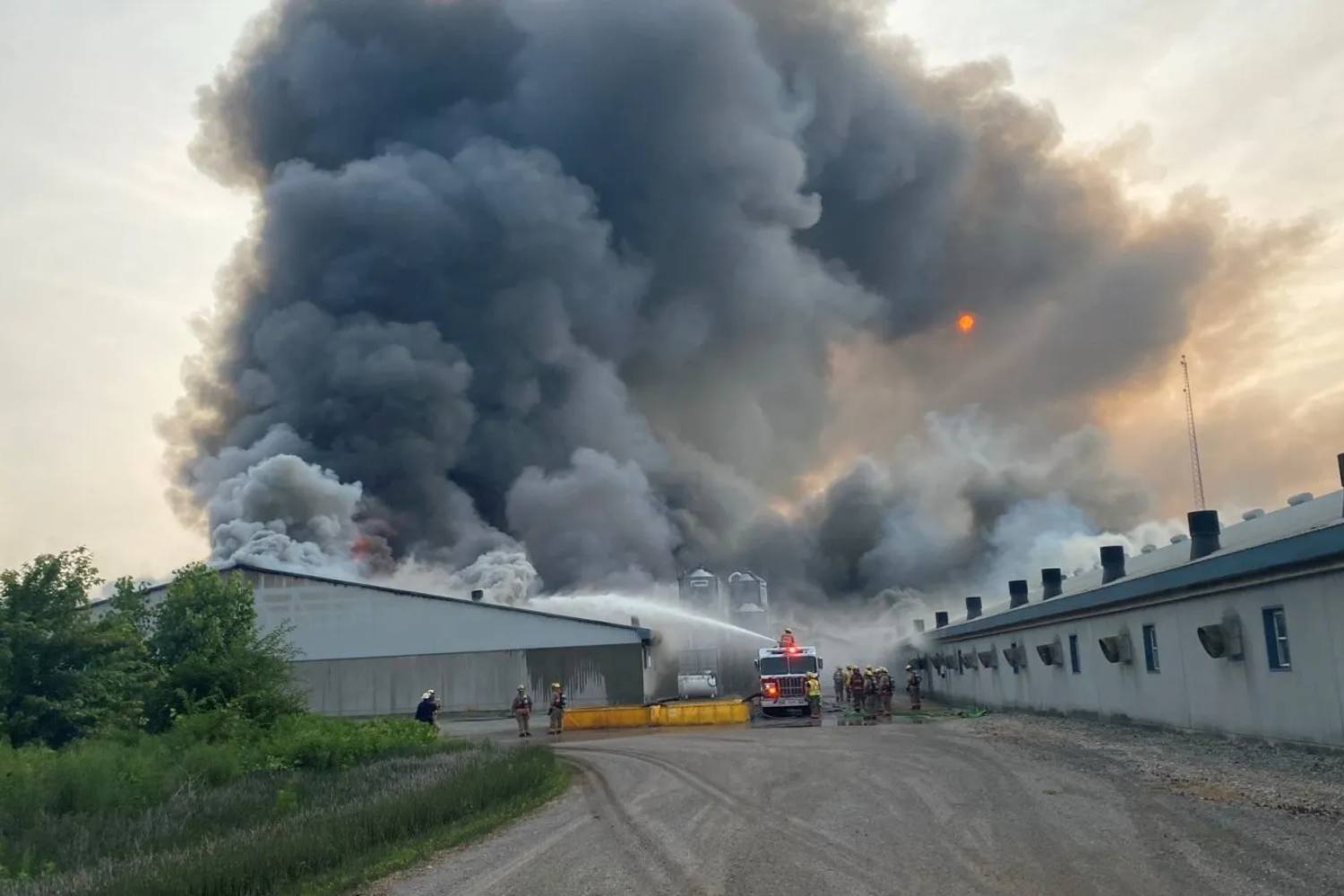
A silent and heartbreaking drama unfolded in the early hours of Tuesday in Simcoe, southwestern Ontario, where a fire of gigantic proportions literally razed a barn to the ground. In what appears to be one of the heaviest livestock losses recorded in the province in recent years, at least 20,000 pigs were trapped inside the burning building. The animals had no way out in the face of a very fast and suffocating fire, which broke out in an immense complex that transformed into a heat and smoke trap in just a few minutes.
@Norfolk County Fire Department
The desperate intervention of the firefighters and the devastation of the agricultural community
The flames required the mass intervention of over forty firefighters from eight different stations in the region, who had to fight against an extremely aggressive fire front, made even more difficult by a wave of scorching heat and very high humidity levels.
Although the ownership of the farm was entirely covered by an insurance policy and no injuries or poisonings were reported among the human staff, the dramatic loss of so many animal lives profoundly shocked and devastated the entire local agricultural community. The Office of the Ontario Fire Commissioner was immediately alerted to shed light on the dynamics of the disaster, although at the moment the authorities do not consider the origin of the fire to be suspicious.
Camille Labchuk’s harsh accusation on the lack of real protections in the warehouses
The magnitude of this tragedy sparked an immediate and indignant reaction from animal protection associations. The executive director of the legal organization Animal Justice, the lawyer Camille Labchuk, expressed deep condolences and pointed the finger at the country’s historic legislative deficiencies in terms of fire prevention in rural contexts.
According to the activist, pigs experience pain and suffering exactly like the pets we share our daily lives with. Labchuk denounced how for decades industrial warehouses have been classified as structures with low human occupancy, thus being exempted from the obligation to install detectors, fire walls or sprinkler systems. Even the new regulations recently introduced continue to consider these precautions as optional, leaving thousands of vulnerable creatures exposed to entirely predictable dangers.
View this post on Instagram
