
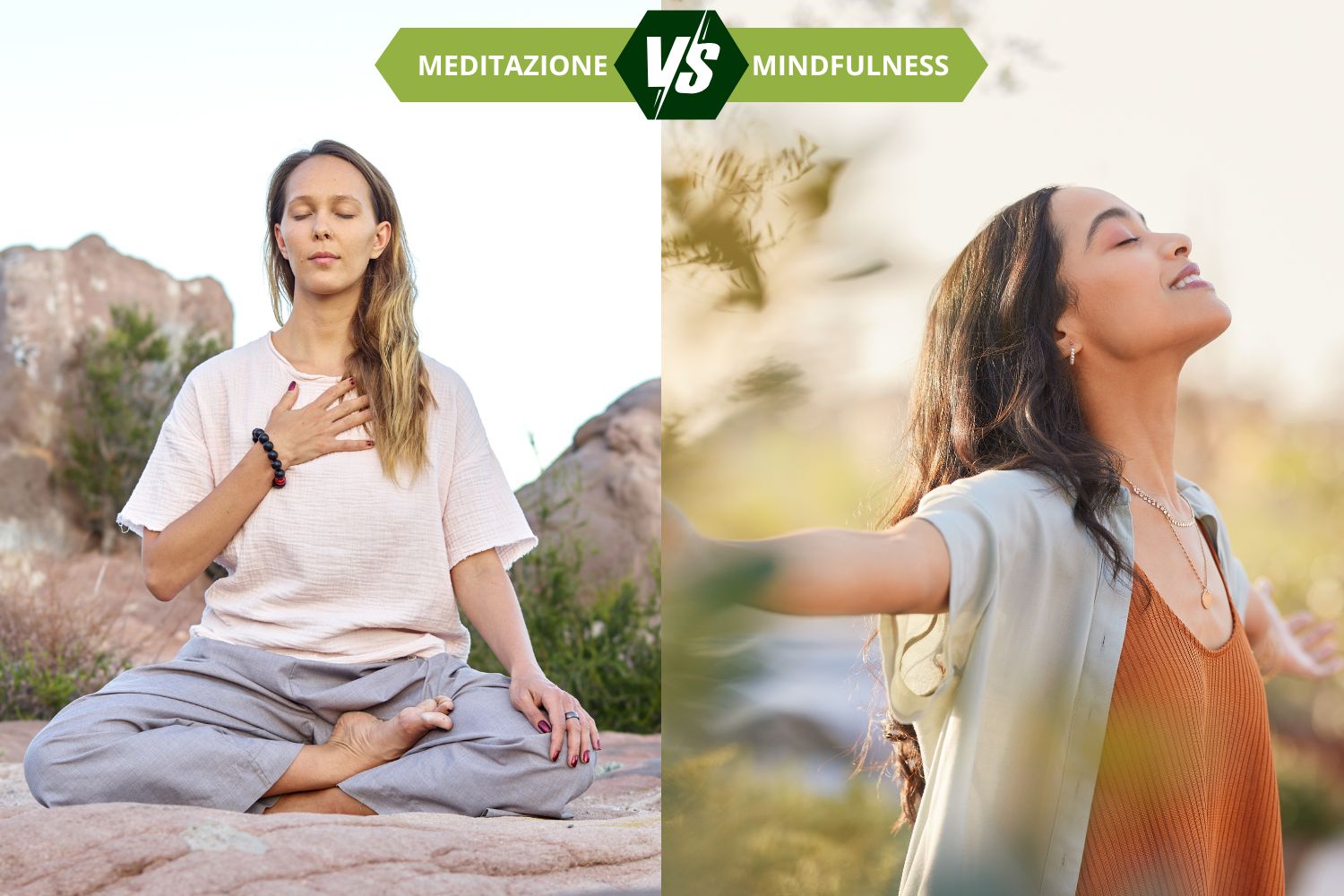
Too often used as a synonym, meditation and mindfulness are not the same thing, let’s try to understand the differences and which one is best for you
In recent years, concepts such as meditation And mindfulness have become increasingly popular, so much so that they are often used synonymously. However, although they are closely related, they are different concepts, representing two practices with distinct objectives and methods.
So what are they? the differences between meditation and mindfulness and what are the different types of meditation? Let’s try to compile the peculiarities of each technique, from the oldest to the most modern, to help you choose the practice that best suits your needs.
Meditation and Mindfulness: what are they and how do they differ?
To begin with, I would like to report a clear and effective distinction made by Virginia Gambardella last year Kalemana Festival in which both the conceptual and substantial differences can already be understood:
There meditation it is really a formal practice, therefore it requires being in a place, in a space, taking some time, finding yourself in a comfortable position, generally but not necessarily sitting, your eyes are closed and you begin to pay attention to an element, an element that could be breathing, a body sensation could be a mantra. There are many meditation practices, I personally practice them vipassanabut it’s there zen meditationthe mindfulness meditationthere is transcendental meditation and you immerse yourself a little inside yourself. Instead the mindfulness it’s just cnon-reactive awareness and it doesn’t necessarily have a fence, it doesn’t necessarily have a container, the more it spreads in life the better, one can practice mindfulness by walking, eating, one can practice mindfulness by talking to someone: it is precisely the ability to pay attention intentionally in the moment present, so I’m not thinking about what has to happen, I’m not thinking about what has already happened, I’m concentrating on here and now and I do it without judgment, in a non-judgmental way.
Meditation: an ancient practice for cultivating awareness
There meditation it is a thousand-year-old practice that has origins in various spiritual traditions, including theHinduismThe Buddhism and the Taoism. It is a generic term that encompasses a wide range of techniques aimed at developing awareness, concentration and inner calm. The main goal of meditation is transcend ordinary thinkingachieve states of profound stillness and connection with your inner self. There are many meditation techniques, which we will explore later, but they all share some key elements:
Mindfulness: the power of attention in the present
There mindfulness can be considered one specific form of meditationbut with broader application to everyday life. The term derives from the Sanskrit “Sati” and means “awareness”but was popularized in the West thanks to biologist Jon Kabat-Zinn, who developed the program in the 1970s MBSR (Mindfulness-based Stress Reduction).
Mindfulness consists of pay attention to the present moment in an intentional and non-judgmental way. Unlike traditional meditation, which can be practiced at specific moments, mindfulness can be integrated into every daily activity: while eating, walking, working or interacting with others.
Main differences between Meditation and Mindfulness:
| Meditation | Mindfulness | |
|---|---|---|
| Origin | Eastern spiritual traditions (Buddhism, Hinduism, Taoism) | Modern technique developed in the West, inspired by Vipassana meditation |
| Objective | Transcend the mind and reach higher states of consciousness | Increase awareness in the present moment |
| Practice methods | Dedicated sessions with specific techniques (e.g. Vipassana, Zen, Mantra) | It can be practiced at any time of the day |
| Approach | Often associated with a spiritual path | Secular approach, also used in the therapeutic field |
| Main benefits | Stress reduction, increased awareness, spiritual growth | Greater concentration, management of emotions, reduction of anxiety |
The main types of meditation
Now that we have clarified the differences between meditation and mindfulness, let’s look at some of the main meditation techniques, each with specific characteristics and benefits.
Vipassana meditation: the path of intuition
There Vipassana meditation represents one of the oldest forms of Buddhist meditation, known for its intuitive approach. The term “Vipassana” means “seeing things as they are” and this practice is based on the deep observation of breathing and body sensations. Its goal is to welcome thoughts and emotions without judgment, promoting greater awareness and mental clarity. In addition to reducing anxiety and stress, Vipassana helps manage emotions with greater balance.
Zen Meditation (Zazen): the practice of simplicity
Meditation Zenor Zazenis typical of Japanese Zen Buddhism and stands out for its simplicity as well as for the great attention paid to it posture: The practitioner sits cross-legged, focusing on breathing and the present moment. Unlike other techniques, Zazen does not require a specific object of concentration, but encourages you to let your thoughts flow without getting attached to them. This meditation promotes concentration, patience and deep mental clarity.
Transcendental Meditation: the power of mantras
There Transcendental Meditation (TM) it is a technique developed by the Indian master Maharishi Mahesh Yogi and is based on the silent repetition of a mantra (a sacred word or sound) to achieve a state of profound tranquility. Repetition of the mantra helps calm the mind, bringing benefits such as deep relaxation, better sleep and greater creativity and energy.
Bring the ancient benefits of the “Mantra of Mantras” into your everyday life
Meditation with the Chakras: energetic balance
There meditation with the Chakrashowever, is inspired by the yogic tradition and focuses on the harmonization of the body’s energy centers. Through visualizations, breathing techniques and the use of specific mantras, this practice aims to balance internal energies, promoting greater emotional well-being, the release of physical tension and a deeper connection with oneself.
Metta (Loving-Kindness) Meditation: Cultivate love and compassion
there Metta meditationalso known as “loving-kindness” meditation, is a Buddhist practice that cultivates feelings of love and compassion towards oneself and others. Through the repetition of positive phrases, such as “May I be happy, may I be at peace”, this technique helps reduce anger and internal conflicts, promoting empathy and harmonious relationships. Furthermore, it develops a sense of gratitude and well-being that is reflected in daily life.
| Type of Meditation | Focus | Benefits |
|---|---|---|
| Vipassana meditation
(the way of intuition) |
Observation of breathing and body sensations without judgment. | Greater awareness, reduction of anxiety and stress, emotional balance. |
| Zen Meditation (Zazen)
(the practice of simplicity) |
Posture, breathing and presence in the current moment. | Increased concentration, patience and mental clarity. |
| Transcendental Meditation
(the power of mantras) |
Silent repetition of a mantra to calm the mind. | Deep relaxation, improved sleep, greater creativity and energy. |
| Meditation with the Chakras
(energy balance) |
Harmonization of energy centers with visualizations, breathing and mantras. | Emotional well-being, release of tension, connection with oneself. |
| Metta Meditation (Loving-Kindness)
(cultivate love and compassion) |
Generate love and compassion through positive phrases. | Reduction of anger, development of empathy and harmonious relationships. |
Conclusion: which practice to choose?
If your goal is develop awareness in daily lifethe mindfulness It’s a great choice, as it allows you to be present in every moment, without needing a formal meditation session.
If you want instead deepen the work on yourself and your mindthe meditation offers numerous techniques to improve concentration, reduce stress and achieve greater inner serenity.
Meditation is really like a mental trainingjust as we go to the gym and each repetition strengthens our muscles, therefore increasing our strength, so each meditation session strengthens our ability to pay attention, which is the same one we use in mindfulness – concludes Virginia Gambarderla who is keen to focus on mindfulness clarify two things – the first is that mindfulness is truly a lifestyle, it is a way of living and the second is something my meditation teacher always told me: mindfulness is a skill it’s a skill, it’s not something we have innately, but it requires effort, it requires training.
The important thing certainly remains to find the practice best suited to you and consistently integrate it into your routine, even for just a few minutes a day. The benefits will be visible in a short time, helping you live with more awareness, balance and serenity.
You might also be interested in:
