
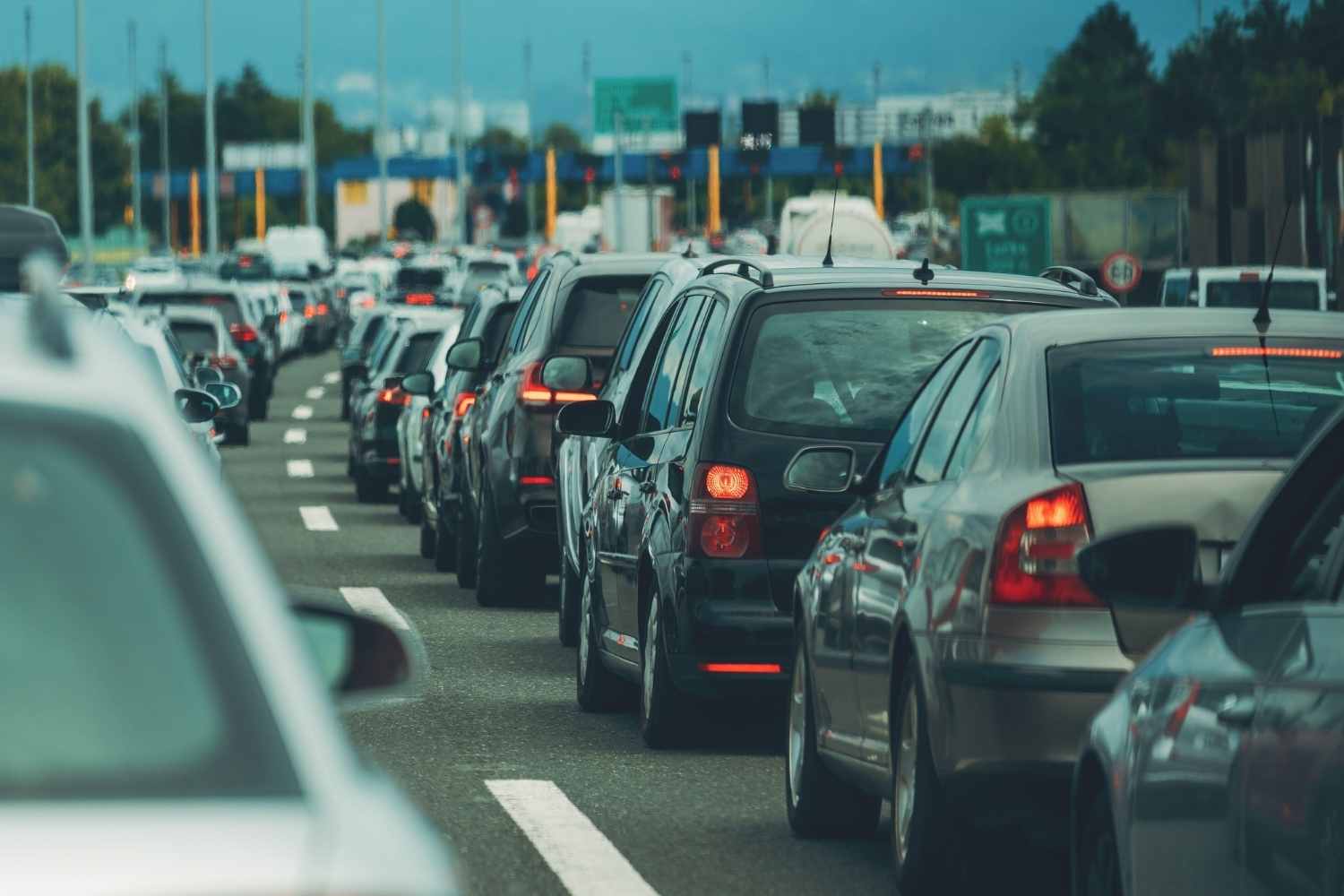
Starting from 1 January 2026, new adjustments to motorway tolls came into force, linked to inflation trends. The analysis conducted by Altroconsumo on 38 routes highlights average increases that are all in all limited, despite very marked differences in costs, determined both by the length of the routes and by the geographical areas crossed. A situation that particularly weighs on those who use the motorway regularly, often every day.
The new tariffs, operational since the beginning of the year, incorporate the adjustment to planned inflation, set at 1.5% as communicated by the Ministry of Transport. On this basis, a selection of 38 representative sections of the national network was examined. The result returns a multifaceted situation: the increases exist, but they do not follow a uniform trend and produce different effects depending on the directions considered. The average increase recorded stands at 1.1%, a value that may appear moderate, but which must be interpreted in light of already high tolls and the intensive use of the motorway by commuters and workers.
General increases, but often just a few cents
In most cases the adjustments translate into an increase of 10 or 20 cents per single route. It happens on very busy connections in Northern Italy, such as Dalmine-Milan East, Bergamo-Milan East or Trento North-Bolzano South, where percentage increases exceed 2%. Even on the A4, in the Agrate Brianza-Milan section, the percentage increase appears higher. In this case the data must be read carefully, because it concerns a very short path: an increase of 10 cents, applied to rates rounded to the nearest tenth, automatically generates a higher percentage change, without translating into a particularly heavy increase in absolute terms. The situation changes if we look at those who travel that stretch continuously: for commuters, the daily repetition of that cost has a more significant impact.
The real burden for those who use the motorway every day
The criticality emerges above all over time. Ten or twenty cents more, considered individually, may seem marginal, but on an annual basis they become a significant expense item for those who travel daily. Commuters, workers and small economic operators therefore find themselves incurring higher overall costs, often in the absence of valid public transport alternatives, especially along some extra-urban routes.
The cost per kilometer comparison
To better understand the burden of tolls, a useful indicator is the cost per 100 kilometres, which allows you to compare routes of different lengths. The calculation is obtained by relating the toll to the kilometers traveled and multiplying the result by 100. The investigation thus highlights some particularly onerous situations: the Novara East-Milan Ghisolfa route exceeds 14 euros per 100 km, while the Turin Rondissone-Novara West route is just under this threshold. Several motorways in Lazio, Campania and the Adriatic axis also consistently exceed 10 euros per 100 km. Values which confirm that many Italian routes are among the most expensive, beyond the increases introduced in 2026.
Where tolls remain unchanged
Around a third of the routes examined do not show any increase during 2026. The situation concerns various connections in the North-West, Central Italy and in particular Sicily, where some motorways continue to be free. What emerges is a non-homogeneous tariff system, characterized by strong territorial differences which do not always find a clear explanation in the quality of the infrastructure or the services offered to motorists.
The routes analyzed
Here is the list of routes examined by Altroconsumo:
| Deals with | Km | Toll 2026 (€) | Increase (€) | Price per 100 km (€) |
| A4: Agrate Brianza-Milan | 21 | 1.70 | 0.10 | 8.10 |
| A4: Dalmine-Milan East | 44 | 3.50 | 0.10 | 7.95 |
| A4: Bergamo-Milan East | 48 | 3.80 | 0.10 | 7.92 |
| A22: Trento North-Bolzano South | 51 | 3.90 | 0.10 | 7.65 |
| A1-A24: Valmontone-Roma Est | 44 | 4.20 | 0.10 | 9.55 |
| A14-A1: Bologna Casalecchio-Florence North | 97 | 8.90 | 0.20 | 9.18 |
| A1: Civitavecchia-Rome South | 59 | 4.70 | 0.10 | 7.97 |
| A4: Verona East-Padova West | 75 | 5.30 | 0.10 | 7.07 |
| A14: San Lazzaro di Savena-Ravenna | 72 | 5.70 | 0.10 | 7.92 |
| A4: Turin Rondissone-Novara West | 83 | 11.50 | 0.20 | 13.86 |
| A22: Trento Centre-Verona North | 87 | 6.40 | 0.10 | 7.36 |
| A1: Florence South-Rome North | 254 | 20.00 | 0.30 | 7.87 |
| A16: Naples-Benevento | 83 | 6.70 | 0.10 | 8.07 |
| A4: Novara Est-Ghisolfa | 49 | 6.90 | 0.10 | 14.08 |
| A14: Naples-Bari North | 260 | 9.60pm | 0.30 | 8.31 |
| A14: San Lazzaro di Savena-Ancona Nord | 199 | 15.70 | 0.20 | 7.89 |
| A14: San Lazzaro di Savena-Rimini Nord | 104 | 8.20 | 0.10 | 7.88 |
| A1-A24: Naples North-Rome East | 223 | 17.80 | 0.20 | 7.98 |
| A14: Bologna Borgo Panigale-Verona South | 139 | 9.60 | 0.10 | 6.91 |
| A14: Ancona South-Pescara North | 135 | 10.60 | 0.10 | 7.85 |
| A7: Genoa Bolzaneto-Milan West | 138 | 10.70 | 0.10 | 7.75 |
| A4: East Milan-Venice Mestre | 272 | 10.30pm | 0.10 | 8.20 |
| A14: Bologna Borgo Panigale-Modena South | 24 | 1.90 | 0 | 7.92 |
| A8: Malpensa T1-Milan | 24 | 1.90 | 0 | 7.92 |
| A4: Trusses-Milan East | 36 | 2.80 | 0 | 7.78 |
| A8: Varese-Milan North | 46 | 3.60 | 0 | 7.83 |
| A20: Messina-Buonfornello | 175 | 0 | 0 | – |
| A4: Cavenago-Milan East | 26 | 2.00 | 0 | 7.69 |
| A18: Catania Nord-Messina | 78 | 0 | 0 | – |
| A20: Messina-Milazzo | 34 | 0 | 0 | – |
| A2-A3: Naples-Cosenza | 22 | 2.30 | 0 | 10.45 |
| A4: Venice Mestre-Padua East | 300 | 3.10 | 0 | 1.03 |
| A7: Pavia-Milan East | 40 | 2.80 | 0 | 7.00 |
| A14: Pescara North-Rome East | 208 | 9.40pm | 0 | 10.29 |
| A1: Ponzano Romano-Roma Nord | 37 | 2.90 | 0 | 7.84 |
| A21: Turin-Asti West | 56 | 5.20 | 0 | 9.29 |
| A24: Teramo-L’Aquila East | 51 | 5.40 | 0 | 10.59 |
| A24: Tivoli-Rome East | 21 | 2.20 | 0 | 10.48 |
