
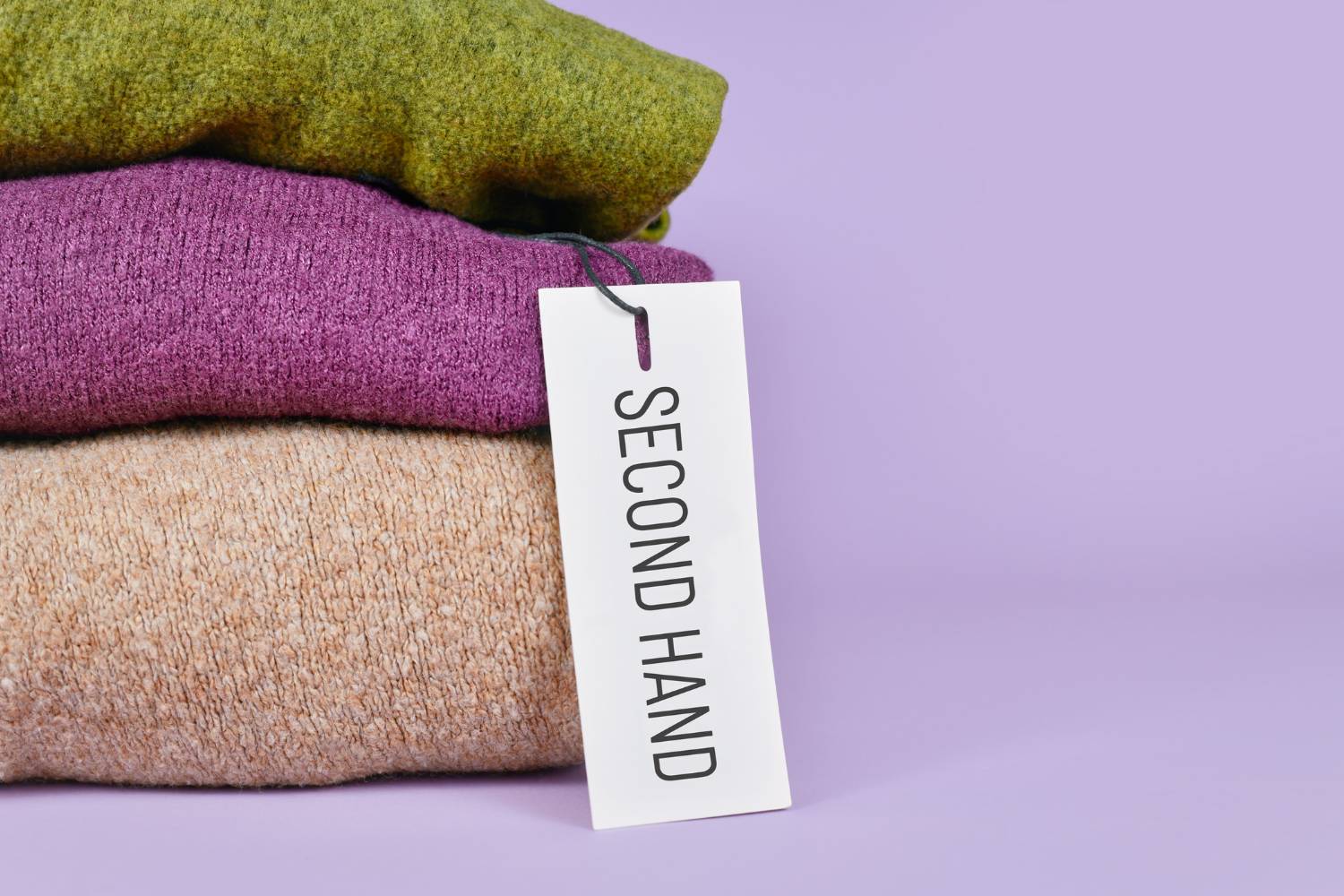
What until a few years ago caused embarrassment has today become a gesture of economic intelligence and environmental responsibility. We are talking about the second-hand market in Italy which, according to the Second Hand Economy Observatory created by BVA Doxa for Subito, has reached 27 billion euros and now involves more than 27 million people.
A new investigation by Altroconsumo photographs a profound cultural change: second-hand goods are no longer something to hide, but a conscious choice that combines savings and sustainability. And, in spite of Black Friday and fast fashion, it’s about time!
According to the survey, 80% of respondents recognize that buying or selling second-hand products has a positive impact on the environment, and 66% believe that it is not worth buying new items that will only be used infrequently. In short, second-hand shopping is no longer a stigma, but a real lifestyle.
And it is no longer a niche phenomenon, but the third most widespread sustainable behavior in the country.
Who buys, what they buy and where they buy
The survey, carried out between 30 May and 3 September 2025, involved 1,460 Italian citizens, representative of the population by gender, age (18-74 years), education and geographical area. Participants were asked whether they had searched for, bought or sold second-hand products, or whether they had already chosen refurbished items, and what the motivations behind these choices were.
The responses confirmed the ongoing transformation: 8 out of 10 interviewees have purchased at least one second-hand product in the last year, and almost half look for used products at least once a month.
The second hand market is driven by young people under 34, while people over 59 are more reluctant. The average annual expense for those who purchase is around 219 euros, generally for around 3 items per year.
The most popular sectors? In first place are clothing, shoes and fashion accessories, chosen by half of those interviewed, followed by books, comics, CDs, DVDs and vinyl records. Household items, DIY and games are also seeing good levels of interest.
!function(e,n,i,s){var d=”InfogramEmbeds”;var o=e.getElementsByTagName(n)(0);if(window(d)&&window(d).initialized)window(d).process&&window(d).process();else if(!e.getElementById(i)){var r=e.createElement(n);r.async=1,r.id=i,r.src=s,o.parentNode.insertBefore(r,o)}}(document,”script”,”infogram-async”,”https://e.infogram.com/js/dist/embed-loader-min.js”);
!function(e,n,i,s){var d=”InfogramEmbeds”;var o=e.getElementsByTagName(n)(0);if(window(d)&&window(d).initialized)window(d).process&&window(d).process();else if(!e.getElementById(i)){var r=e.createElement(n);r.async=1,r.id=i,r.src=s,o.parentNode.insertBefore(r,o)}}(document,”script”,”infogram-async”,”https://e.infogram.com/js/dist/embed-loader-min.js”);
Online platforms now play a central role: over half of purchases (54%) take place via sites or apps such as Vinted and Subito.it, while 35% take place in physical stores. Price negotiation is widespread and 59% of buyers manage to obtain average discounts of 23%.
On the payment front, 6 out of 10 interviewees use electronic tools such as credit cards, bank transfers and PayPal.
High satisfaction, rare problems
On a scale of 1 to 100, the average satisfaction level reaches 83 for buyers and 84 for sellers. Only 4% of buyers and 3% of sellers reported inconveniences, such as worse product conditions than advertised or extra costs.
Ultimately, 3 out of 4 shoppers rate the experience, with the final price emerging as the deciding factor in the overall rating. A result that confirms the good maturity reached by this market.
!function(e,n,i,s){var d=”InfogramEmbeds”;var o=e.getElementsByTagName(n)(0);if(window(d)&&window(d).initialized)window(d).process&&window(d).process();else if(!e.getElementById(i)){var r=e.createElement(n);r.async=1,r.id=i,r.src=s,o.parentNode.insertBefore(r,o)}}(document,”script”,”infogram-async”,”https://e.infogram.com/js/dist/embed-loader-min.js”);
Sustainability at the center of choices
The environmental impact is an increasingly relevant motivation in the choice of second hand: 80% of those interviewed recognize that second hand has beneficial effects on the environment. 66% say that it is not worth buying new objects intended for sporadic use, a sign of growing awareness towards more circular consumption models.
Contributing to the second-hand market means extending the life of an asset, limiting the production of new objects and reducing the amount of waste. It is a concrete way to reduce pollution.
However, there is some resistance. 37% still perceive risks linked to possible scams or goods in poor condition, a more widespread concern among those who have never purchased used. 24% also admit a certain discomfort at the idea of buying something already used by others.
However, the majority agrees that many used products are practically like new, and direct experience tends to dissolve these doubts: among those who have already tried second hand, concerns drop to 31%.
The refurbished market is growing
In parallel with traditional second hand, interest in refurbished products is also growing. Almost 4 in 10 respondents have already purchased a refurbished device, with smartphones leading the way (59%), followed by computers and tablets (31%) and small household appliances (25%).
Compared to a survey conducted by Altroconsumo in 2024, when only 28% had tried a refurbished one, the current figure shows significant growth. Almost half of the participants believe that these products are as reliable as new ones, a percentage that rises to 58% among those who have already purchased them.
For 30% of those interviewed, however, the price difference between a refurbished product and a new one is not yet advantageous enough. This suggests that there is still scope to make the market more competitive and accessible.
The complete survey on second hand is available on COMMITTED TO CHANGE, the Altroconsumo platform dedicated to building a new culture of consumption.
