
Did you know that your library card can turn into a real source of food sustenance? In the United States and Canada, hundreds of public facilities have started an innovative circular model: instead of limiting themselves to paper volumes, they lend sachets of non-GMO seeds, aromatic herbs and flowers to all citizens for free.
The initiative has taken hold in small entities such as the Basalt Public Library, located in western Colorado, where director Barbara Milnor has bet on the project to maintain the relevance of the institution in the era of digital content. The mechanism is simple: you collect up to 3 sachets of seeds at the counter, grow them at home and, at the end of the season, collect the seeds from the strongest and most resistant plants to return part of them to the community.
The case of Crete and cultural inclusion in Canadian universities
The experiment has successfully expanded to several institutions, as demonstrated by the Public Library of Crete, where reception staff collect donations from local gardeners to enrich the community catalog and promote disease-free crops. In addition to reducing costs for those who want to start a home garden, generational seed conservation allows you to select plants capable of resisting arid climates or alkaline soils.
@Crete Public Library
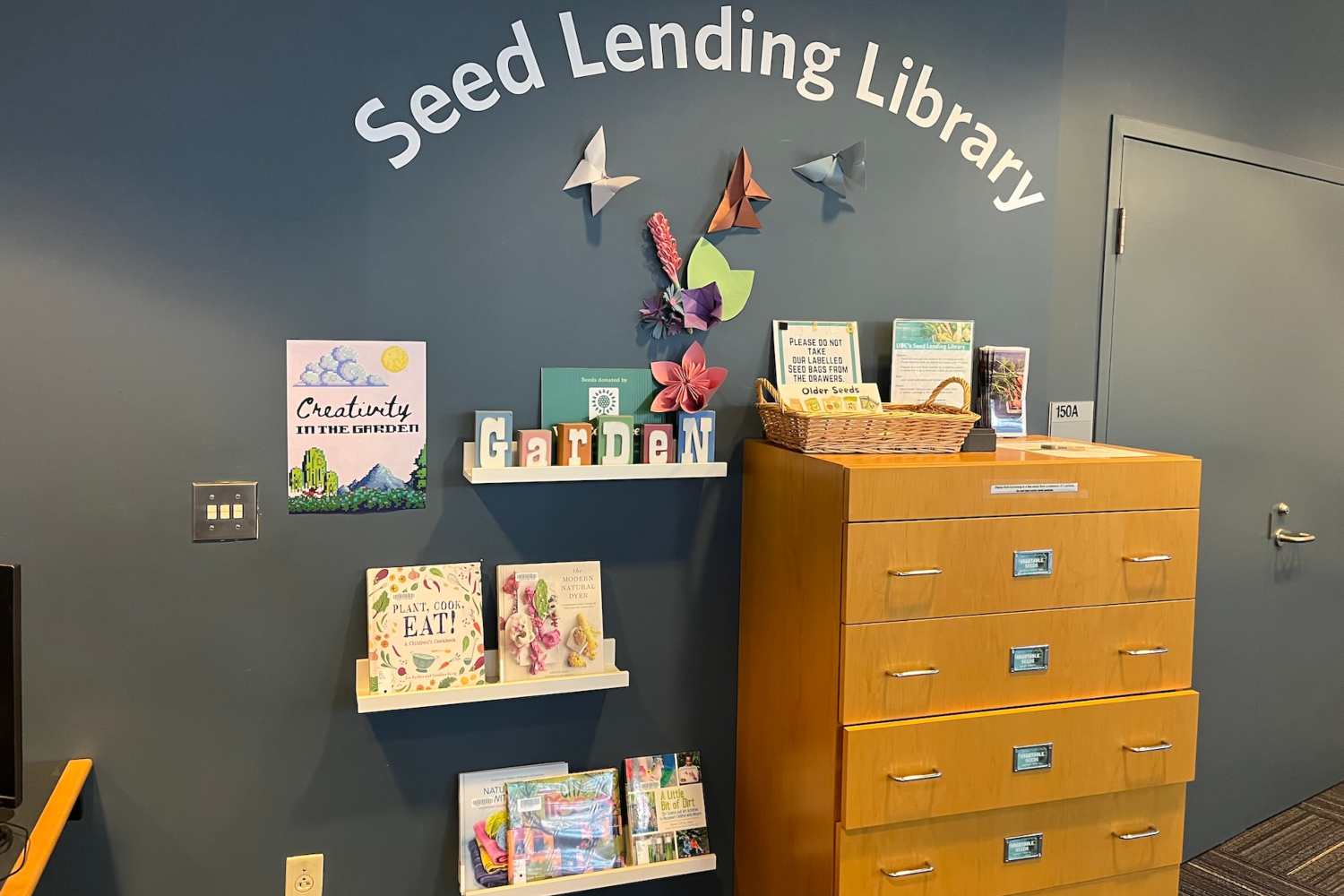
The initiative has crossed national borders arriving in Canada at the University of British Columbia (UBC), where 5 special branches have been created since 2017 thanks to the vision of the co-founders and librarians Helen Brown and Wendy Traas. The Woodward Library and Education Library facilities feature classic vegetables and flowers provided by donors like West Coast Seeds, while the X̱wi7x̱wa and Asian Library locations offer varieties with a strong cultural and medicinal connection drawn from indigenous and Asian traditions.
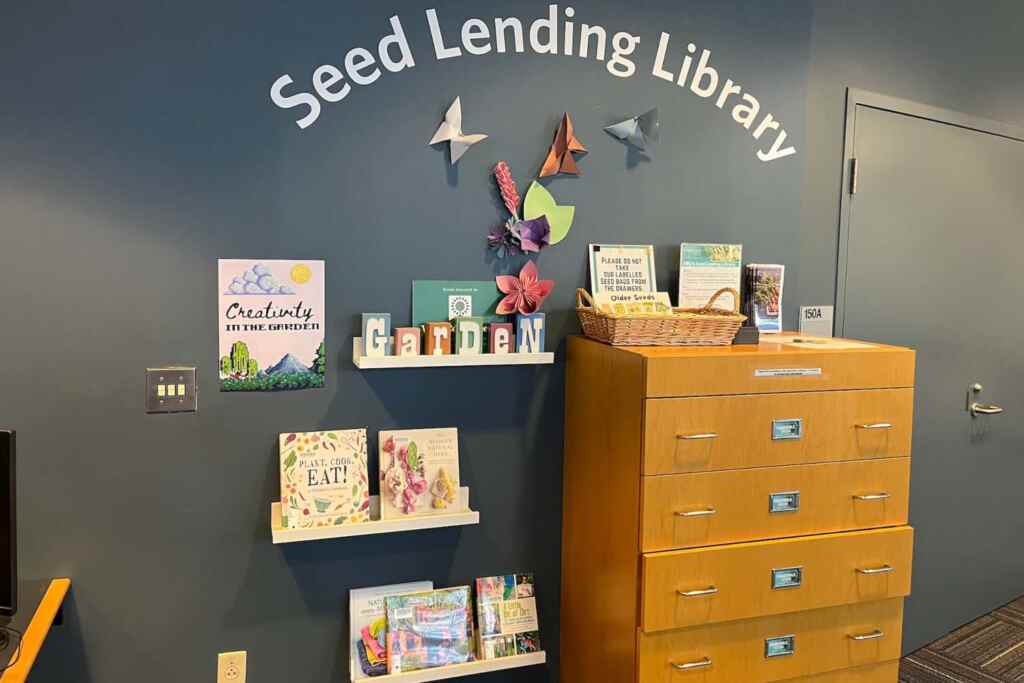
@University of British Columbia
Gardening workshops and training for the community
The value of these seed banks also lies in the intense training activity aimed at adults and children. Through events and workshops, the libraries teach beginners how to plant, care for the soil and clean the seeds to save for the following year. In this way the library card ceases to be a simple reading tool to transform itself into a driver of sustainability, food sovereignty and sociality, uniting different generations around the culture of the earth.
