
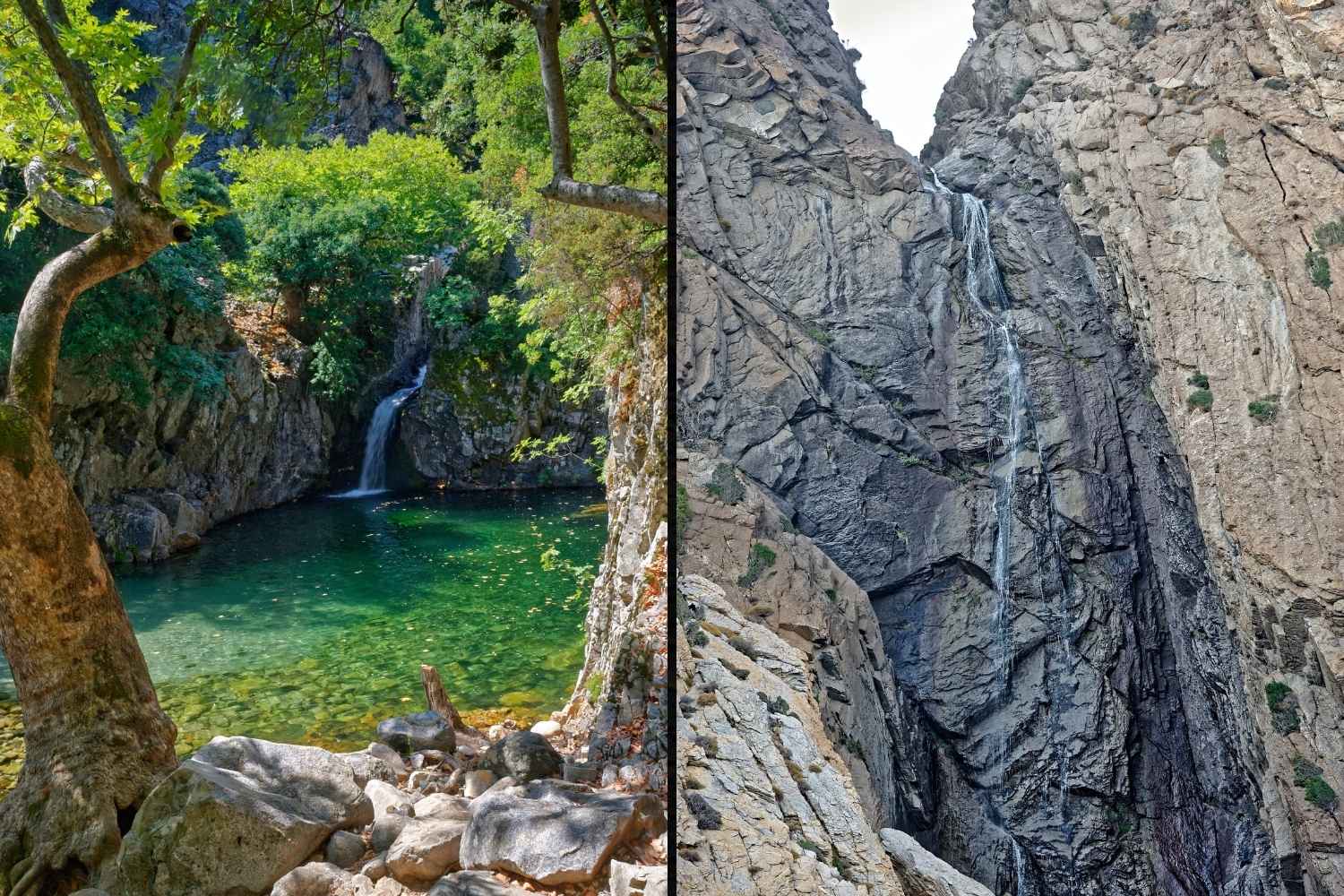
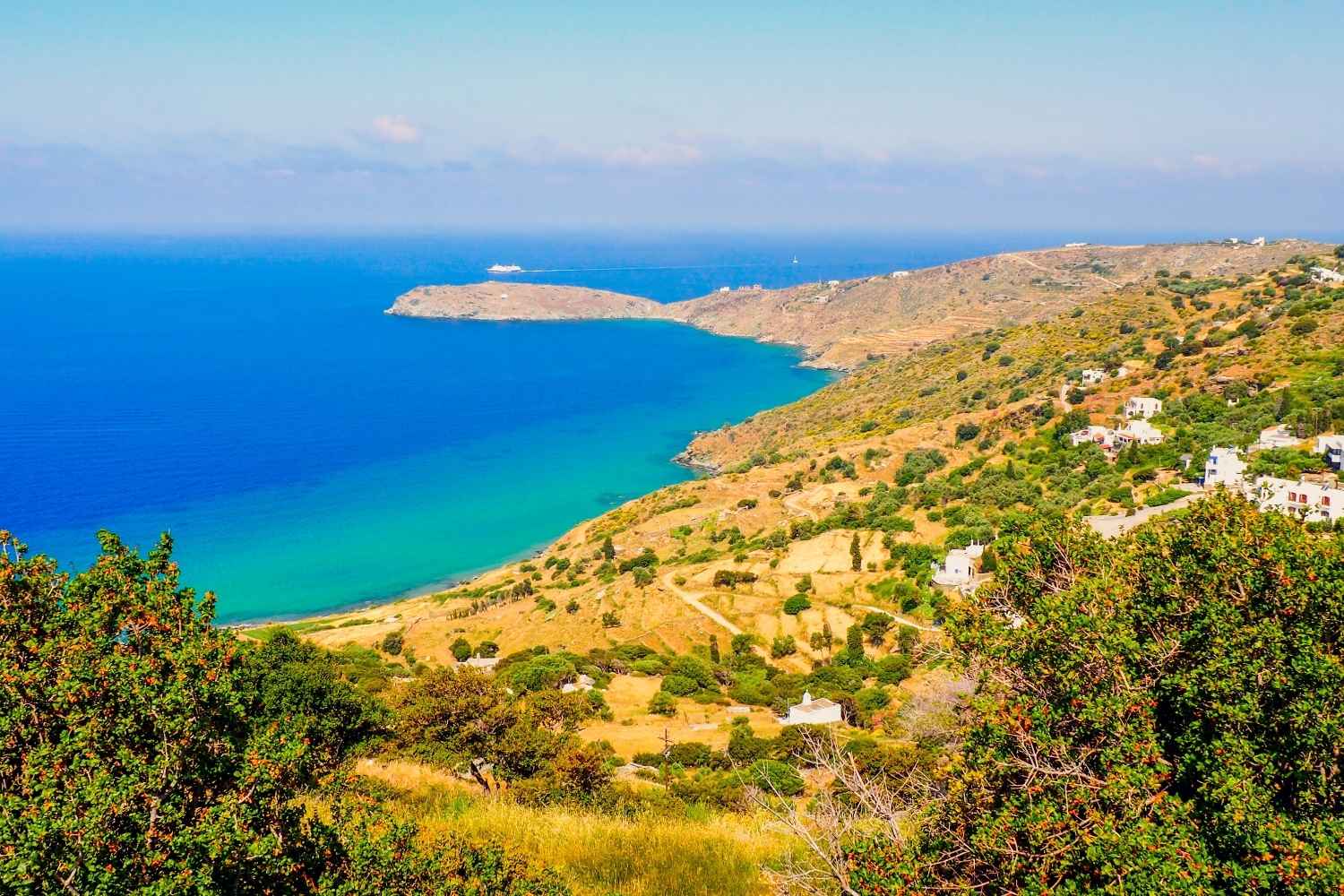
The most beautiful river on the island is called Fonias, which in Greek means murderer. The name is not decorative: after heavy rains the flow increases quickly and the course overwhelms what it finds, something to be aware of for anyone arriving in Samothrace to visit the vathres, the famous natural pools. The island of Samothrace is located in the northern Aegean, a few miles from the Turkish coast, and has no airport, so you can only get there by ferry. Mount Saos, whose Fengari peak reaches 1,611 metres, occupies almost the entire island and makes it an anomalous case in the panorama of the Greek islands. There are beaches, but they are pebbly and windy. What brings travelers here is higher up, in the gorges.
One hundred pools dug into a rock older than the sea
The vathres are natural basins that the torrents have carved into the rock over millennia of work. According to the local portal InSamothraki, the island has over one hundred: of the approximately sixty waterways, thirteen originate between one thousand and 1,100 meters above sea level, and around 700 the minor branches converge and open the gorges.
One detail that tour guides often get wrong concerns the stone. A study published in the journal Water by a group from the Hellenic Institute of Marine Research measures the composition of the soil: 31% of the surface is covered by an Upper Jurassic ophiolitic complex (gabbros, basaltic flows, pillow lavas) and 26% by the Miocene granitic pluton. The truly volcanic rocks cover just 8% and are on the margins. In short, the vathres are excavated mainly in granite and raised ocean floor. The same study explains why there is never a shortage of water, given that the relief ratio of the streams is on average 0.20, a very high value, in which the rivers rush towards the sea instead of crossing the plains. And the igneous rocks, which are not very permeable, retain water in superficial aquifers which feed perennial springs. The Greek Geological Institute has registered 42 cold ones and two thermal ones, from which the village of Therma takes its name.
Where are they, and how much does it cost to get there
The most popular vathres are in the northern part, on the courses of the Fonias, the Platia (which most know as Gria Vathra), the Tsivdogiannis and the Kardelis, all within reach of Therma. The first pools can be reached in twenty or thirty minutes of walking, in the months of July and August they are full of people. Going up requires effort, suitable shoes and a minimum of experience, even if usually above the first waterfall the crowd thins out quickly. The paths, for the most part, have no signs, so venturing alone, without knowing the way, is not a good idea at all.
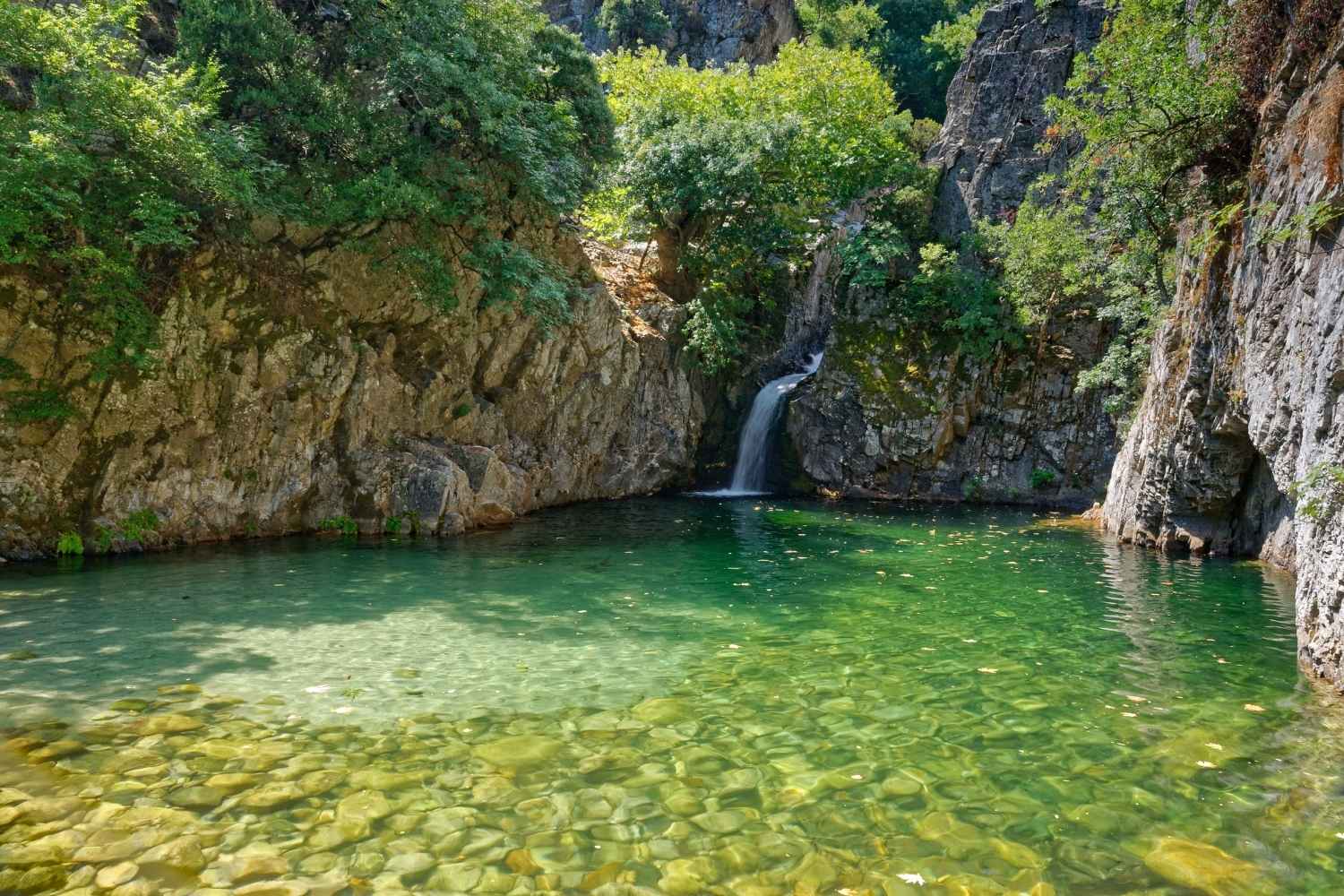
One rule applies everywhere, and it is more serious than it seems: no sunscreen, no soap, not even organic. These waters are the island’s ecosystem, not a swimming pool. Mount Fengari and the coastal strip form a special protection area of the Natura 2000 network, code GR1110012, 209 square kilometers of which 27% is marine, with 58 species protected by European directives. The island also hosts a long-term ecological research platform and is a candidate for a biosphere reserve of the UNESCO MAB programme, a candidacy which is still open and which therefore does not yet constitute real recognition.
The island where people dived already two thousand five hundred years ago
Near Palaiopoli, on the north side, the terraces of the Sanctuary of the Great Gods remain. The file from the Greek Ministry of Culture documents a mystery cult active from the 7th century BC until the end of the 4th century AD, open to anyone who wanted to be initiated, whether they were men and women, free and slaves, or Greeks and foreigners. The famous Nike was found here in 1863, today at the top of the Daru staircase of the Louvre.
The most quoted anecdote is told by Plutarch at the beginning of Life of Alexander: Philip II fell in love with Olympias just as they were both being initiated into the mysteries of Samothrace. It is news reported four centuries after the facts, with the doubtful formula that Plutarch often uses, and historians treat it for what it is, that is, a story and not a document.
