
Out of 70 Italian large-scale retail trade companies interviewed for the survey “AI in large-scale retail trade“, only one has brought artificial intelligence to an industrial scaling level. Just 1.4% of the sample. The survey, carried out by Fòrema and ENIA. – National Foundation for Artificial Intelligence commissioned by tech companies Aten And GTNinvolved almost all Italian large-scale retail trade companies: there are just over a hundred in the country, and almost half have a turnover of more than one billion euros. The industry has stopped looking at AI as a futuristic suggestion. Transforming it into an industrial process remains another story.
68% of companies, 48 out of 70, are still in an active exploration or testing phase. 19%, 13 businesses, have not started anything. And then there is that one company already in scaling, an isolated case which alone is enough to measure the distance between the pilot projects and their actual implementation in distribution networks made up of hundreds of sales points.
Among the concrete uses, those oriented towards internal efficiency rather than customer experience win. Corporate knowledge bases are the most popular application, adopted by 38 companies. This is followed by the monitoring of stock outages and the management of prices and promotions, both at 28. The automatic reconciliation of transport documents and the chatbots for customer service stop at 23 applications each, the optimization of energy consumption at 21. For now, in short, the large-scale retail trade is asking AI to cut costs rather than to innovate the point of sale.
The main barriers are not technological or economic, they are organisational. The lack of specialized internal skills is the most cited problem, reported by 41 companies out of 70. In second place is cultural resistance to change and distrust towards AI, indicated by 35 companies. On governance, the situation is even further behind: only 11 companies have formalized an internal policy on artificial intelligence, 17 are defining it, and 42, 60% of the sample, have not yet addressed the issue of compliance with the European AI Act. Finally, for 29 companies, the real benefits of innovation remain to be quantified.
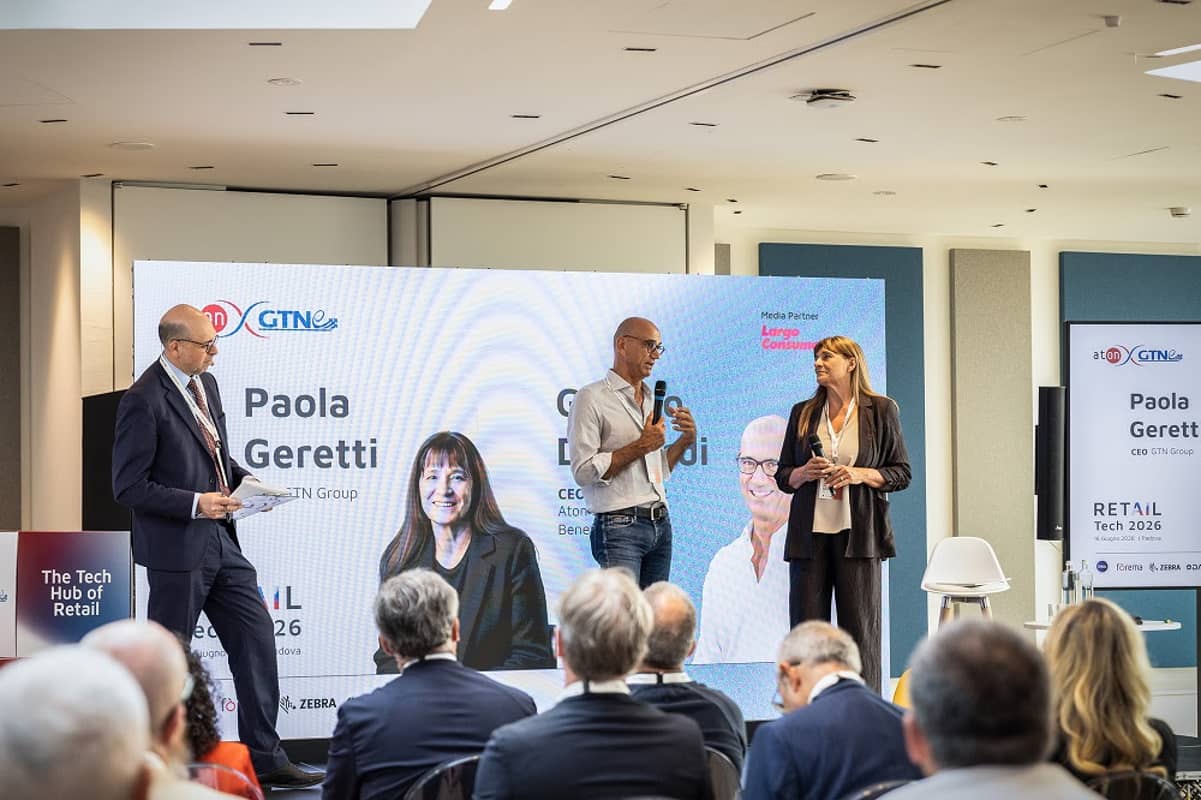
Giorgio De NardiCEO of Aton, sees in the numbers a sector that already believes in the value of AI for logistics and back-office, but which still has to deal with the complexity of the physical store, where staff, information systems and algorithms must integrate without friction. “GDO believes in the concrete and reliable value of AI,” he says, but the leap in scale requires a systemic vision capable of translating data into immediate operational decisions.
Forty-one out of 70 companies complain about the lack of internal experts, and for Matteo Sinigagliageneral director of Fòrema, is precisely the crux here: “the real obstacle does not lie in technology, but in skills and organizational culture”. Without a data literacy and managerial training plan, he warns, the transition risks stalling even if pilot projects continue to multiply.
“The real challenge is no longer technological, but regulatory and governance,” he claims Paola GerettiCEO of GTN. The figures prove her right: 42 companies out of 70 have not yet addressed compliance with the European AI Act, and for Geretti, adopting AI without a formal policy exposes companies to legal and ethical vulnerabilities that are difficult to manage once projects scale.
Valeria Lazzarolipresident of the ENIA Foundation, looks at the contrast between the 1.4% already scaling and the 68% still stuck in exploration and reads something deeper than a simple technological delay: “we are faced with a delicate cultural and regulatory shock, even before a technological one”. Without solid rules, a widespread data culture and serious investments in internal skills, he warns, AI risks generating mistrust rather than value.
One fact remains: 42 out of 70 companies have yet to open the AI Act compliance file. And with the European regulation already in force, the time to do so is shrinking.
