
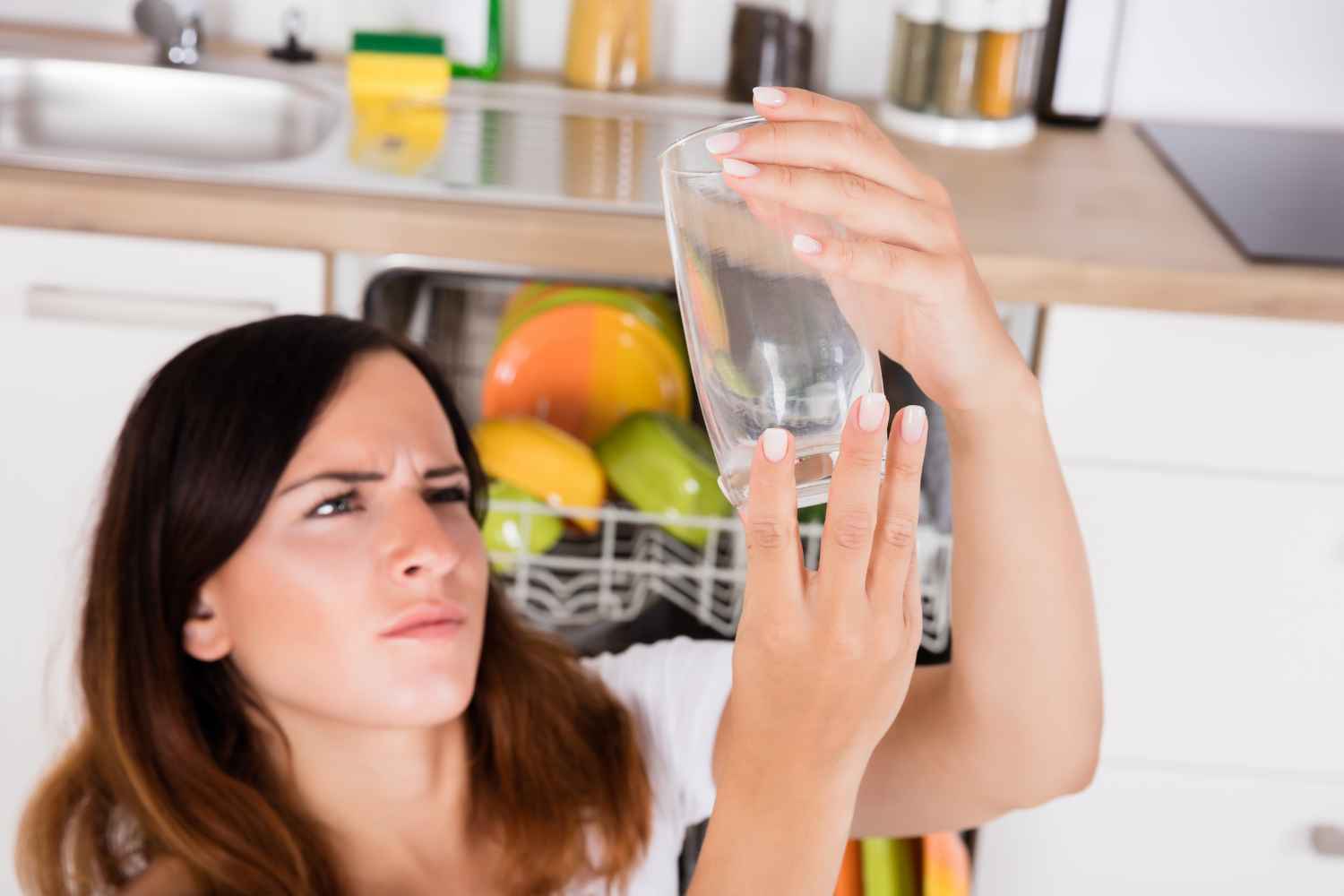
It often happens that you take perfectly clean glasses out of the dishwasher, but they look anything but brilliant. A whitish patina seems to cover the glass and, even by wiping it with a cloth, the opacity does not disappear.
In most cases the culprit is the limestone present in the water, especially in areas where the water is particularly hard. With the passage of time and repeated washing, minerals can deposit on the surface of the glasses, leaving marks and whitish traces, which are not very nice to look at. Before thinking about replacing them, however, it is worth trying a simple remedy: soaking in warm water and citric acid.
How to remove limescale from glasses with citric acid
The process is very simple: just prepare a basin large enough to contain the glasses without crowding them together.
Pour about a liter of warm water and add 20-30 grams of citric acid powder, mix until it has dissolved completely. The water does not have to be boiling: a lukewarm temperature is sufficient and allows the treatment to be carried out without subjecting the glass to unnecessary temperature changes.
Then immerse the glasses in the solution, making sure that the opaque areas are completely in contact with the water and leave them to soak for about 15-20 minutes. After this time, wipe them gently with a soft sponge or cloth. Finally, rinse them very well under running water.
If the opacity was mainly due to limescale, the result should be immediately visible: the glass will appear more transparent and brilliant.
Because citric acid works against limescale
The principle is quite simple, the whitish deposits present on glasses are often made up of mineral salts, in particular calcium compounds. Citric acid creates an acidic environment that helps dissolve and remove these deposits, making them easier to wash off when rinsing.
However, an opaque glass cannot always be recovered. If the surface of the glass has been permanently altered by years of aggressive washing or by the high temperatures of the dishwasher, the opacity could be due to real erosion of the material and not to a layer of limestone.
Rinsing and drying make the difference
After the treatment it is important to rinse each glass carefully, eliminating any residue of the solution. To avoid new streaks, it is best to dry them immediately with a soft, clean cloth, preferably a lint-free one. In areas with very calcareous water the treatment can be repeated occasionally, when the appearance of the patina is noticed again.
A little attention is advisable with decorated, painted, gilded or particularly delicate glasses. In these cases it is best to first check the manufacturer’s instructions and possibly try the treatment on a small, barely visible area. It is also better to avoid contact of concentrated citric acid with eyes and skin.
Are vinegar and baking soda valid alternatives?
White vinegar is also often used against limescale, as it is acidic and can help dissolve mineral deposits in a similar way, although it has a much stronger odor than a citric acid solution.
Bicarbonate, on the other hand, has different characteristics, it can be useful for cleaning and for removing some residues thanks to its light abrasive action, but it does not dissolve limescale in the same way as an acidic substance. Furthermore, it must be used delicately on glasses to avoid excessive rubbing.
