
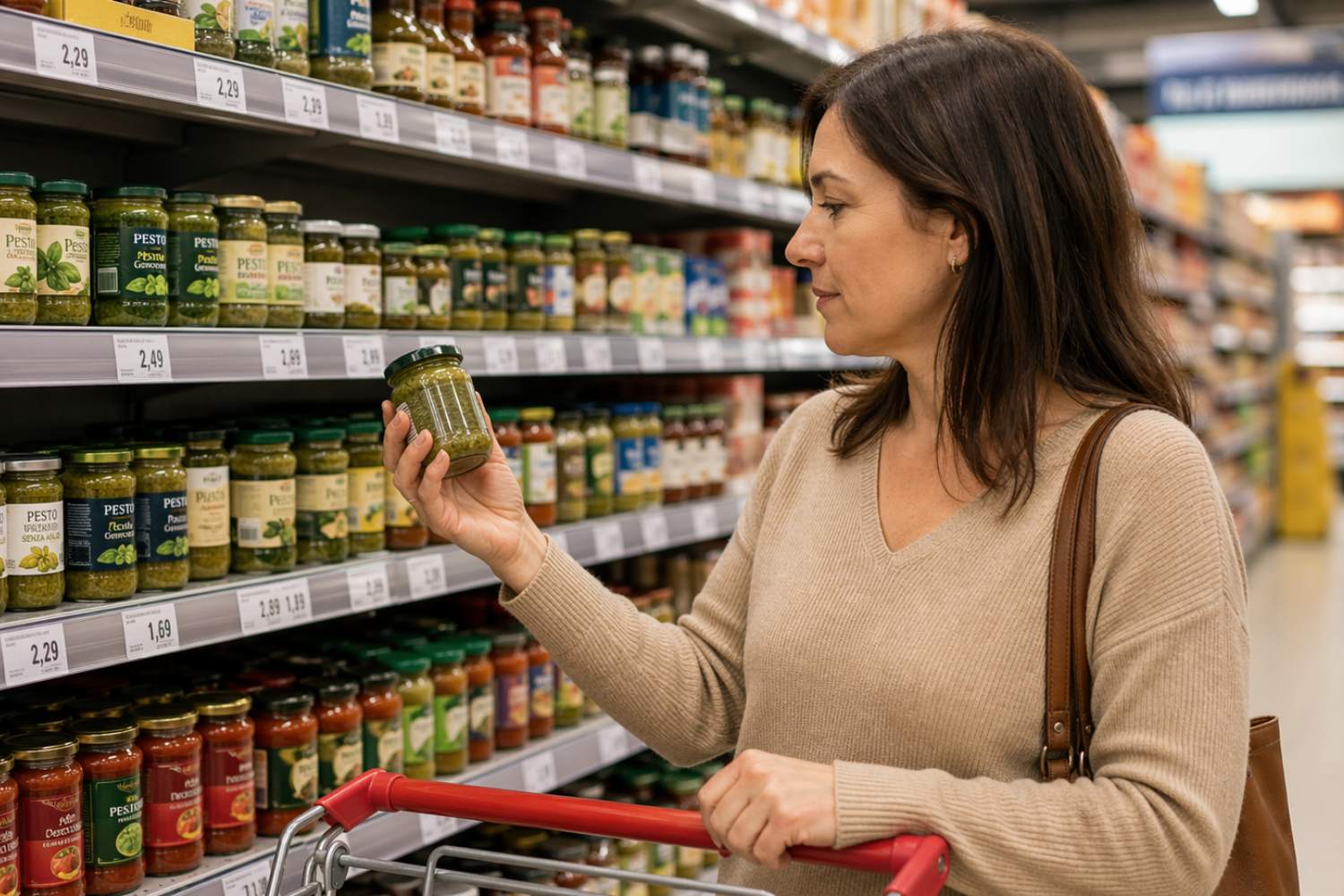
In the ranking of ready-made pestos drawn up by Altroconsumo, at the top there are two MD brand jars and one from Lidl’s vegan line. The smile soon fades, because that first place is barely worth one acceptable. All around there is an expanse of failures, the result of abundant saturated fats, cheeses, excessive oil and additives, which ballast almost every product, including the most famous and expensive ones. Pesto is just one chapter of a broader investigation, given that the consumer association has put under the magnifying glass over 280 ready-made sauces on sale in the main Italian supermarkets and discount stores, and the final ranking has provided more than one surprise.
The tomato sauces passed the exam with flying colors, with many references placed in the high ranges, while the basil pesto, on the contrary, was the category that came out worst in the comparison. The numbers speak for themselves: of the 79 pests examined none reached the sufficiency of judgments Good or very good not even a shadow. Just three jars fall into the “acceptable” range, the others all end up among the poor. A collective criticism that deserves to be looked at closely, starting with those who managed not to sink.
The three pests who get an “acceptable”
In the lead, tied with 42 points, are two products from Lettere dall’Italia, MD’s private brand, Pesto alla Genovese and the variant Without Garlic. Just one point lower, at 41, comes Vegan Basil Pesto from Vemondo, Lidl’s vegetable line. The curious fact is that two of the three “survivors” bear the label of the MD discount store, while the third comes from the vegan shelf of Lidl. The result of the latter is most likely influenced by the absence of animal cheeses, replaced by vegetable ingredients: less saturated fats, and therefore an overall more favorable nutritional profile. In absolute terms there is no need to uncork the sparkling wine, but in such a ranking a acceptable it’s almost equivalent to a gold medal.
Because not even the best are good enough
The crux lies in the recipe itself, because Genoese pesto is born, by definition, from ingredients loaded with fat. There is oil, extra virgin olive oil or another type (often poured with a generous hand), there are cheeses, parmesan and pecorino, and there is dried fruit, traditional pine nuts or, more frequently, cashews. The method with which Altroconsumo assigns the votes also counts.
55% of a pesto’s score depends on the Nutri-Score, which penalizes saturated fats, salt and, where there are any, excess sugars. For pesto the first two take the lion’s share, because oil, cheese and dried fruit push the saturated fats up and salt and additives take care of the rest. Another 15% concerns the degree of industrial transformation, and here a simple rule applies: the more ultra-processed a product is, the more it loses positions. Sweeteners, when present, account for a further 10%, but for pesto the real Achilles’ heel remains the richness of fats that it brings with it by nature. The verdict, ultimately, does not depend on the wrong brand or on a price that is too low: it is the pesto as such that comes out badly from an evaluation built on these criteria.
Famous brands and high prices are not enough
Those who hoped that a higher expense would ensure a better pesto on a nutritional level will have to think again, at least judging by the data from Altroconsumo. Just scroll through the scores of some of the most popular products on the shelves, all of which ended up in the range rare. Alce Nero, with its Pesto alla Genovese, stops at 39 points, just ahead of Lidl’s Deluxe with basil and rocket with cashews (38).
Further down, paired at 32, we find the Barilla Basilico e Limone, the Terre d’Italia Pesto della Liguria with Basilico Genovese DOP and 37% EVO oil, the Esselunga Bio with Basilico Genovese DOP Without Garlic and the Biffi 100% Vegetable Without Cheese. Followed by Sapori & Dintorni by Conad, Pesto Genovese with Basilico Genovese DOP, at 31 points, while Il Viaggiator Goloso Pesto Genovese with Basilico Genovese DOP and Pesto Fresco by PAM stand at 30, in the versions with and without garlic. Biffi’s case is instructive, given that the recipe, despite being entirely vegetable, without cheese, does not save him from rareand it could be penalized by the doses of oil and dried fruit, fats even when of vegetable origin. Even further down, among the most beaten jars in the ranking, Rana pesto appears, which stops at 24 points.
How to position yourself in front of the shelf
Nobody is asking for pesto to be banned, and if it were to end up on the table every now and then, the nutritional profile would certainly not represent a problem. The best way remains that of homemade pesto, where the doses of oil and cheese can be calibrated as desired.
