
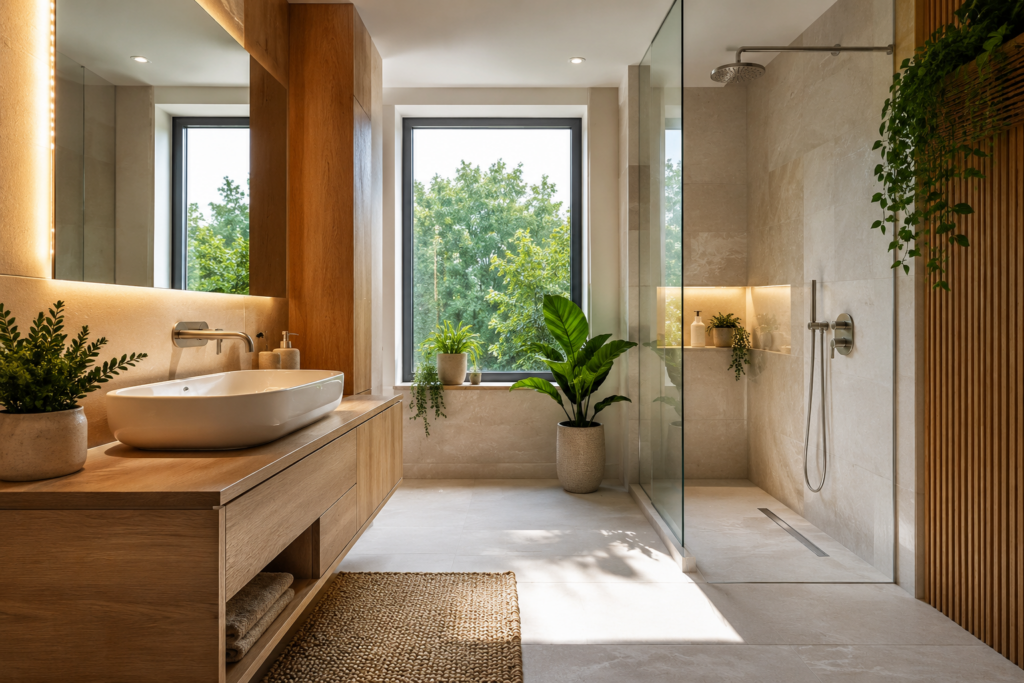
When we talk about sustainable homes and ecological transition, the mind immediately goes to solar panels on the roof, the latest generation appliances in the kitchen or the efficiency of heating. Yet, there is a room that, more than any other, represents the true heart of our daily consumption of vital resources: the bathroom. It is precisely here, within the walls of this intimate environment, that the most significant share of an entire family’s water consumption is concentrated and, consequently, a notable part of the energy needed to heat the running water we use every day. Thinking about renovating the bathroom in a sustainable way is therefore a strategic and intelligent choice, capable of concretely lightening the environmental impact of our lifestyle and, at the same time, allowing our bills to breathe at the end of the month.
Every single day, between regenerating showers, personal hygiene routines and toilet flushes, we consume hundreds of liters of drinking water. Very often we do this almost automatically, without realizing how much of this precious resource is unfortunately lost due to obsolete systems or poorly thought-out furnishing choices in the design phase. A conscious renovation, however, aims to transform this space into a true oasis of well-being that respects the planet in every detail. Reducing the ecological footprint of the home starting from the bathroom means combining ethics with aesthetics in a perfect embrace, demonstrating to ourselves and others that environmental responsibility can coexist beautifully with daily comfort and with a modern, captivating design and, above all, accessible to anyone who wishes to make a difference.
Materials that last over time: the choice of eco-sustainable bathroom furniture
When you decide to renovate this important room, the temptation to be guided exclusively by the visual aspect and the latest style trends is very strong. However, true sustainability lies in the intrinsic quality and certified provenance of the materials we choose to introduce into our home. A modern and oriented approach to ecological bathroom furnishings favors intelligent solutions that not only reduce the environmental impact during the production phase, but which also guarantee extraordinary resistance to humidity and daily wear and tear. This means avoiding premature replacements which would generate unnecessary waste of money and mountains of waste that are difficult to dispose of.
The choice of furnishings, therefore, must be based on rigorous but easy to apply criteria. To choose consciously, it is possible to look at the eco-sustainable bathroom furniture offered by companies such as Deghi, made with FSC certified wood panels, which guarantees the origin of the wood from forests managed in a responsible, ethical and totally respectful way of local biodiversity. Equally important are the surface treatments to which the furniture is subjected: the use of water-based paints, totally non-toxic and free of harmful chemical solvents, protects firstly the health of the craftsmen who produce the furniture, and secondly that of the end users, significantly improving the quality of the air inside the room. The durability of the product thus emerges as the true, great pillar of contemporary domestic ecology.
In addition to certified virgin wood, continuous technological innovation in the furniture sector today allows the use of advanced composite materials and recycled materials for the bathroom, capable of perfectly imitating fine textures such as natural stone or concrete. These solutions offer significantly superior endurance performance and boast a drastically reduced environmental impact compared to the extraction of new resources. Choosing furnishings designed to last over time, keeping their beauty intact, is the first and fundamental step to reduce the global consumption of raw materials and to concretely enhance the principles of the circular economy.
Smart taps: cut water consumption without sacrificing comfort
If the furniture defines the atmosphere, style and practical organization of the space, it is undoubtedly the taps that determine the real consumption of resources during the daily use of the room. Traditionally, a common sink tap delivers around 10-12 liters of water per minute, a quantity far greater than what we actually need to wash our hands, rinse our faces or brush our teeth. Fortunately, modern technology comes to our aid by offering brilliant and intelligent solutions that allow drastic water savings, all without the user perceiving the slightest reduction in comfort or the pleasant pressure of the water jet.
Modern mixers with jet aerators represent the simplest, most economical and effective solution to address this problem: these small but ingenious devices mix the outgoing water with the air, reducing the effective flow rate by up to 50%, but at the same time maintaining the jet full-bodied, abundant and very pleasant to the touch. Added to this innovation are temperature limitation systems, invisible but very precious mechanisms that prevent the boiler from turning on involuntarily when cold water is simply required, thus avoiding unnecessary and costly waste of gas or electricity.
Another absolutely crucial element for the water efficiency of our bathroom is the toilet cistern. Old traditional single-flow systems used up to 9 or even 12 liters of water for each single use, a real ecological drain. Replacing them with modern dual flow exhaust systems allows you to choose, depending on the real needs of the moment, between a reduced volume (usually around 3 litres) and a full one (around 6 litres). This simple precaution optimizes the use of drinking water and avoids the waste of thousands of liters per year for each individual member of the family, transforming a daily gesture into a great victory for the environment.
LED lighting and low-impact coatings
An ecological and environmentally friendly renovation certainly cannot be considered complete without a careful and scrupulous analysis of lighting and coverings, both vertical and horizontal. The bathroom is by its nature a humid and multifunctional environment that requires versatile lighting, often turned on for many hours a day, especially in homes less exposed to natural light. The installation of modern LED light points represents the most obvious, bright and efficient choice: these lamps not only consume up to 85% less energy than old and outdated incandescent or halogen bulbs, but also boast an extraordinarily longer lifespan. This translates into a drastic reduction in the need for maintenance and, above all, in less special waste to be disposed of.
As regards walls and floors, the choice of ceramic remains an unsurpassed classic for reasons of hygiene, ease of cleaning and resistance to wear. However, the attention of today’s conscious consumer must be directed specifically towards those companies that adopt truly virtuous production processes. Choosing closed-cycle ceramic tiles means opting for products made by expertly reusing manufacturing waste and constantly purifying the water used in the industrial process. This approach minimizes the release of pollutants into the environment and significantly reduces the consumption of new extractive raw materials, protecting the landscape.
Even the covering installation phase can and must become ecological. It will be enough to prefer glues, mortars and joints with very low emissions of volatile organic compounds (the so-called VOCs), innovative products that guarantee a healthy environment and clean air from the very first day of using the new bathroom. The combination of these small but fundamental attentions transforms the bathroom into a perfectly balanced domestic ecosystem, where every single detail, from floor to ceiling, actively contributes to global and shared well-being.
