
Lulingu’s story represents one of the most extraordinary and hopeful pages in the modern history of animal conservation. Recovered at just 18 months of age after being torn from her family and swallowed up by the illegal wildlife trade, the little girl was taken to the GRACE sanctuary, the only facility in the world dedicated to the recovery of eastern lowland gorillas (also known as Grauer’s gorillas).
There, executive and scientific director Katie Fawcett and national director Jackson Kabuyaya Mbeke witnessed the first steps of a long recovery journey, in which the gorilla Pinga acted as her surrogate mother, integrating her into a family group together with three other females: Mapendo, Ndjingala and Isangi.
The difficult return to the Virunga forest
After more than five years of preparation managed by GRACE Gorillas, Virunga National Park and local communities, with the crucial support of the Gorilla Doctors and the Re:wild organization, the four females were officially released in December 2024 on Mount Tshiaberimu, in the Democratic Republic of Congo.
The primary objective was to provide a fundamental genetic boost to a local population reduced to a minimum and at risk of extinction within 50 years. Constant monitoring conducted by ranger Benoit Ishaba and veterinarian Cedric Kibengo – who used human pregnancy tests and non-invasive analyzes on urine samples collected from leaves – confirmed the full success of the rehoming and the successful mating with the dominant male Mwasa.
The happy ending and the birth of the puppy: a triumph for biodiversity and scientific research
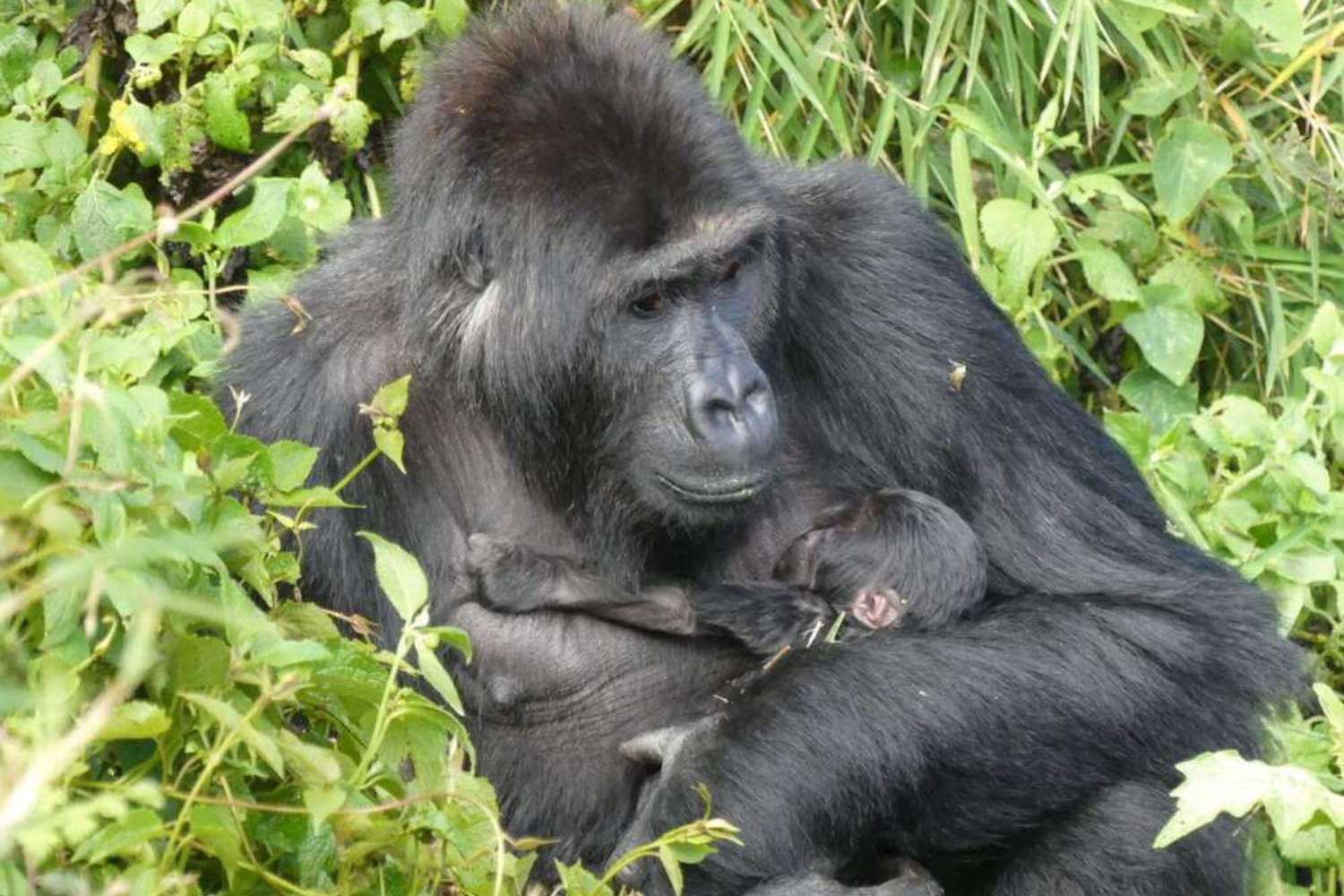
The long-awaited moment materialized on May 21st, the day on which Lulingu gave birth to her first puppy in complete freedom, an event emotionally documented by scientists who follow the family group step by step. Gorilla pregnancies typically range between 8 and 9 months, and the arrival of this newborn is not only a splendid personal victory for a mother who survived the tragedies of poaching, but a true historical record for the protection of the species in critical danger of extinction.
Veterinarian Cedric Kibengo confirmed that none of the released specimens have ever needed medical treatment since living in the wild, and the first images of Lulingu intent on breastfeeding, cradling and protecting the little one confirm an impeccable maternal instinct. While researchers continue to monitor the group in the hope that other females will soon give birth, the birth of this cub represents a tangible symbol of resilience and environmental recovery, demonstrating how international collaboration and targeted protection can restore a future to the most vulnerable creatures on the planet.
View this post on Instagram
