
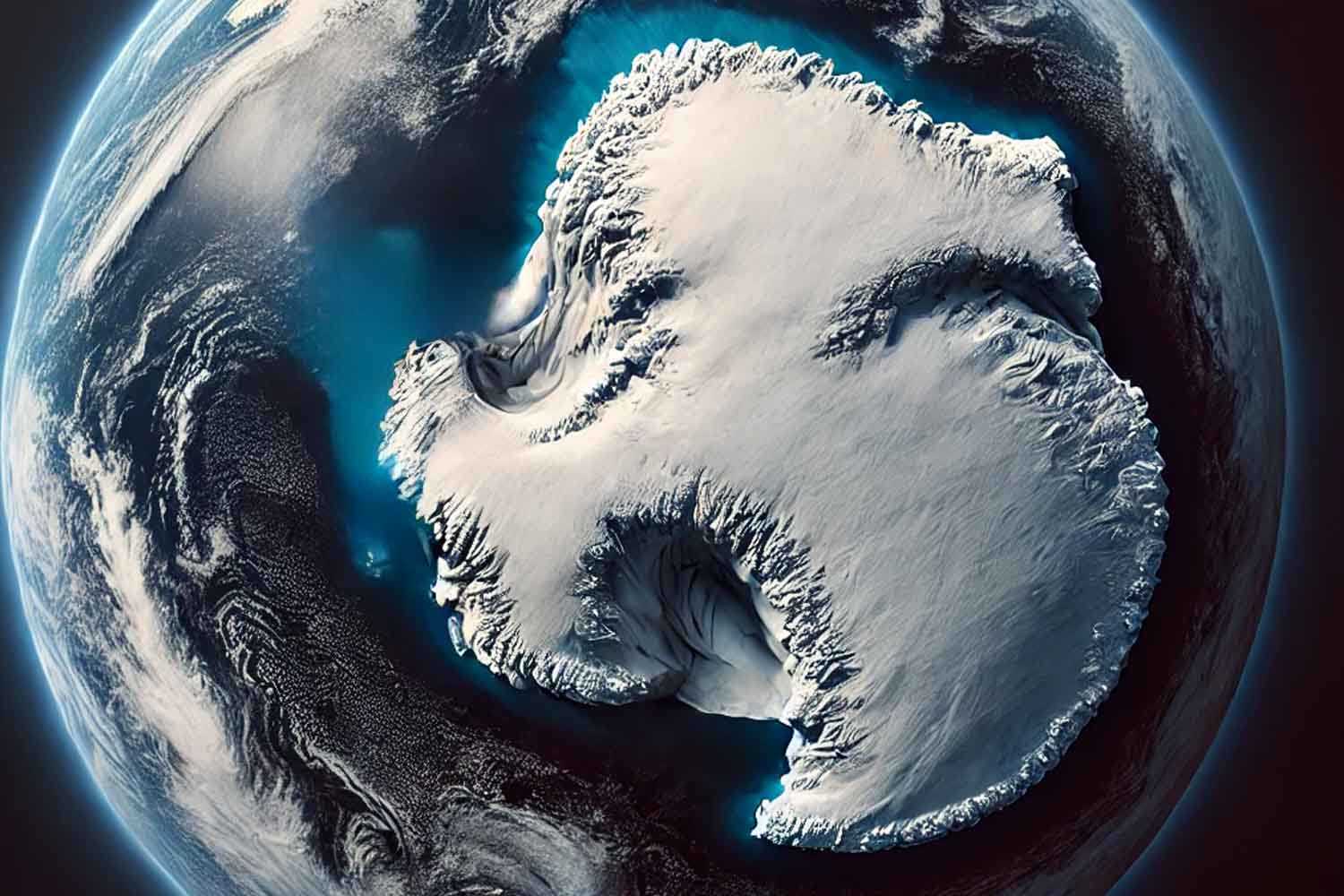
The recent discovery of the largest oil and gas reserves in the British Antarctic Territory, announced by Russian scientists, has sparked a heated geopolitical and environmental debate. With over 511 billion barrels of oil estimatedthe impact on the economy, environment and international relations could be immense.
The discovery was made by the Russian research vessel Alexander Karpinsky during a series of studies in the British Antarctic Territory area. According to preliminary data, the reserves contain over 511 billion barrels of oil, an amount that exceeds the production of the North Sea in the last fifty years. This discovery projects the Antarctic territory among the potential new epicenters of global energy, promising to redefine the global oil balance.
However, this discovery is not without geopolitical consequences. The British Antarctic Territory is at the center of a territorial dispute that also involves Argentina and Chile. The possibility that Chile, which has recently discovered hydrocarbon resources in the region, steps up its territorial claims, could further exacerbate regional tensions. In this context, the already delicate political balance risks being compromised, introducing new dynamics in the relations between the States involved.
Antarctic Treaty and environmental challenge: risks of exploitation
Antarctica has long been protected by Antarctic Treaty of 1959which prohibits the exploitation of natural resources to preserve the continent as a place dedicated to science and peace. This discovery, however, tests the effectiveness of the treaty. The temptation to exploit such huge resources could in fact lead to a revision of the current regulations or even to the violation of the treaty itself, with potential repercussions on the international scenario.
The environmental implications are equally worrying. Antarctica is one of the most fragile and biologically unique ecosystems on the planet. Oil extraction in this region could cause irreversible damage, with risks of oil spills, destruction of natural habitats and serious consequences for wildlife. Environmentalists underline the importance of protecting this unique environment and denounce the danger of putting economic profits before safeguarding the planet.
Russian intentions: science or strategic interests?
Although Russia has presented the discovery as the result of purely scientific research, many experts remain skeptical. According to Klaus Dodds, professor at Royal Holloway University, seismic surveys conducted are often the first step towards resource extraction. Russia, which in the past has exploited scientific missions to pursue strategic objectives, is now under international observation.
Global reactions have been mixed. International organizations and governments have expressed concern, but there has also been a certain skepticism. According to the British Foreign, Commonwealth & Development Office, Russia has declared that its activities do not pose a threat to other states. However, the scale of the discovery and the potential economic implications make it difficult to imagine a future in which these resources are not exploited.
Global and economic impacts: a new energy balance
If these reserves were exploited, the consequences for the global economy would be significant. The availability of oil in such quantities could lower crude oil prices, change the dynamics of energy trade and destabilize the economies of oil-exporting countries. At the same time, importing countries could benefit from this new source of supply, reducing their energy dependence.
An emblematic example is Argentina. If involved in the exploitation of these resources, Argentina could emerge as a major oil producer, significantly improving its economy and strengthening its geopolitical position. However, this development would entail complex challenges, such as the risk of environmental pollution and the need to manage the interests of other international actors.
The delicate balance between opportunities and risks
The discovery of the largest oil and gas reserves in the British Antarctic Territory raises crucial questions. Is it possible to exploit these resources without compromising the environment? How will global geopolitical and economic dynamics change?
As the world ponders the implications of this discovery, a clear need emerges: finding a balance between economic development and environmental protection. Antarctica, one of the few pristine areas on the planet, cannot be sacrificed to progress. The future will tell us whether this discovery will lead to international collaboration or heated rivalries for control of resources.
